



The greatest medium of all time is not only admired by Spiritists but also by people from all religious, political, and social segments—both national and international—who recognized the seriousness of the postulates he embraced and exemplified during his 92 years of life. He was even nominated for the Nobel Peace Prize in 1981 and was elected the citizen of the century in Minas Gerais. The term ‘phenomenon’ is frequently used to qualify this singular man. Having only completed primary school, he wrote hundreds of books and messages in various languages. He could have become wealthy but lived, until his last day, on his pension, without materially benefiting from the earnings obtained from his works. His passing occurred on the same day that Brazil celebrated its world football championship in 2002, allowing him to return to the spiritual world without much fanfare, practicing humility until the last moment, the greatest characteristic of this enlightened Spirit, who exemplified the teachings of Jesus, especially the one that said: ‘Whoever wishes to be the greatest must be the servant and the least of all.’
Born Francisco de Paula Cândido Xavier, in honor of the saint of the day of his birth, he had eight siblings. He was part of a family of modest means, the son of João Cândido Xavier, a lottery ticket seller, and Maria João de Deus, a Catholic laundress, both illiterate. According to biographers, Xavier’s mediumship first manifested itself when he was four years old. His mother passed away on September 29, 1915, when he was only 5 years old.
He started primary school at the age of eight, where he studied in the morning and then worked in a spinning and weaving factory. In 1922, while in the fourth grade, he received an honorable mention for an essay in a state competition about the Centenary of Brazil’s Independence, which he confided to the teacher had been dictated by a ‘man from the other world.’
Of the nine children, six were given to godparents and friends. Francisco was raised by his godmother and his mother’s old friend, Rita de Cássia, described as ‘very strict, very emotionally unstable, disturbed’ by Eurípedes Tahan Vieira, a doctor of Chico and a friend from his youth. She would whip him with a quince branch and began to stab him with kitchen forks in the abdomen, not allowing him to remove them, causing him terrible suffering. The only moments of peace he had were in dialogues with the spirit of his mother.
Many times, Chico heard his deceased mother say that she would send an angel to reunite the whole family. As his mother had said, Chico’s father remarried; this time to Cidália Batista, with whom he had six more children. His second mother, Cidália, gathered all the children and treated them with great affection.
Chico Xavier began to have dreams and would wake up agitated at night, conversing with spirits. In the morning, he would tell his family about his dreams. His father decided to take him to the vicar of the city of Matozinhos, who, after listening to him, recommended that the boy stop reading newspapers, magazines, and books.
While talking to his mother, saddened by not being understood by anyone, Chico heard her say that he needed to change his thoughts, that he should not be an undisciplined child to avoid earning others’ dislike. He should learn to be quiet and, when he remembered any lesson or experience received in a dream, he should follow it.
She told him that he needed to learn obedience so that one day God would grant him the trust of others. For seven consecutive years, he had no further contact with his deceased mother.
Educated in the Catholic faith, Chico Xavier obeyed the obligations indicated to him by the Church. He would wake up early to start his school tasks and then go to work at the textile factory.
In 1925, Chico left the factory to work in the store of Mr. José Felizardo. The nighttime disturbances returned, and after sleeping, he would fall into a deep trance.
The first and only teacher of Chico who discovered his psychographic mediumship was D. Rosália, who would take the students on countryside outings, and the next day they were to bring an essay describing the outing. Chico’s always took first place.
In 1927, at the age of seventeen, Francisco faced the insanity of a sister, which he believed was caused by a process of spiritual obsession. The family had to turn to a couple of Spiritists, Mr. José Hermínio Perácio and Mrs. Carmem Pena Perácio, who, after some meetings and the effort of Chico’s family, helped his sister to be cured. From then on, the Gospel at Home was maintained until that year of 1927, when Chico respectfully said goodbye to the kind priest, who wished him support and protection on his new path.
In June of the same year, the foundation of a doctrinal nucleus was considered. In 1927, the Luiz Gonzaga Spiritist Center, based in the residence of João Cândido Xavier, who became president of the institution, was already formed and well attended.
At this time, he began to write poems, which he attributed to spirits. Starting in 1931, he began to assert that the authors were various deceased poets. In 1928, he began publishing in the periodicals O Jornal, from Rio de Janeiro, and Almanaque de Notícias, from Portugal. The First Works 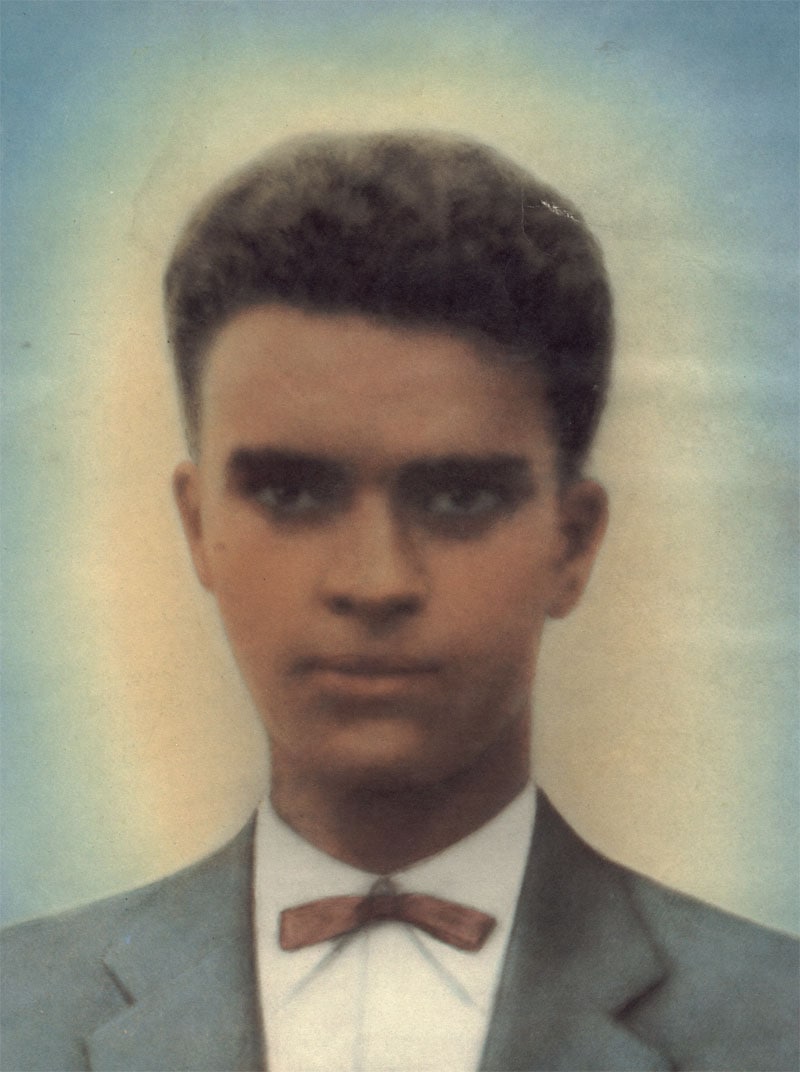 In 1931, in Pedro Leopoldo, he lost his stepmother Cidália and continued the work Parnaso de Além-Túmulo. This year also marked the coming of age of the medium and was when he claimed to have had his first encounter with his spiritual mentor Emmanuel. Xavier said that the mentor informed him about his mission to psychograph a series of thirty books.
Upon publishing his first works, he began to sign with his father’s name, Francisco Cândido Xavier.
In 1932, Parnaso de Além-Túmulo was published by the Brazilian Spiritist Federation (FEB); the work is a collection of poems attributed to spirits of Brazilian and Portuguese poets.
He continued with his job at the Farm, which began in 1935, and performed his duties at the Luiz Gonzaga Spiritist Center, assisting those in need with prescriptions, advice, and psychographing. The farm administrator was agronomist Rômulo Joviano, also a Spiritist, who not only secured the job for Xavier but also helped him find the peace necessary for his psychographic work, accompanying him in the sessions at the Luiz Gonzaga Center, of which he would become president. It was precisely during the time he was psychographing in the basement of Joviano’s house that one of his greatest works, entitled Paulo e Estêvão, was written.
At the same time, he began a long series of refusals of gifts and distinctions, which would last throughout his life, such as that from Fred Figner, the great businessman, who bequeathed him a large sum in his will, which the medium passed on to the Brazilian Spiritist Federation for charitable use. Fred Figner had a newspaper column on Spiritism and corresponded with Chico Xavier for over 17 years. A year after Figner’s passing, Chico Xavier psychographed the book ‘Voltei,’ signed by the spirit of ‘Brother Jacob,’ who would be Figner’s own spirit. This book is considered highly relevant as it contains important accounts and recommendations for followers of the religion.
In the 1930s, the publication of novels attributed to Emmanuel and the work ‘Brazil, Heart of the World, Homeland of the Gospel,’ attributed to the spirit of Humberto de Campos, where the history of Brazil is interpreted from a spiritual and theological perspective, also stood out.
During this time, Francisco entered federal public service as a service assistant in the Ministry of Agriculture.
In 1943, one of the most popular books in Spiritist literature, the novel Nosso Lar, was published, the best-selling work of the medium. In 2010, it became a film and had already sold over two million copies.
In 1944, reporters David Nasser and Jean Manzon did a not-so-favorable report on the medium, which was published in O Cruzeiro. The reporters pretended to be foreigners and used false names to test if Xavier was a fraud; however, when Nasser and Manzon returned home after the report, they had a surprise, as Nasser recounted in an interview with TV Cultura in 1980: ‘In the early morning, Manzon called me and said: ‘Have you seen the book that Chico Xavier gave us?’. I said no. ‘Then look,’ he said. I went to my library, picked up the book, and it was written exactly this: ‘To my brother David Nasser, from Emmanuel.’ To Manzon, he had made a similar dedication.
In 1955, Chico Xavier personally met the medium Waldo Vieira, resulting in a Spiritist partnership that lasted until 1966, during which they psychographed 17 books together.
In 1965, Chico Xavier and Waldo Vieira traveled to Washington, USA, to promote Spiritism abroad. With the help of Salim Salomão Haddad, president of the Christian Spirit Center, and his wife Phillis, they studied English and published the book Ideal Espírita, under the name The World of The Spirits.
In the early 1970s, Xavier participated in television programs that had a significant impact. His live interview on the program Pinga-Fogo, from TV Tupi, on July 28, 1971 (starting the night before), reached 35 audience points and was rebroadcast three times in São Paulo and retransmitted throughout Brazil, in addition to an extra edition in the Diário de S. Paulo, with the full program. The program extended considerably. The host commented several times during the program that the end was near, but the program continued. On this day, Chico told the famous Case of the Airplane: on a flight from Uberaba to Belo Horizonte, the plane went through severe turbulence, and everyone began to pray and scream, which Xavier also did. Then, Emmanuel entered the plane and, after a brief dialogue, reprimanded Xavier for his lack of faith: ‘Shut up and die politely so as not to disturb others with your screams, die with faith in God!’. At the end of the program, Xavier psychographed a poem attributed to Ciro Costa, called Segundo Milênio. According to Herculano Pires, some relatives of Ciro Costa watched the program and attested to the presence of the poet’s style.
The success of the first program led to a second edition on December 21, 1971, starting the night before, also with great repercussions. It reached 86% IBOPE, according to the then-interviewer Saulo Gomes, which was claimed to be a record audience in Brazilian television. In this edition of the program, in response to the interviewer’s question about ‘what the so-called spiritual benefactors think about Brazil’s current position, whether in political or social terms,’ Chico Xavier replied that ‘Brazil’s current position is one of the most dignified and encouraging for us,’ explaining that ‘our democracy is guarded by forces that protect us against the intrusion of any ideologies linked to disintegration.’ Furthermore, he also emphasized the importance of prayer and vigilance; the ‘gift of freedom in Jesus Christ’ and the state of conflict in the country. At the end of the second program, Xavier psychographed a poem attributed to Castro Alves, called Brasil. In both occurrences of Pinga-Fogo, Xavier allegedly answered, under the direct inspiration of Emmanuel, various questions from journalists and the audience on topics such as mediumship, psychography, life on other planets, reincarnation, abortion, cremation, homosexuality, Umbanda, death, evolution, vegetarianism, salvation, organ transplantation, miracles, the hippie movement, divorce, and many others.
During this decade, in addition to cataracts and lung problems, he began to suffer from angina. In 1975, he left the Spiritist center Comunhão Espírita Cristã and founded a new one in Uberaba, the Grupo Espírita da Prece, where he began to carry out his activities. By 1980, there were already two thousand charitable institutions founded, helped, or maintained thanks to the royalties from his psychographed books or charitable campaigns promoted by him.
In 1980, he was proposed to run for the Nobel Peace Prize, competing with prominent figures of the time, such as Pope John Paul II, and the Polish union leader Lech Wałęsa (like John Paul II). Due to the extensive social work carried out by the medium from Minas Gerais, his victory was considered certain, as Mother Teresa of Calcutta, with less extensive work, had been awarded the previous year. But none of them won—a UN institution took the Nobel that year.
In 1994, the American tabloid National Examiner published an article with the headline declaring that ‘Ghost writers make millionaire novelist.’ The article was prominently featured in Brazil by the now-defunct magazine Manchete, under the title Secretary of Ghosts, stating that, according to the National Examiner, the Brazilian medium became a millionaire, having earned 20 million dollars as a ‘secretary of ghosts.’
The magazine Manchete continued: ‘According to the newspaper, he is the first to admit that the 380 books he has published are by ‘ghostwriters,’ but ‘ghosts’ in the literal sense. Chico simply transcribes the psychographed works of over 500 deceased writers and poets.’
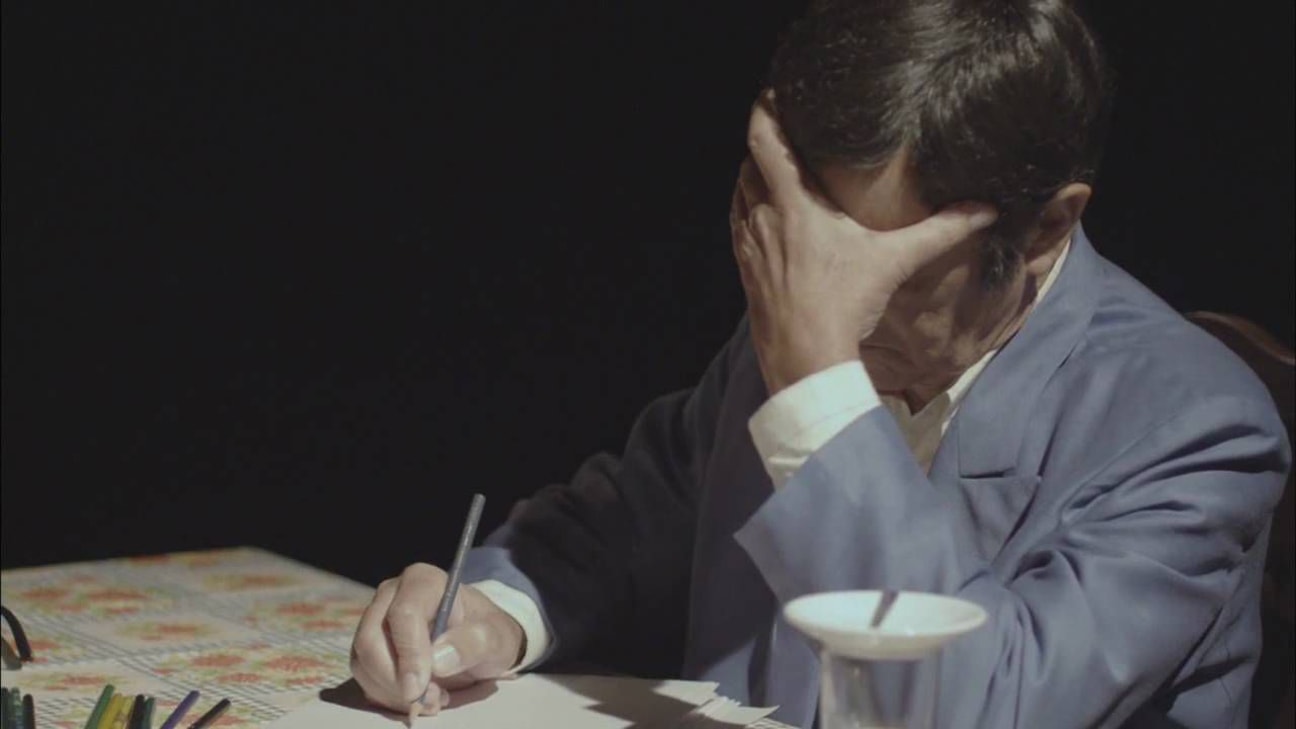 The medium did not respond, but the Brazilian Spiritist Federation, through its then-president Juvanir Borges de Souza, who published most of Chico Xavier’s works, sent a letter to the magazine stating that it used the royalties and remuneration from the works of Francisco Cândido Xavier for charitable purposes, as did other publishers, emphasizing that ‘the royalties are granted free of charge, aiming to make the Spiritist book quite accessible and thus contribute to the dissemination of Spiritist Doctrine.’
The same president of FEB, on the occasion of the I World Spiritist Congress, presented a ‘motion of recognition and gratitude to the medium Francisco Cândido Xavier,’ approved by the National Federative Council of FEB. In the document, the representative entities of Spiritism in Brazil expressed their gratitude and respect for the medium. Death
The medium died at the age of 92 due to cardiorespiratory arrest on June 30, 2002. According to reports from friends and close relatives, Xavier said he would pass away on a day when Brazilians were very happy and when the country was celebrating, so that his passing would not cause sadness: on the day of his death, the country was celebrating the World Cup victory.
The then-president of Brazil, Fernando Henrique Cardoso, issued a statement about the medium’s death: ‘A great spiritual leader and a beloved and admired figure throughout Brazil, Chico Xavier left his mark on the hearts of all Brazilians, who over decades learned to respect his permanent commitment to the well-being of others.’ The then-governor of Minas Gerais, Itamar Franco, declared three days of official mourning in the State and stated: ‘Chico Xavier expressed an immense kindness in his face, a reflection of his illuminated soul, which particularly shone through in his dedication to the poor, an image I will always cherish with great affection.’
According to the Military Police of Minas Gerais, 120,000 people attended the medium’s wake, which took place in Uberaba on July 1 and 2. In a truck from the Military Fire Department of the State of Minas Gerais, the coffin with the medium’s body traveled five kilometers to reach the São João Batista Cemetery in the same city, with over 30,000 people accompanying the procession on foot. When the coffin arrived at the cemetery, it was received with a rain of petals from 3,000 roses thrown profusely from a Federal Highway Police helicopter.
The Spiritist centers founded by Chico Xavier, Grupo Espírita da Prece and Comunhão Espírita Cristã in Uberaba, and Centro Espírita Luiz Gonzaga in Pedro Leopoldo, continue to operate and carry out many charitable assistance activities.
In 2014, the Federal Public Ministry of Uberaba entered into an agreement with the medium’s adopted son, Eurípedes Higino, which provides for the protection and cataloging of the medium’s collection.