



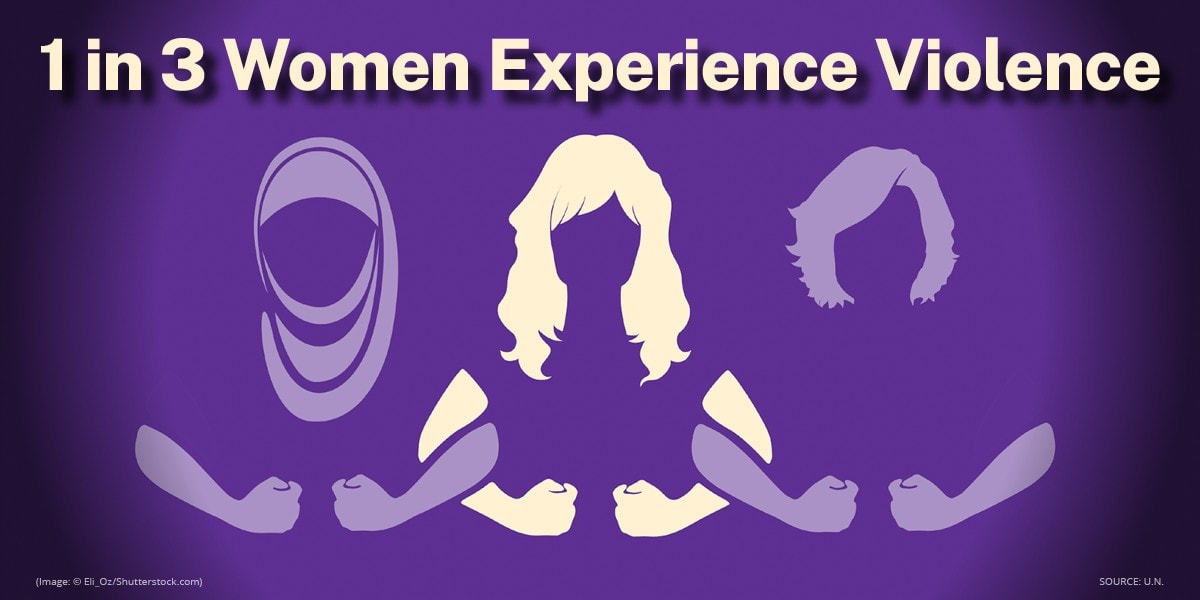
The United States is intensifying its efforts to end the scourge of gender-based violence at home and around the world.
This work is especially important, given that reported cases of physical and sexual violence against women and girls have dramatically increased during the COVID-19 pandemic. The problem has been termed the “shadow pandemic.”
In the first U.S. National Strategy on Gender Equity and Equality, released in November 2021, the White House announced it would strengthen national and global policies to eliminate all forms of gender-based violence, support survivors through comprehensive services, and increase prevention efforts.
Gender-based violence may have increased during the pandemic as an unintended consequence of stay-at-home orders and lockdowns. In many cases, measures intended to control the spread of COVID-19 isolated women and children with violent family members. At the same time, reduced funding often led to cuts in support services.
Reports of domestic violence and calls to domestic violence hotlines increased by 25% or more (PDF, 58 KB) in countries such as Argentina, France, and Singapore, according to the UN, and by up to 48% (PDF, 350 KB) in some East African countries. Increases in reported cases have also been observed in Canada, Germany, Spain, the United Kingdom, and the United States.
Worldwide, half of the women surveyed said they or someone they know experienced gender-based violence during the COVID-19 pandemic, according to a November 2021 report from the United Nations Entity for Gender Equality and the Empowerment of Women, also known as UN Women.
The Biden-Harris administration has stated that eliminating gender-based violence is a moral and strategic imperative. In addition to threatening the physical and psychological safety of individuals, gender-based violence harms families, communities, economies, and society as a whole.
In recent years, the United States has:
• Spent nearly $87 million between 2014 and 2016 to provide safe spaces, counseling programs, and other services in areas including Ethiopia, Iraq, Syria, Nigeria, Haiti, the Democratic Republic of the Congo, Myanmar, South Sudan, Mali, Somalia, the Central African Republic, Pakistan, the Philippines, and Yemen.
• Worked with the private sector to challenge harmful gender norms and provide resources to survivors of gender-based violence in 15 countries through the U.S. DREAMS partnership (Determined, Resilient, Empowered, AIDS-free, Mentored, and Safe).
• Integrated prevention and response to gender-based violence into economic growth projects around the world.
• Supported projects to strengthen prevention efforts, promote accountability, and address systemic barriers that survivors face, including those in the legal system.
• Partnered with UN agencies and other organizations to protect women in conflict zones and humanitarian contexts.
Preventing and responding to all forms of gender-based violence is a cornerstone of the U.S. government’s commitment to promoting democracy, advancing human rights, and promoting gender equality.
“Eliminating violence against women is a lasting value and goal that we must prioritize in everything we do,” President Biden said on November 24, 2021, the International Day for the Elimination of Violence Against Women. “Because only when women and girls can live free from the fear of abuse and violence can they unleash their full potential.”
Source: share.america.gov, by Leigh Hartman