



In light of the climate emergency, the debate on ways to promote sustainable development in the Amazon is gaining traction across various economic sectors — including tourism. In indigenous territories, a management model has emerged as an alternative for communities willing to welcome visitors while striving to keep the forest alive — community tourism.
In the municipality of Feijó, in the state of Acre, the people of the Shanenawa Village welcome travelers interested in immersing themselves among native peoples and learning about living in harmony with the forest. “In the past, we had our festivals where relatives came from other regions and ethnicities, and we held our cultural celebrations, but we didn’t have this experience with tourism yet. Tourism was not a reality in the village until three years ago,” said Chief Tekavainy Shanenawa.
In addition to the festivals, he highlighted that Brazilian and foreign visitors began coming to the Katukina Kaxinawa territory in search of ancestral knowledge of forest medicine through the use of ayahuasca, which was preserved during a 30-year ban. “The ancients kept the wisdom of medicine all this time. We were able to consecrate it again when I was already an adult with children, to practice what my grandfather taught me,” he noted.
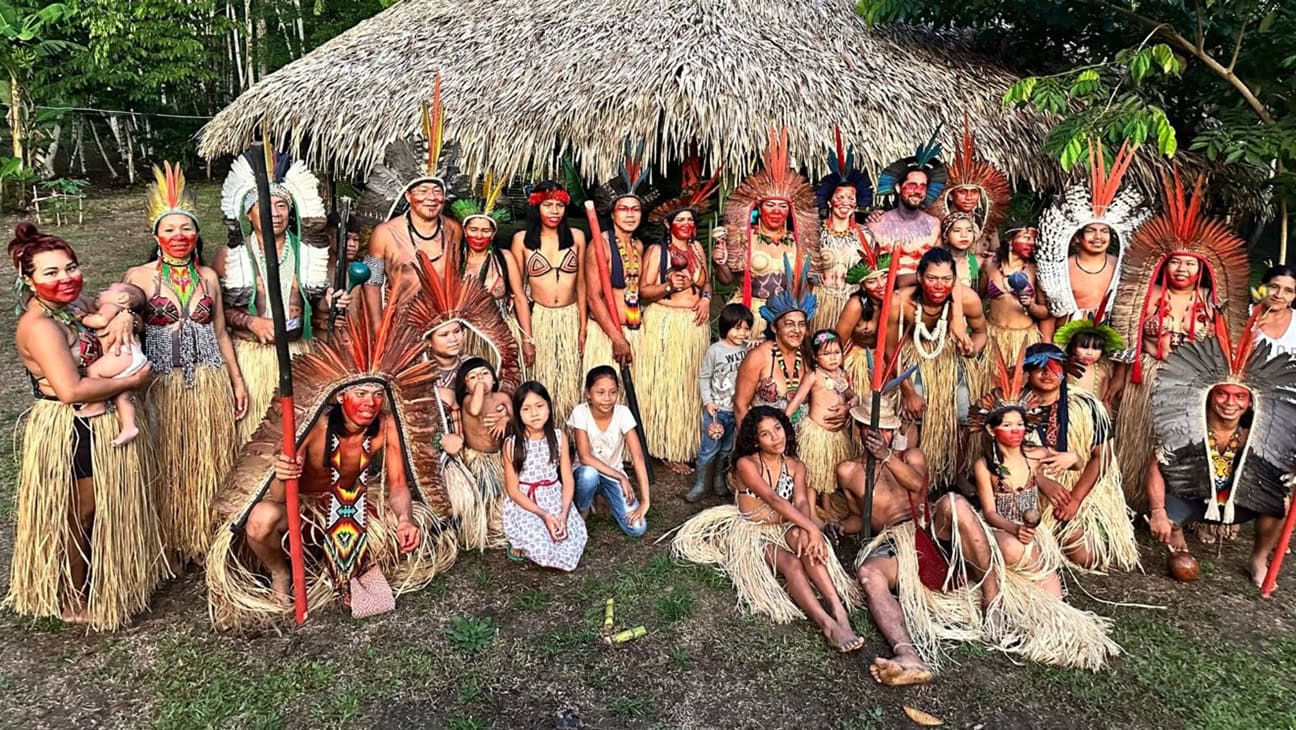 Before the introduction of tourism, the economy among the Shanenawa was based on subsistence agriculture — mainly bananas and cassava, hunting, and fishing, in addition to the production of handicrafts.
According to the chief, the trade of these products began to finance the purchase of animal protein and other necessities acquired in the city. The arrival of tourism was welcomed by the village members, who saw the opportunity to add value to their production and also strengthen their culture and teachings for future generations.
“When we consecrate the medicine, it strengthens us more and more, especially the youth, who are learning. When visitors arrive, we take pleasure in showing them how the medicine lives and how it is consecrated. And each time we consecrate it, we improve ourselves,” says Maya Shanenawa, the chief’s eldest daughter.
Tradition
Among the Shanenawa people, the firstborn becomes the new chief, regardless of gender. The vocation also prevails. In addition to Maya, recognized as vice-chief at the age of 29, the second daughter, Maspã Shanenawa, had her vocation recognized by the community and is already responsible for the ritual of consecrating the medicine.
For the Shanenawa, tradition is strengthened by tourism — young people choose to stay in the forest and preserve their culture, with indigenous people leading their own narratives.
“People see in books, but books don’t tell the story right. Today, every tourist who arrives in my village has the opportunity to hear the story directly from us, the story I heard from my grandfather,” said Chief Teka.
Partnership
The active participation of the village and the fair sharing of benefits are the main principles of community tourism, 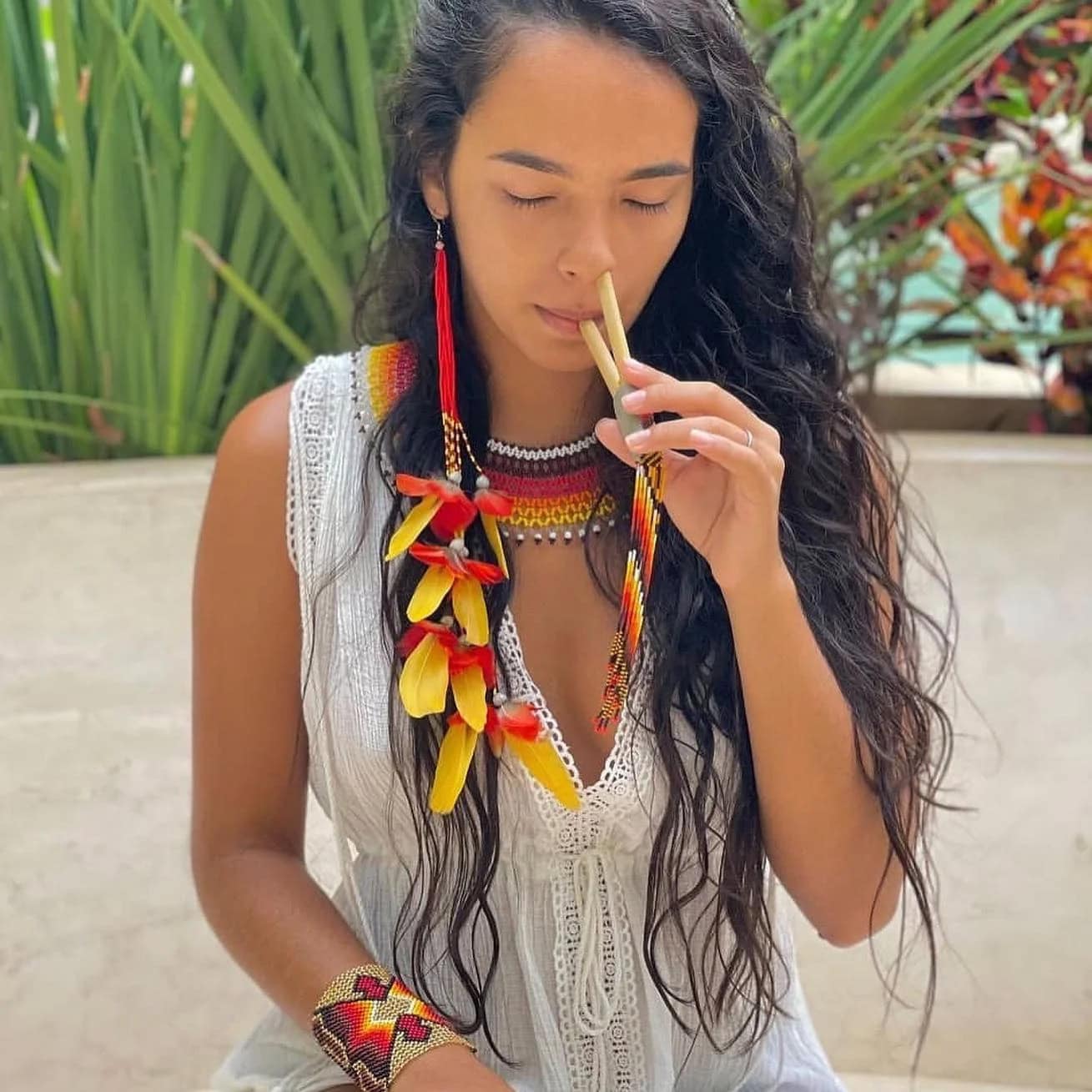 but they are not always observed. A diagnosis from the Ministry of Development, Industry, Commerce, and Services shows that partnerships offered to indigenous peoples often disadvantage the community.
The Shanenawa are aware of this issue and seek partnerships to boost tourism. One of the companies that works directly with the indigenous people has appointed representatives from the community itself.
Tuwe Shanenawa, one of the community members who works directly with travelers, says he is proud to show the forest and present their ancestral knowledge to outsiders. “I always say that no one arrives here by chance, especially travelers. Somehow, it’s a calling for their life — for the medicine or just for everyday life, but never by chance. Of course, they come to visit, but it goes far beyond what people sometimes expect, because of the spiritual connection.”
In addition to Tuwe Shanenawa, everyone who works in tourism in the village strives to enhance the visitors’ experience, whether through natural food harvested and prepared right there in the forest, or through tours in the Amazon, passing by the majestic samaúma — a tree that can reach 70 meters in height and live for 120 years — or through herbal and clay baths that prepare the spirit for the consecration of the medicine.
Challenges
According to Pedro Gayotto, co-founder of the social tourism company that organizes activities with the Shanenawa people, there is still demand from tourists seeking ethnic tourism, but they do not know how to get there.
“Most travelers who take itineraries in indigenous territories with us say: ‘I have been looking for an indigenous trip for a long time and didn’t know how; I didn’t know where to start, and I found you through someone’s recommendation, on Google.’ This shows that the demand exists; people just don’t know how to get there,” he emphasized.
In addition to the challenge of bringing travelers to the destinations, a significant number of other obstacles need to be overcome. The reality in each indigenous community is different, but there are common issues. One example is the waste generated by tourism. “We understand that burning waste is not the best solution, and we also don’t want to 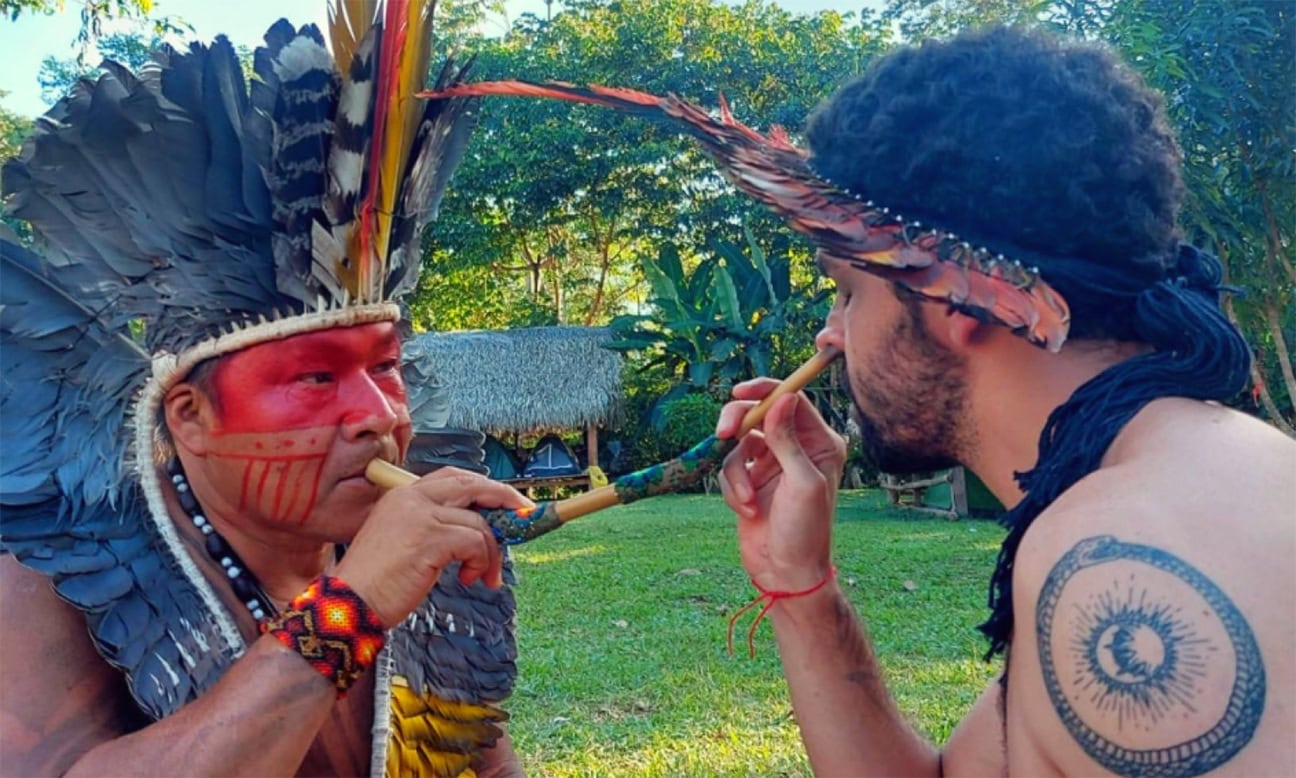 take it somewhere else. So we need help to find a solution,” warned Tuwe Shanenawa.
Task Force
The disposal of waste left by tourism was one of the topics discussed in the task force held from December 2 to 6, with the participation of representatives from the federal government and the United Nations Development Programme (UNDP). The Shanenawa had the chance to present their demands and discuss with institutions efforts to regulate community tourism.
Guided by the rules established by the National Foundation of Indigenous Peoples in 2015, tourism on indigenous lands is still poorly regulated by federal agencies. Only 39 itineraries are registered across the country, of which 14 focus on sport fishing.
According to the general coordinator of Sustainable and Responsible Tourism at the Ministry of Tourism, Carolina Fávero, this lack of information has already been identified by the ministry, which is currently working on mapping these initiatives. More than 150 villages with tourism activities have registered so far, she highlighted.
A project was created in partnership with the Federal University of Rio Grande do Norte — named Brazil Responsible Tourism — she said, which focuses on indigenous communities. It is expected to include training in responsible tourism and community tourism, aiming to support the development of official visitation plans, materials, and mapping efforts, which, according to Fávero, is already underway.
*The reporter traveled at the invitation of the Samaúma Institute and the Ministry of Development, Industry, Commerce, and Services.
Source: Agência Brasil