



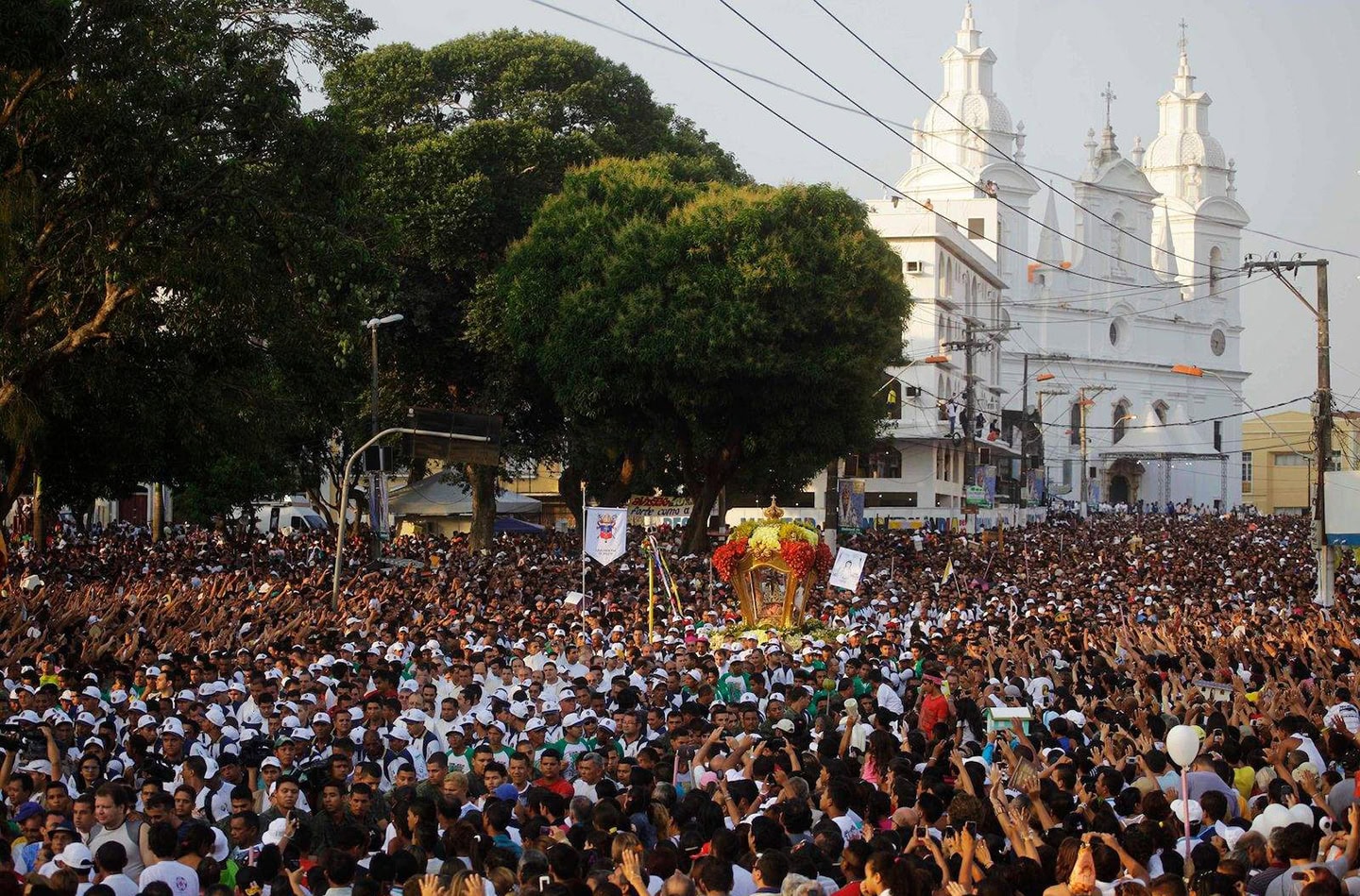
Considered one of the largest religious celebrations in the world, it takes place every year in Belém, the capital of Pará, in October, attracting around 2 million faithful to honor Nossa Senhora de Nazaré. A UNESCO World Cultural Heritage site, this festival lasts several days, characterized by the grandeur of the faith that moves people and the energy that envelops the city during the Círio. It is compared to Christmas in Pará, where residents gather, celebrate, and hold banquets after the celebrations with typical local foods.
The festival is a procession where the pilgrim image of Nossa Senhora de Nazaré, affectionately called Naza or Nazinha by her devotees, is carried from the Basilica (where it remains all year) to the Nazaré Sanctuary Square. The Círio de Nazaré features several moments of homage: the translado, the first journey made by the saint’s image, which travels on top of a truck, from the Nazaré Basilica to the Church of Nossa Senhora das Graças (main church), located in Ananindeua, a neighboring municipality to Belém, where it spends the night; the road pilgrimage, after the nighttime vigil, the saint’s image proceeds to the village of Icoaraci, in Belém, accompanied by ambulances and official authority vehicles.
Next, the fluvial pilgrimage, where the image travels by boat across the Baía do Guajará, from Icoaraci to the city port dock in Belém, accompanied by canoes, jet skis, boats, and decorated yachts; the motorcycle pilgrimage happens right after the fluvial círio and the image departs from Estção das Docas, heading to Colégio Gentil Bittencourt, accompanied by a large number of decorated motorcycles, which, to the sound of horns, announce the passage of the saint; the trasladação, a procession that takes place on the night before the Círio itself, where the image is carried to the Cathedral of the See on a marble tied to a 400-meter rope, carried by people.
Finally, the highlight is the Círio de Nazaré procession. The route begins with the celebration of a mass and, afterward, the saint’s image is led by the archbishop to the headquarters, to follow the path again to the basilica. Many devotees form a human chain along the rope. Some walk barefoot, others carry crucifixes, images of the saint, and/or objects related to a grace received, as a form of gratitude or request. The saint is on public display for a week in the sanctuary square.
Over the years, the Círio de Nazaré has grown in magnitude and importance, becoming a living testament to the rich spirituality and culture of the region. This celebration involves a series of events, rituals, and manifestations that attract pilgrims from across the country, transforming Belém into a meeting point for Brazil’s cultural and religious diversity. Faith intertwines with secular traditions, creating a unique experience of devotion that echoes through generations.
When and where does it take place?
 The Círio de Nazaré takes place annually in October, culminating on the second Sunday of the month. Belém, with its rich culture and spirituality, provides the perfect setting for this unique manifestation. Roma Fluvial or Círio Fluvial The Fluvial Pilgrimage is one of the most beautiful moments of the festival. Pará is known for its people who live along the margins of its rivers and work on them daily for their sustenance, the so-called riverside dwellers. This pilgrimage was created so that they can pay homage to Nossa Senhora, give thanks for all the graces received, and ask for blessings and the renewal of faith and hope in better days. The saint’s image travels by boat across the Baía do Guajará, from the city of Icoaraci to the port pier in the city of Belém. This route is made with canoes, jet skis, boats, decorated yachts, and many colorful balloons.
Candle Procession
The Candle Procession is the highlight of the festival. Millions of faithful follow an immense rope that guides the image of Nossa Senhora de Nazaré through the streets of Belém. It is a moment of devotion and emotion that unites the community in a unique spiritual experience. The devotees form a large human chain, and some walk barefoot, others carry crucifixes, images of the saint, and/or objects related to a grace received, as a form of gratitude or request. A great spectacle of faith and devotion.
Typical Foods
Don’t be fooled, a great festival like the Círio de Nazaré also encourages the preparation of many typical dishes, since gastronomy is an attraction in itself in Belém. During the festival days, food is sold at various points in the city, but it is concentrated at the Mercado do Ver-o-Peso, a well-known tourist spot in the city.
Source: www.visitbrasil.com