



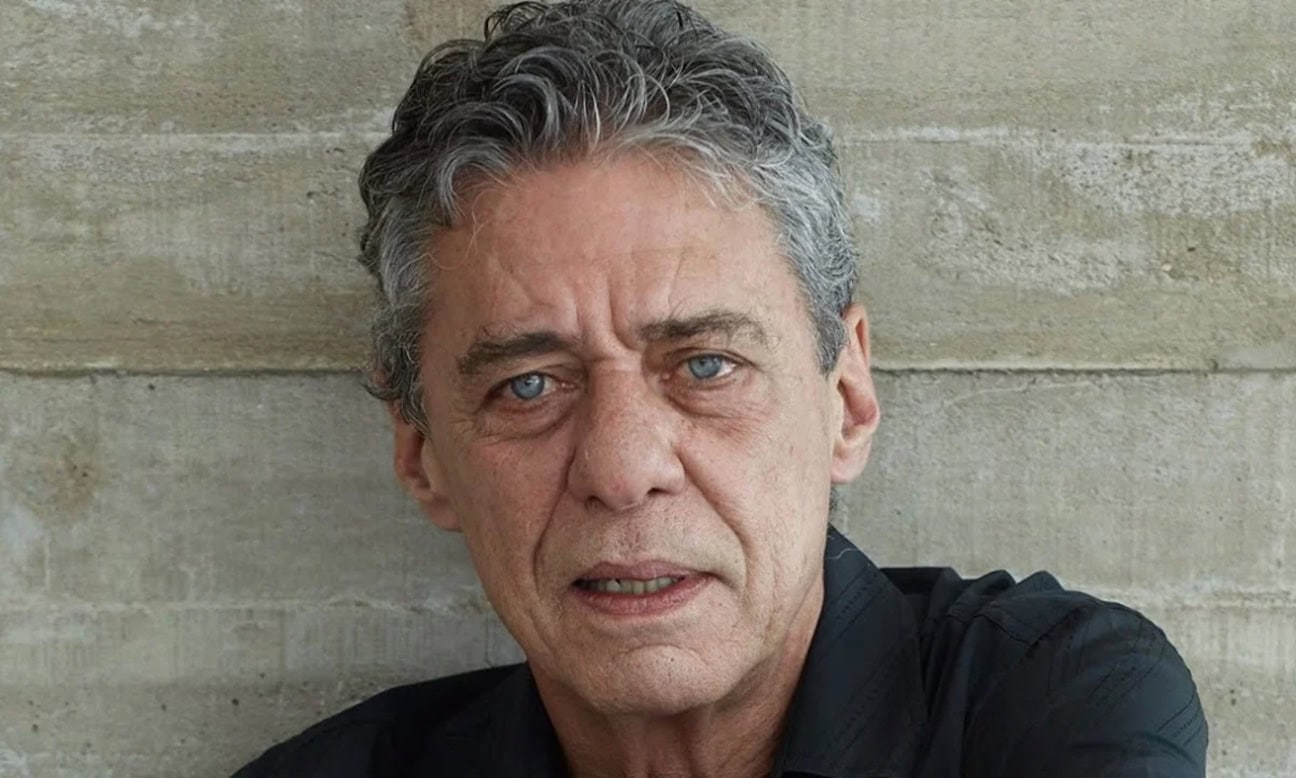
With a career spanning fifty-eight years, Chico Buarque has composed 537 songs, recorded 1,302 tracks, released 50 albums (solo or collaborative, studio or live), written four plays, a novella, a short story collection, and six novels. His next novel, “Bambino a Roma,” is set to be published in August. This impressive body of work defines the legacy of the composer, playwright, and writer, as he celebrated his 80th birthday with family in Paris (on June 19).
The extensive work of Buarque is the focus of more than a dozen books, some of which are being released during the octogenarian celebrations. Among the authors is Adélia Bezerra de Meneses, a professor of literary theory at the State University of Campinas (Unicamp) and the University of São Paulo (USP). She is the author of three books about the artist, the most recent being “Chico, Buarque or the Resistant Poetry—Essays on Recent Song Lyrics,” which is currently in its final stages of completion.
Meneses was a student activist in the 1960s, involved in adult literacy using Paulo Freire’s method in a working-class village in Osasco. She participated in meetings of Ação Popular and attended Brazilian Popular Music (MPB) festivals at the Paramount Theater (TV Record) with “the same passion.” She earned her master’s and doctorate under the guidance of Antonio Candido, a professor in the Department of Literary Theory and Comparative Literature at the University of São Paulo (USP). Her thesis was published in the book “Desenho Mágico—Poetry and Politics in Chico Buarque,” which won the Jabuti Prize in 1982 in the Essay category.
In an interview with Agência Brasil, Meneses explains why Chico Buarque’s songs deserve literary study: “From my own experience, I can say that not every song lyric can be treated as a poem, but Chico’s songs withstand this approach, which is neither superior nor inferior to musical analysis: it is a different approach. It is also important to note that there are distinctions among composers, and Buarque, according to his own statements, leans more towards the lyrics than the music.”
In her analysis of the artist’s work, the writer highlights that Chico Buarque’s production can be categorized as “resistant poetry,” encompassing nostalgic lyricism/love lyricism, utopia, and critique. She emphasizes that this classification does not imply “a reduction to songs with explicit social themes.”
Source: Agência Brasil