



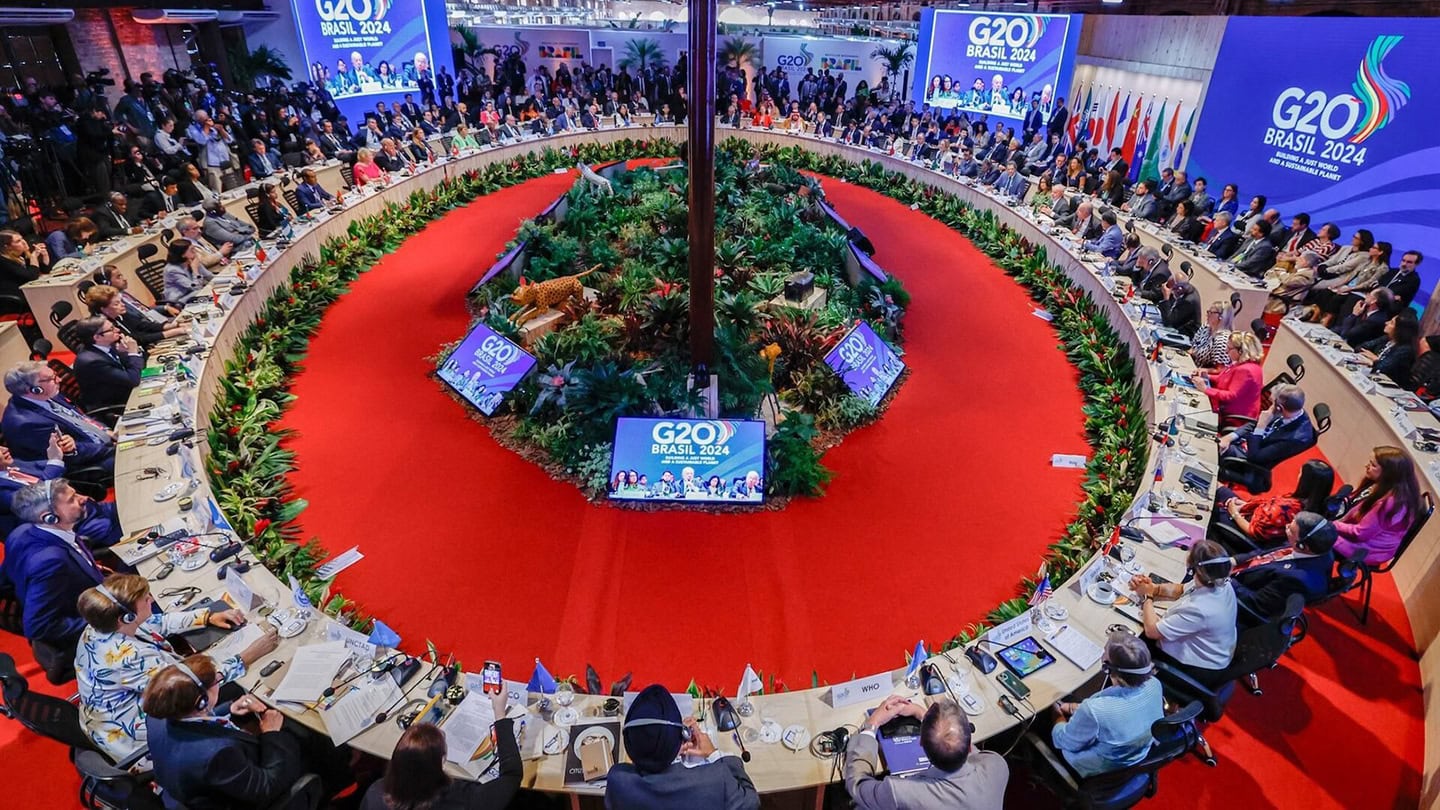
As Brazil prepares – for the first time – to host global leaders at this year’s G20 summit, most Brazilian adults are optimistic about their country’s status as an international power. Approximately four in ten say that Brazil will eventually become one of the world’s most powerful nations, and about a quarter say that Brazil is already among the major powers, according to a recent study conducted by the Pew Research Center.
Brazilian views on their country’s international positioning are more positive than in 2017, the last time the same study was conducted. At that time, Brazilians were decidedly more pessimistic about their country’s potential to become a top international power.
Brazilians have also become more optimistic regarding domestic issues. The proportion of Brazilians who trust the national government to do what is right for the country has nearly doubled, from 23% in 2017 to 47% today. The proportion of those satisfied with democracy in Brazil has also increased from 28% to 44% during the same period. During the 2017 survey, the country was embroiled in a long-running corruption investigation known as “Operação Lava Jato” or “Operation Car Wash,” which implicated a large number of politicians and high-level executives, including directors of a major state-owned energy company.
Positive views of certain groups and institutions in Brazil accompany the relative optimism of the public. Majorities say that large foreign companies, the police, the military, financial institutions, religious leaders, and the media have a good influence on how things are going in Brazil. But Brazilians are divided on whether the judiciary system has a positive or negative impact on the country.
Views of some institutions have changed significantly since 2017. Brazilians are now more likely to say that financial institutions, the police, and the judiciary have a good influence in the country. On the other hand, views on the media have become more negative. The survey was conducted before Brazil’s Supreme Court upheld a ban on the social network X.
At the same time, Brazilians say their nation is divided among social groups – and see especially strong conflicts between supporters of different political parties. Brazilians also see divisions among different racial and religious groups.
Support for Brazil’s president is also lukewarm
About half of Brazilians (48%) have a favorable view of President Luiz Inácio Lula da Silva. This is higher than the proportion that has a favorable view of his predecessor, opposition leader Jair Bolsonaro (40%). The survey took place before Brazilian authorities accused Bolsonaro in March of falsifying his COVID-19 vaccination records and in June of diverting jewelry he received from foreign governments while serving as president.
Key findings of this study
Brazilians tend to say that their country’s influence in the world has remained the same in recent years; 42% hold this view. Smaller proportions say it has become stronger (26%) or weaker (27%).
About six in ten Brazilian adults (59%) say that representative democracy is a good way to govern. This is more than the proportions that say the same about other political systems we asked about – but a relatively low level of support for representative democracy compared to those measured in other nations.
Brazilians view their peers with distrust. Only 17% say that most people, in general, can be trusted, while 81% say they cannot. And 24% think that people try to help others most of the time, while 74% say that people basically only take care of themselves. Men are more likely than women to say that other people can generally be trusted.
About one-third in Brazil say that their country has become more democratic (32%) since Lula returned to the presidency. In comparison, only about one in five Brazilians (21%) say their country has become less democratic; 42% say the state of democracy has not changed.
The Pew Research Center survey was conducted with 1,054 Brazilian adults, through in-person interviews from January 26 to March 11, 2024.
Source: Pew Research Center