



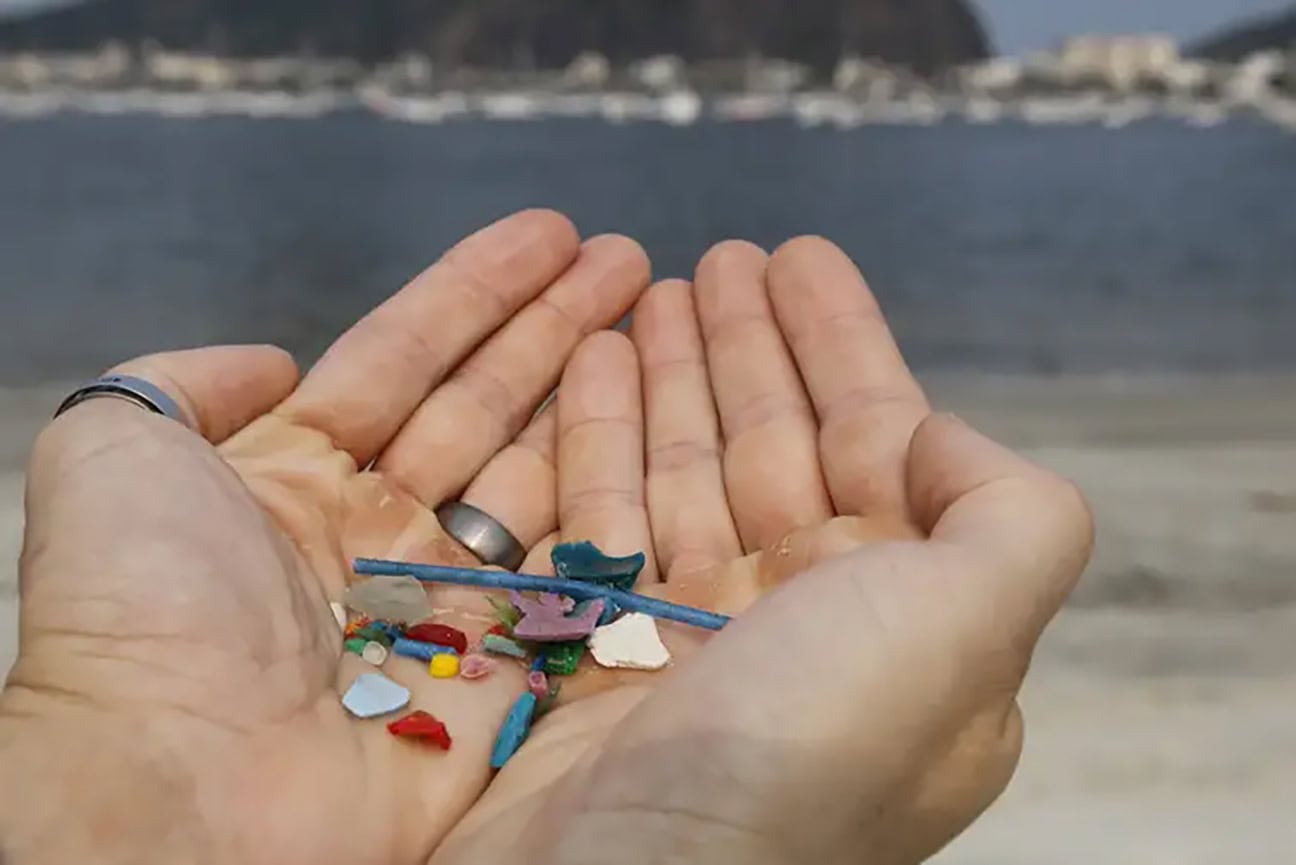
Brazilian researchers have developed a type of bioplastic that degrades quickly when composted or discarded in the environment. The material is innovative because it uses small encapsulated bioactive particles from functional foods like carrot and chia. Unlike synthetic plastic, it does not leave residues that pollute the environment, harming life in the oceans and even human health.
The research is coordinated by Maria Inês Bruno Tavares, a professor at the Institute of Macromolecules at the Federal University of Rio de Janeiro (UFRJ), and has had two recent articles published in the international scientific journal Journal of Applied Polymer Science, including a cover story in May.
Plastic pollution is one of the greatest challenges of our time, according to the United Nations (UN). Around the world, one million plastic bottles are bought every minute, and about five trillion plastic bags are used each year. Half of all plastic produced is intended for single-use applications, used only once and then discarded.
Plastic is made up of polymers, which are large molecules. To decompose in the environment, Professor Tavares noted, these molecules are fragmented into smaller particles until they reach what is known as microplastic. Microplastics are in the air, in the water, and end up being absorbed by plants, ingested by animals and humans, and can cause allergies and health damage.
“Every polymeric material — whether biodegradable or synthetic — generates microplastic to degrade. The difference between the packaging we are making and traditional packaging is that ours will generate some microplastic, and all of it will be consumed by microorganisms. The synthetic packaging will not. It will generate microplastic, and the microplastic will remain,” she observed.
Under ideal composting conditions, the researcher added, the developed bioplastic material loses 90% of its mass in 180 days and, even if discarded in the environment, degrades quickly. Since it uses functional foods in its composition, the material degrades in the environment even faster than current compostable plastics.
The fate of plastics
This bioplastic material, Professor Tavares said, aims to minimize the use of synthetic polymers. Unlike synthetic polymers, bioplastic cannot be recycled. However, it meets the demand for a large portion of plastic use, which ends up being used only once.
“Synthetic polymers are not going to disappear,” says the professor. Some materials cannot be replaced, such as parts for airplanes or cars or even safety equipment like helmets. They will continue to be made from synthetic polymers, but we can change a large part of what we consume daily. Most packaging can be made from biodegradable polymers,” she argued.
For humanity to better deal with the amount of waste produced and reduce microplastics in the environment, “everything that can be biodegradable should be biodegradable,” she added, and synthetic materials should then be disposed of properly, reused, recycled, or incinerated, as in the case of medications and those used in hospitals.
The research is funded by the Rio de Janeiro State Research Support Foundation and is currently being patented. The team is also seeking companies interested in producing bioplastics.
Source: Agência Brasil