



Brazilian table tennis player Hugo Calderano won the Table Tennis World Cup in Macau, China, on April 20. He is the first non-Asian and non-European athlete to win the title.
“It’s an incredible feeling to win this title,” Calderano said in an interview with the International Table Tennis Federation after the match.
“I didn’t start off very comfortably. I lost the first set, but I managed to make some tactical adjustments, and I was also mentally prepared when the opportunity arose. I’m also proud to be able to represent Brazil so well and bring a title of this magnitude to our country,” he said.
In the final, Calderano defeated China’s Lin Shidong, the world number one, 4 sets to 1. Along the way, he overcame the Chinese world number one, Wang Chuqin, and the Japanese number three, Tomokazu Harimoto.
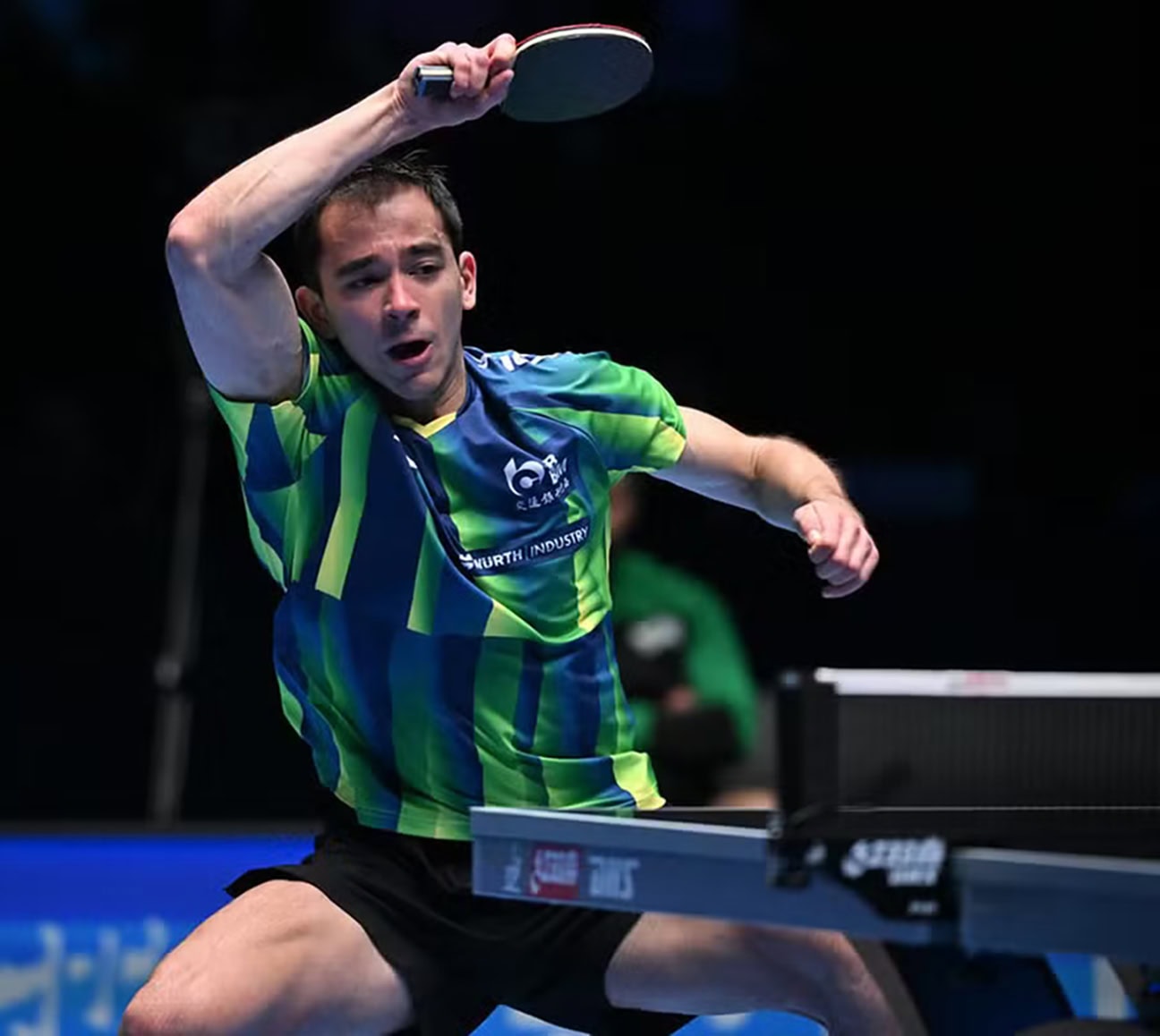 Also after the match, Calderano recalled the difficult period he went through after the 2024 Paris Olympics, when he reached the semifinals and was close to a medal, but lost to Sweden’s Truls Möregårdh in the semifinals and lost the bronze to France’s Felix Lebrun. Even so, on that occasion, he achieved the best performance by an athlete from the Americas in the history of the sport in the competition.
The result elevates the Brazilian from fifth to fourth place in the world ranking. He is a three-time individual champion at the Pan American Games, an Olympic semifinalist, and has 25 titles on the international table tennis circuit.
Government Sponsorship
Brazilian President Luiz Inácio Lula da Silva paid tribute to the athlete, who has been receiving support from the federal government’s Bolsa Atleta program for nearly 15 years.
“Incredible performance by the world top 5 athlete,” the president wrote in a social media post. “In a tournament with 48 of the best international competitors, the Brazilian took a player from the Americas to the final and to the title for the first time,” he stated.
The Bolsa Atleta is an initiative linked to the Ministry of Sports, created in 2005, that sponsors high-performance individual athletes and para-athletes in national and international competitions. It ensures minimum conditions for them to dedicate themselves exclusively and calmly to training and local, South American, Pan American, world, Olympic, and Paralympic competitions.
Source: Agência Brasil