



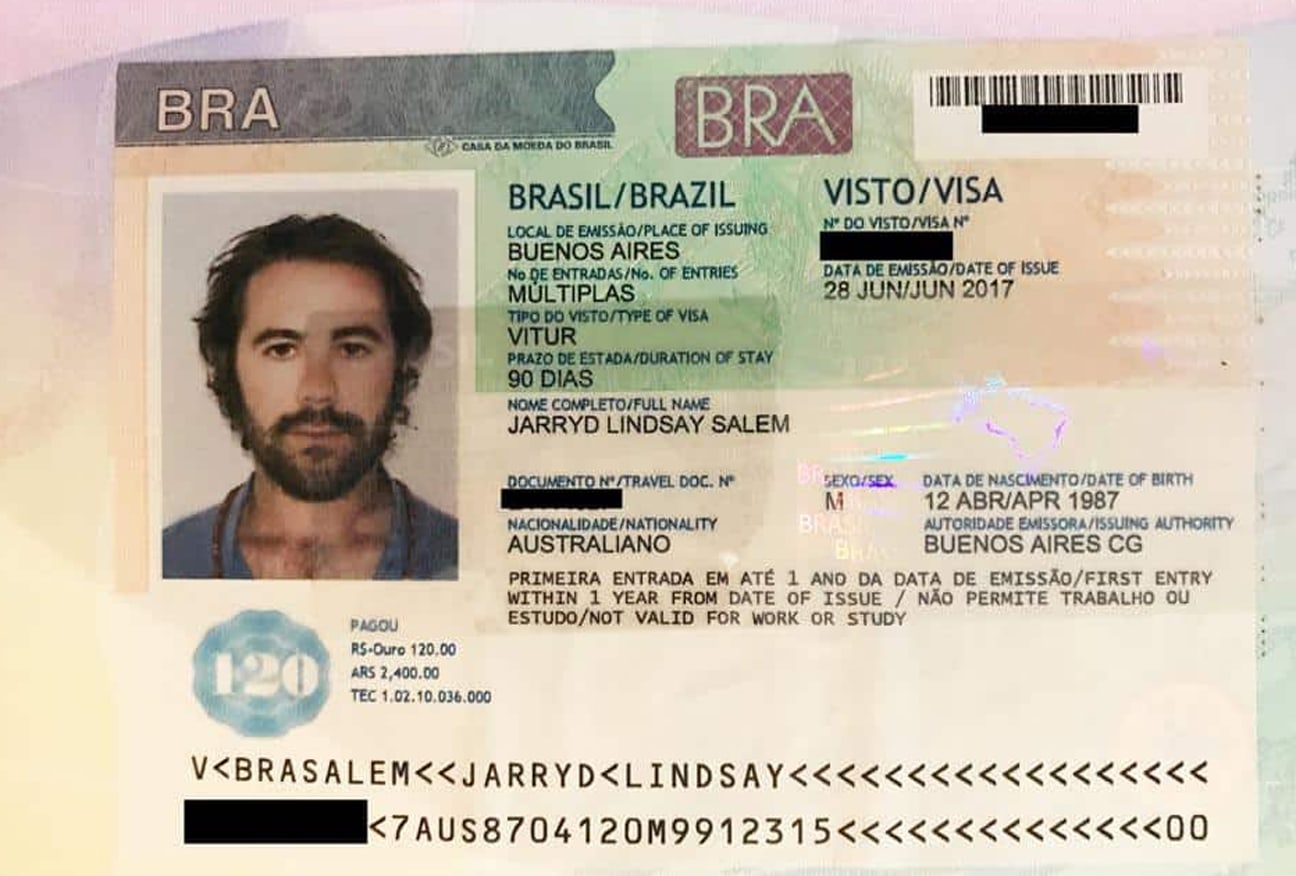
The administration of Luís Inácio Lula da Silva determined on Wednesday (8) the end of the visa exemption for citizens of the United States, Canada, Japan, and Australia. According to the Brazilian newspaper Folha de São Paulo, the government has already informed the Brazilian embassies in these four countries about the measure, which has not yet come into effect.
The visa exemption for citizens of these four countries was granted by the government of former president Jair Bolsonaro in 2019, who argued that the decree would stimulate tourism in Brazil. The visa exemption applies to people traveling for tourism, business, transit, and artistic or sporting activities, for stays of up to 90 days.
However, Bolsonaro’s decision broke with the principle of reciprocity historically adopted by Brazilian diplomacy since the countries involved did not offer the same benefits to Brazilian tourists.
Lula’s transition team, as soon as he won the elections, began reviewing the decree and considering the resumption of the visa requirement for the following reasons:
First, the current administration believes that, without reciprocity, the visa exemption weakens Brazil in relation to the countries involved.
Second, according to the analysis conducted on the impact of the measure on Brazilian tourism, the visa exemption for these countries did not increase tourism in Brazil.
The administration compared the year 2019, when the visa requirement was removed, with the previous year and with 2022, when the restrictions due to the coronavirus pandemic had been lifted.
In the case of the United States, the increase in the number of tourists from 2018 to 2019 was 12%, from 391 thousand to 439 thousand. In 2022, 355 thousand Americans visited the country, a number below the pre-pandemic level.
In Japan, there was a 4% decrease between 2018 and 2019, from 59 thousand to 56 thousand. In 2022, there were 16.8 thousand tourists.
According to Folha de São Paulo, the Brazilian Ministry of Foreign Affairs is already communicating to the representations of these four countries that their citizens will face the same rules established for Brazilians. However, before these new rules come into effect, the Brazilian government is granting a few weeks for the embassies to reorganize.