



Recognized as Brazil’s intangible cultural heritage since 2004, the viola de cocho is one of the most authentic symbols of the Pantanal region’s identity. Carved from a single wooden log, the instrument features in manifestations such as cururu and siriri, songs and dances that span generations in Mato Grosso and Mato Grosso do Sul.
The artisanal crafting is registered by the National Institute of Historic and Artistic Heritage (Iphan) as knowledge to be preserved. No two violas are alike: each craftsman shapes the piece according to the arm and playing style of its user. Previously made with animal gut strings, they now use nylon but continue to produce the peculiar sound that distinguishes the instrument.
The Craftsman
One of the main guardians of this tradition is master Alcides Ribeiro dos Santos, founder of the Museu da Viola de Cocho, in Santo Antônio do Leverger (MT), about 40km from the capital Cuiabá.
A descendant of four generations of violeiros and cururueiros, Alcides learned as a young man to transform logs into music.
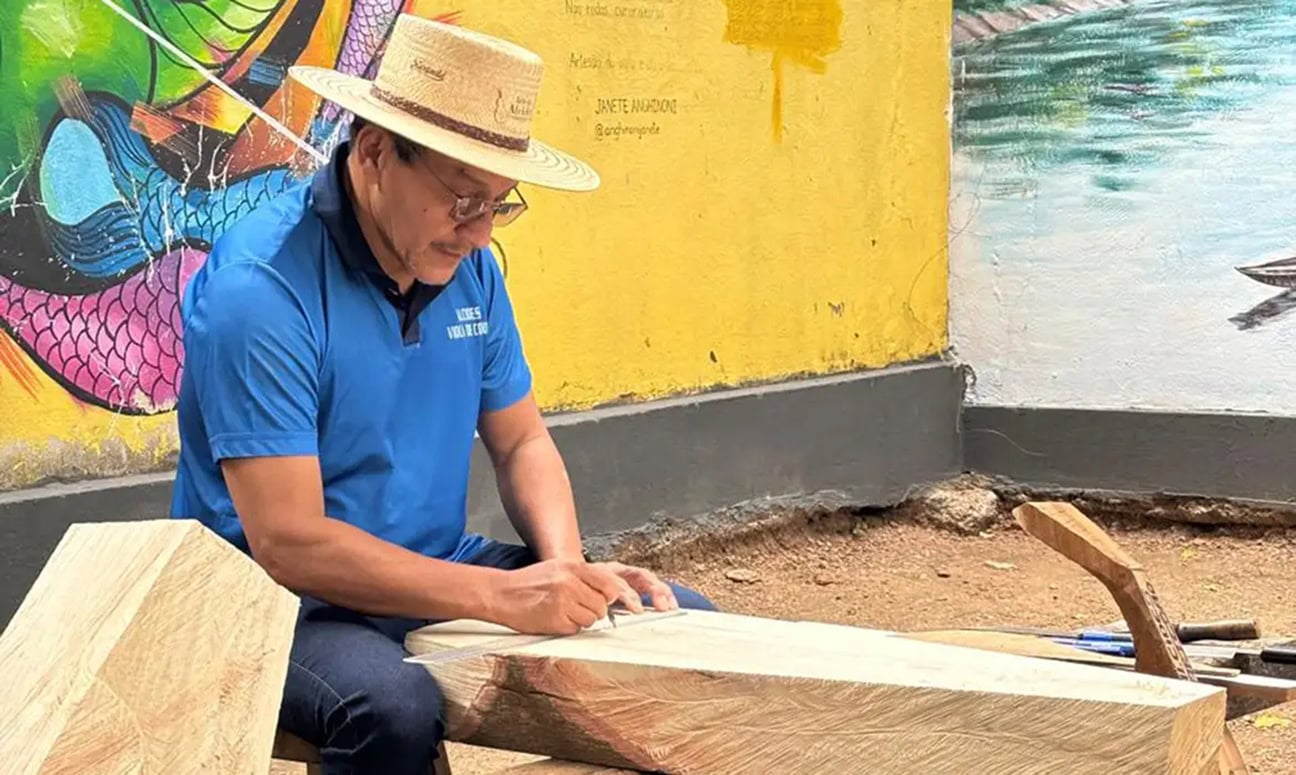 “Each instrument is unique. The wood holds the soul of the Pantanal,” says the craftsman, recognized as Master of Popular Culture of Mato Grosso since 2012.
In the family-maintained atelier, Alcides produces violas for musicians and decorative pieces. The production process for a piece can take up to ten days, from carving to finishing. According to him, the tradition was consolidated from adaptations of the Portuguese guitar.
“It comes from the Portuguese guitar. The shape is different, but the tuning is the same. Here, wood was abundant, and with the tools used to hollow out canoes and troughs, the viola emerged. Researcher Roberto Corrêa classified it as a velvet sound, because it’s a closed instrument that produces a wonderful sound,” he explains.
The Viola Player
Another important figure in keeping the Pantanal tradition strong is Roberto Corrêa—violeiro, composer, and researcher. A native of Minas Gerais and resident in Brasília since 1975, he helped spread the viola de cocho in universities, concerts, and festivals in and outside the country.
In an interview with TV Brasil, Corrêa recounts that he met Alcides as a child, when he was in Mato Grosso researching the viola de cocho in 1979.
“I have a viola built by Manoel Severino, who was a partner of Alcides’ father, Seu Caetano. I met Alcides when he was still very little, learning from them the art of building the instrument. It’s a very singular instrument, and playing this viola brings back memories of dear people I met back then, in the 1970s,” he says.
For the violeiro, one of the best descriptions of the sound of this peculiar instrument was given by Manoel de Barros. “Manoel de Barros, a poet from Mato Grosso do Sul in the Pantanal, has a poem that speaks of the dripping sounds of the violas de cocho. So that’s it, a sound of waters,” he describes.
Corrêa has published, among others, the book Viola Caipira, the first in Brazil about the instrument, and A Arte de Pontear Viola, in which he presents his teaching method. This Friday, his new EP, “Solos de Unha e Carne”, was released on all digital platforms.
Source & photos: Agência Brasil