



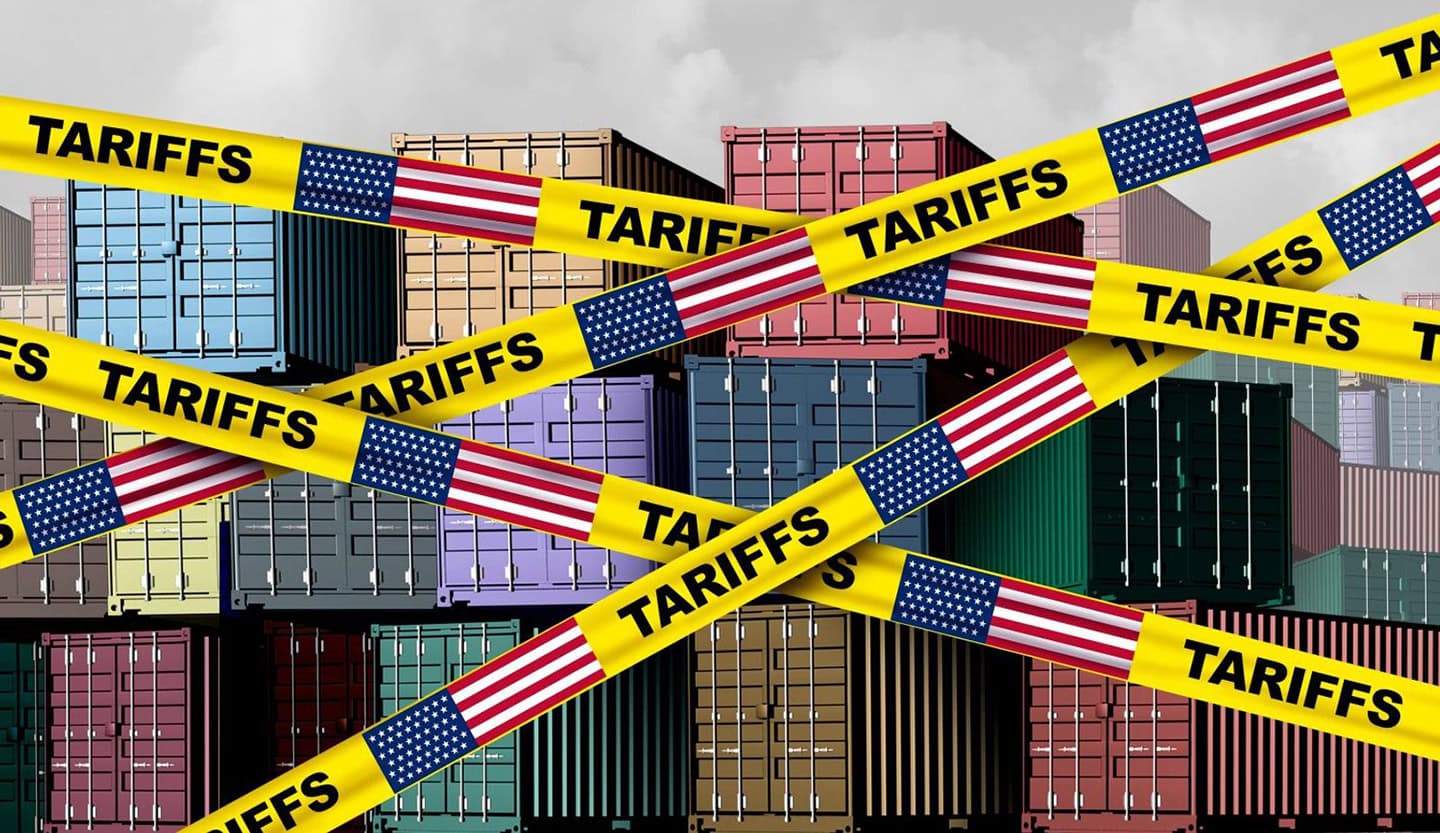
For months, consumers have been hearing from manufacturers and retailers that President Trump’s flood of new tariffs on virtually all imports would cost them dearly. But that hasn’t happened, and the full impact has yet to materialize.
The largest tariffs continue to be delayed
In April, Trump imposed new tariffs on almost everything the US imports, with Chinese products facing rates of up to 145%. The stock market plunged on the news, and Trump paused the plan for 90 days. And when the 90th day arrived in July, he extended the pause again until this Friday, August 1st.
In the meantime, tariffs were set at 30% for Chinese imports and at least 10% for essentially the rest of the world, while the Trump administration tries to negotiate individual trade deals with each country. On Sunday, Trump shook hands with the President of the European Commission after agreeing to the terms of a new deal. Two days of US-China negotiations ended on Tuesday without a definitive agreement.
Companies stocked up on products to avoid paying more
Given Trump’s long-standing campaign in favor of tariffs, some companies began stocking up on products as early as last winter — in the hope of avoiding new import taxes for a while.
Best Buy rushed imports of electronics from Asia. The American Fireworks Company, in Hudson, Ohio, stocked up on fireworks for July 4th, almost all made in China. Pet accessories seller Barton O’Brien, from Kent Island, Md., borrowed money to bring in as many harnesses, collars, and other supplies from China as he could store.
“We had dog life jackets in the bathroom,” said O’Brien, whose company BAYDOG sells in hundreds of stores, to NPR in May. “Our warehouse was packed. We had to rent a container and put it in the back.”
In fact, so many importers rushed their shipments that ports in winter looked more like peak season — as if another Black Friday and Christmas were coming — than the typical post-holiday lull.
“Many of the things consumers have bought so far came from that first wave,” said Zac Rogers, a supply chain management expert at Colorado State University, who tracks shipping and storage data. “All of that arrived before the tariffs, which is one of the reasons we haven’t had really high costs yet.”
Importers are holding back shipments
Importers were shocked by Trump’s April announcement, which added high tariffs not only to China — for which they were prepared — but also to Vietnam, Mexico, and other major trading partners.
Trump argued that foreign nations would pay his tariffs, but in practice, it was American importers who suddenly faced new fees at customs. Many responded by canceling shipments or holding them abroad until the tariff plan becomes clear. And that means those more expensive imports simply haven’t arrived yet.
“Importers are scared,” said Patrick Allen, a Columbus, Ohio-based importer of French wines. “They don’t know when the other shoe will drop.”
His customers are “sitting on their hands,” said Allen, instead of placing their usual orders for fall and winter holidays. Pet supplies retailer O’Brien canceled his order of dog sweaters from India. Hair clip seller Rozalynn Goodwin, from Columbia, S.C., stopped her shipments from China.
Many companies are absorbing the new costs
Suppliers and retailers who are paying higher tariffs — the current 10% for most imports or 30% for Chinese ones — hesitate to pass on the full cost to inflation-weary consumers.
“I think we raised [prices] about 10% and absorbed the rest,” said Bobby Djavaheri, whose Los Angeles-based company Yedi Houseware imports air fryers and waffle irons from China. “It’s just impossible to pass on everything because people won’t buy the product.”
Major automakers are largely absorbing the new tariffs as a hit to profits. General Motors reported last week that tariffs cost the company about $1.1 billion in the last quarter. Stellantis — whose brands include Chrysler, Jeep, Dodge, and Ram — says it paid more than $300 million in tariffs and produced fewer vehicles overall to avoid paying even more.
Industry data shows that car prices have risen less than usual.
Tariff delays = price delays
Trump’s 90-day pause in the summer gave importers a new window to stock up at predictable, lower tariffs. In fact, the second extension to August 1st allowed many stores to replenish holiday stocks, avoiding particularly painful price increases during the key shopping period.
Supply chain professor Rogers believes that was the Trump administration’s idea, as retailers needed more time to get holiday stock at lower tariffs.
“It reminded me a lot of when I assign homework due at the end of class,” he said, “and there are five minutes left, and no one is done, and I say: ‘Okay, you can take it home.’ That’s sort of what happened with the tariffs and the extensions.”
But, of course, not everything needed for the holiday season will arrive in the US before August. Plus, Rogers says storage costs in warehouses are also rising. In June, his data showed that demand for storage space exceeded supply for the first time since the 2022 supply chain crisis.
Retailers are raising prices gradually
And that means higher prices are still expected, just more slowly or less than initially feared.
In June, inflation rose slightly, 2.7% from the previous year, with prices increasing a bit more in categories especially affected by tariffs: clothing, appliances, and toys.
Toy maker Hasbro said it now expects tariffs to hit later in the year, and probably with less damage than initially feared, thanks to stockpiles and delays. CFO Gina Goetter described tariff-related expenses so far as “minimal,” offset by cost cuts, budget reallocation, supplier shifts, and “targeted” price increases.
Similarly, general retail prices through June were “broadly stable, with limited tariff impact,” according to data firm Circana. But if Trump follows through on his promise of higher tariffs in August, Circana warns of imminent impact on highly imported products, including shrimp, tilapia, coffee, spices, cocoa, bananas, berries, and canola oil.
Many business owners hope Trump’s original plans — like 145% Chinese tariffs, for example — never come to fruition.
“That would have put people out of business quick, honestly,” said Danny Reynolds, who runs the Stephenson’s clothing boutique in Elkhart, Ind. “So, I feel like it was always just a threat dangled by the president to start negotiations.”
He counts on tariffs staying as they are now, around 30% for Chinese products, with costs shared among manufacturers, wholesalers, retailers, and consumers.
“If you take 30% and divide it by five or six,” said Reynolds, “suddenly it’s not so dramatic anymore.”
Source: npr.org by Alina Selyukh