



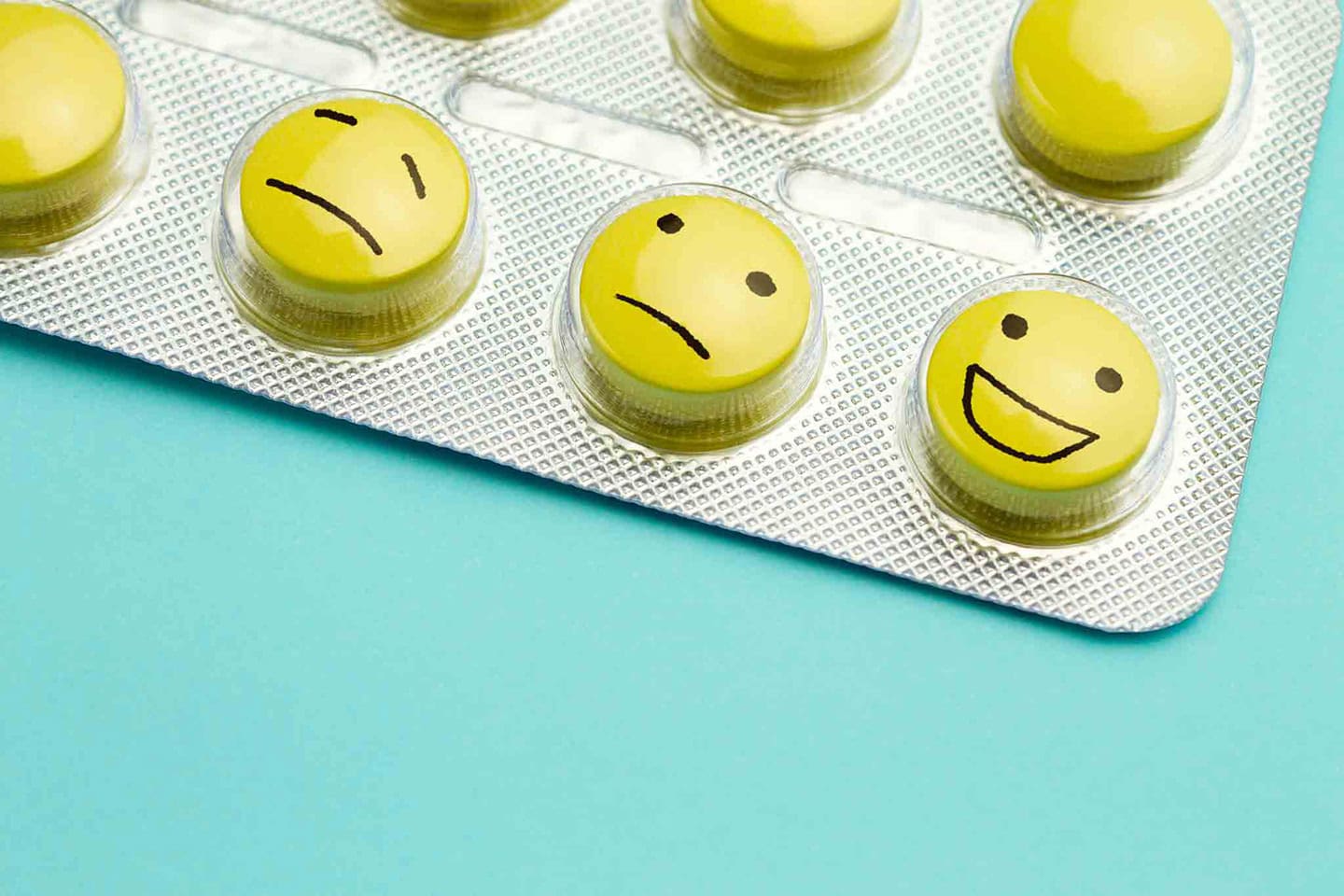
Doctors have known for a long time that antidepressants come with side effects for cardiovascular and metabolic health.
But a large analysis by a team of researchers in the United Kingdom gathered, for the first time, data from more than 150 clinical trials to compare the physical side effects of dozens of antidepressants.
The study, published in the Lancet this week, details how each medication can affect weight, blood pressure, heart rate, cholesterol, and other areas of health.
The final result is something like a “sports league table” for 30 different antidepressants based on their side effect profile, says the lead author, Dr. Toby Pillinger, psychiatrist at King’s College London.
“It has never been done on such a large scale before and no one has ever assigned specific numbers to the amount of weight you will gain, or how much your cholesterol increases,” he says.
The findings are based on existing data, mainly from 8-week drug studies, which in total represent more than 58,000 patients.
The antidepressants most frequently prescribed in the US — selective serotonin reuptake inhibitors, or SSRIs, like Zoloft and Prozac — tended to have fewer physical side effects, according to the analysis.
Other medications, particularly some of the older drugs, showed more significant impacts.
For example, a person who took nortriptyline, a tricyclic antidepressant, could, on average, have a heart rate increase 20 beats greater than the SSRI fluvoxamine. For other medications, the expected weight change could be 4 pounds gained, or lost.
Pillinger says the intention is not to highlight certain antidepressants as better than others.
“It may be that a medication that is quite bad for one person is actually quite good for another. I think that’s the message, rather than naming and shaming certain drugs,” he says.
Pillinger hopes the data can help prescribers and their patients make individualized decisions about the best medication.
In fact, he and his colleagues created a free digital tool that is already being used by clinicians around the world to create a “menu” of options, based on the patient’s underlying health and the side effects they would most like to avoid.
Dr. Nina Kraguljac, professor at Ohio State University, who did not participate in the research, says the study was well done — and largely reassuring.
“What surprised me about this study is that the side effects are not so severe,” says Kraguljac, who is also chair of the Research Council of the American Psychiatric Association.
However, she emphasizes that “side effects alone should not guide a clinical decision,” since the study results ultimately reflect an average, not the individual patient.
“Side effects do not occur in all patients and are not necessarily a reason to discourage people from taking the medications,” she says.
The study has some notable limitations.
Although many people take these drugs for months or years, the data were largely from 8-week randomized controlled trials, which are the most common.
And some prominent side effects — that lead some people to stop taking antidepressants — were not assessed, says Dr. David Hellerstein, professor of psychiatry at Columbia University.
He points to the impact on sexual function, gastrointestinal problems, and “emotional blunting” — a feeling that emotions are being dulled — as common complaints that were not examined.
Most of the side effects detailed in the study are already well known, although he believes the work will still be “a useful reference point” for patients and prescribers.
“On a large scale, most of these drugs appear quite safe on many physical parameters, especially the newer ones, like the SSRIs and SNRIs (serotonin-norepinephrine reuptake inhibitors),” he says.
But for some groups of people, side effects can be significant, he warns, “and could affect which medication the doctor would choose or which the patient would prefer”.
And, he notes, side effects are not always a downside.
Hellerstein has a patient who lost a significant amount of weight due to depression, which means that an antidepressant that also led to some extra weight would actually be “healthy”.
“I would say that’s not a side effect. That’s a benefit of the treatment,” he says.
Source: npr.org by Will Stone