



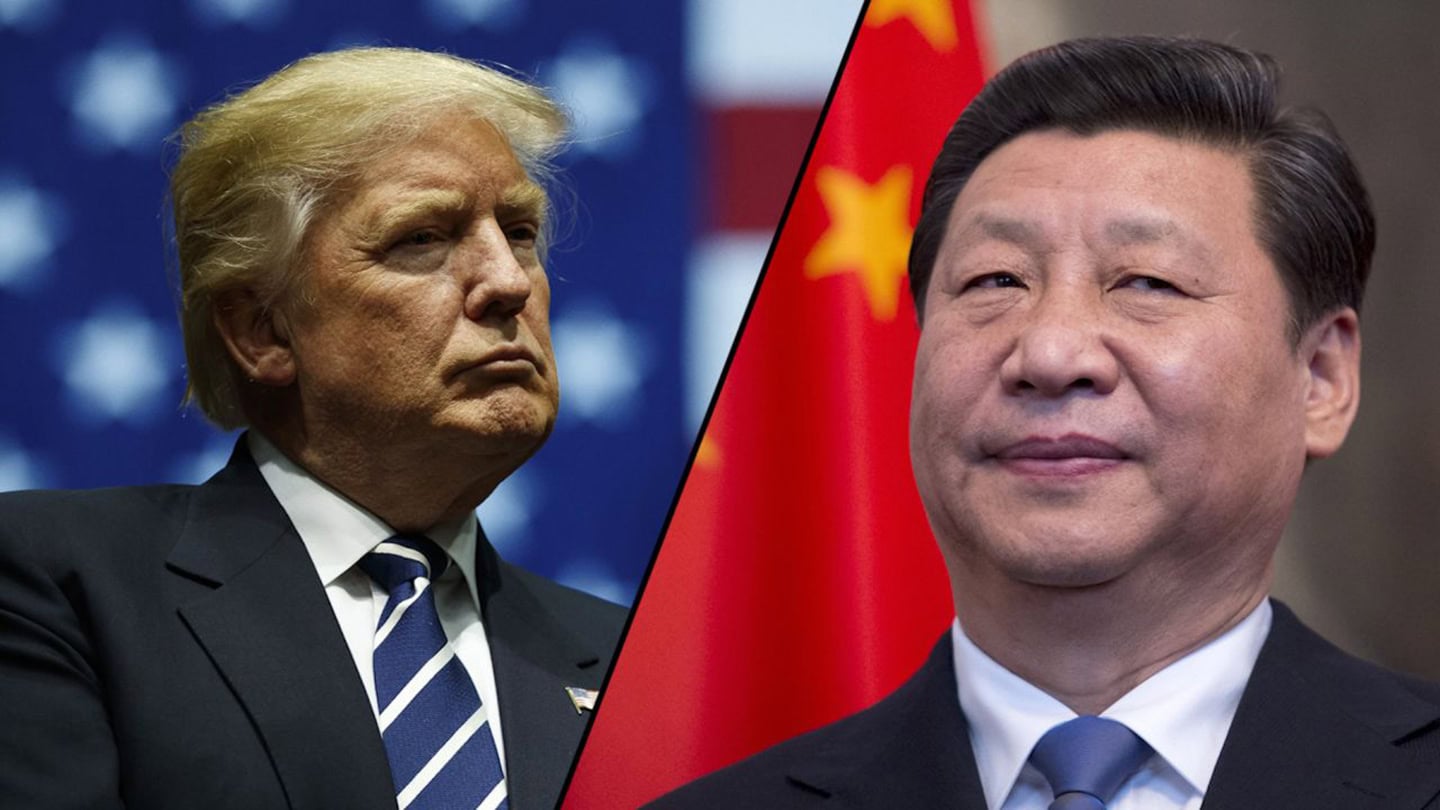
US Treasury Secretary Scott Bessent said he believes Presidents Donald Trump (US) and Xi Jinping (China) will talk to resolve trade issues, including a dispute over critical minerals. “I believe we’ll see something very soon,” the official said amid new attacks from the US president, accusing the Asian country of violating an agreement to mutually reduce tariffs and trade restrictions on critical minerals.
Significantly, the two countries agreed to a 90-day reduction in so-called “reciprocal tariffs.” US tariffs on Chinese imports will drop from 145% to 30%, and China’s tariffs on American products will fall from 125% to 10%.
To counter the trade war launched by the Trump administration, China had suspended exports of minerals and rare earths, tungsten, molybdenum, indium, bismuth, and tellurium. These are components used in strategic areas of the US industry, such as defense, semiconductors, aerospace, and automotive.
“I’m confident that when President Trump and President Xi speak on the phone, this will be resolved,” Bessent continued. “But the fact that they’re holding back some of the products they agreed to release under our deal—maybe it’s a glitch in the Chinese system, maybe it’s intentional. We’ll see after the president speaks with the party leader.” The interview was given to CBS broadcaster.
Last Friday (30), Trump expressed his certainty about speaking with President Xi Jinping. In April, China had stated that the two leaders had not spoken recently, making the potential conversation even more significant.
The Asian country is at the forefront of those pursuing a foreign policy that counters US hegemony. And some statistics also explain some of the Americans’ fears. In 2024, for example, China was among the top ten fastest-growing countries, at a rate of 5%, according to official data.
India ranked first (6.5%), followed by the Philippines (5.6%), Malaysia (5.1%), Indonesia (5.0%), and China (5.0%). Last year, China’s GDP totaled approximately 134.9 trillion yuan, equivalent to between US$17 trillion and US$19 trillion. Converted to reais, the value exceeds R$100.18 trillion.
In the first quarter of 2025, the Chinese economy expanded 5.4% compared to the same quarter of 2024. The market estimated a 5.1% increase in China’s GDP.
Additionally, as part of its multilateral foreign policy, China was one of the countries that most advocated for the expansion of the BRICS, hosted in the Asian country. And one of the main debates within the bloc is the use of a common currency, which reduces dependence on the dollar in trade transactions.
Currently, the BRICS are formed by Russia, India, China, South Africa, and Brazil. The BRICS also include partner countries such as Belarus, Bolivia, Kazakhstan, Cuba, Malaysia, Nigeria, Thailand, Uganda, and Uzbekistan.
Source: www.brasil247.com