



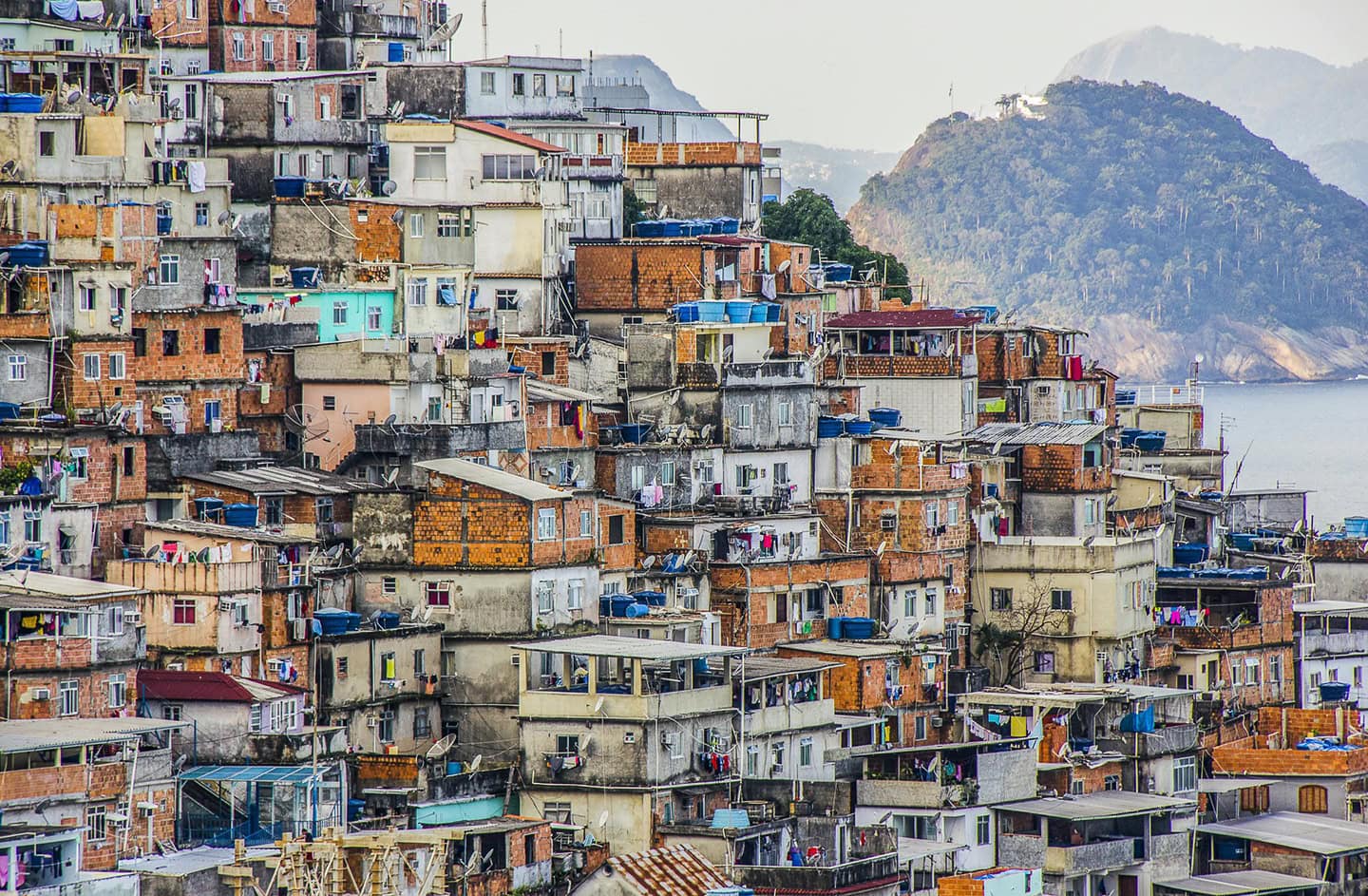
Brazil has 16.39 million people living in slums and urban communities. This represents 8.1% of the total 203 million inhabitants of the country, meaning eight out of every 100 people live in these areas. The data is part of a supplement to the 2022 Census, released on Friday (8) by the Brazilian Institute of Geography and Statistics (IBGE). Research indicated that there are 12,348 slums in 656 municipalities in Brazil to date.
IBGE researchers consider slums and urban communities as places with characteristics such as legal insecurity, absence or precarious or incomplete provision of public services, urban planning standards outside the current order, and occupation of areas with restrictions or environmental risk.
Distribution
IBGE detailed that 43.4% of slum residents are in the Southeast region. There are 7.1 million. In the Northeast, 28.3% (4.6 million); in the North, 20% (3.3 million); in the South, 5.9% (968 thousand); and in the Midwest, 2.4% (392 thousand).
The state of São Paulo has the largest population of slum residents, 3.6 million, followed by Rio de Janeiro (2.1 million) and Pará (1.5 million). The three states together account for 44.7% of the total slum residents in the country. The largest slum is Rocinha, in Rio de Janeiro, with 72,021 residents.
In proportion, Amazonas has the largest share of people living in slums (34.7%). This means that practically one in every three residents of the state lives in some community.
Has the number of people living in slums increased?
Yes. In 2010, IBGE identified 11.4 million people in 6,329 slums or communities, which accounted for 6% of the population.
However, researchers warn that caution is needed when comparing 2010 and 2022, as there have been technological and methodological improvements in identifying territorial divisions during this period.
Source: Agência Brasil