



Santa Claus (Brazilian Portuguese) or Father Christmas (European Portuguese), also known as Saint Nicholas, Kris Kringle, or Santa Claus, is a legendary character originating from Western Christian culture who is believed to bring gifts to children during the night on Christmas Eve of toys 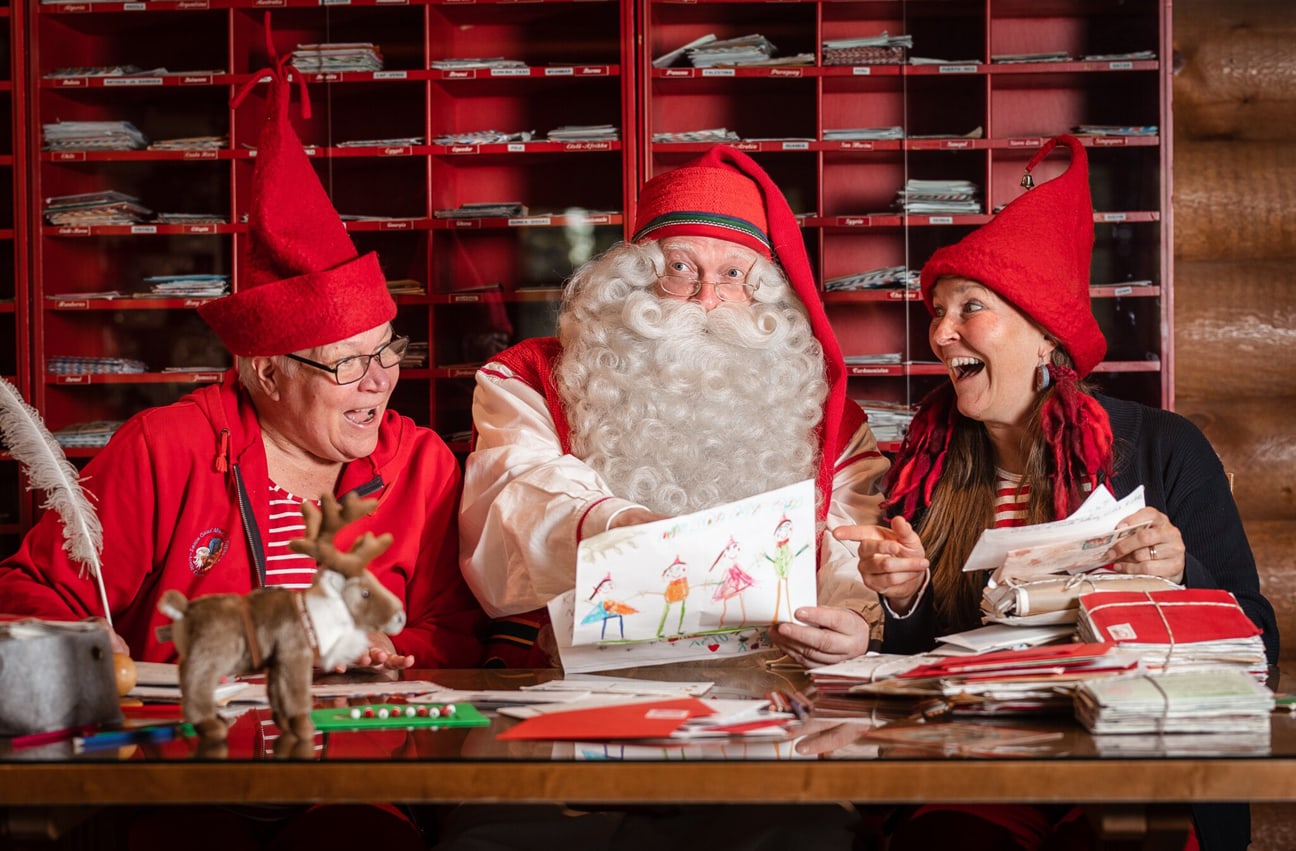 and sweets or coal or nothing, depending on whether they are “good or bad.” He supposedly accomplishes this with the help of Christmas elves, who make the toys in his workshop, often said to be at the North Pole, and flying reindeer that pull his sleigh through the air.
Inhabitant of the North Pole? Created by Coca-Cola? Urban legend from Eastern Europe? There are many legends spread about the origin of Santa Claus, and many of these myths have a kernel of truth! However, beyond all these assumptions spread around the world, there is a true story of Santa Claus that dates back centuries.
The true story of Santa Claus dates back to the 4th century and involves a region that is now part of Turkey. We are talking about Saint Nicholas of Myra, also known as Nicholas the Wonderworker, a Christian bishop. Nicholas was born in Patara, present-day Turkey. His parents were very wealthy and followed the tenets of Christianity. From childhood, Nicholas felt called by God to live fully the Christian life  in prayer and charity.
Nicholas was celibate, and the focus of his life was solely to serve God according to the teachings of Jesus.
It is said that Nicholas became an orphan at a very young age and then decided to use the wealth he inherited to help the most needy people.
When Nicholas arrived in Myra, the inhabitants of the city, enchanted by such charity and piety, cried out for Nicholas to become Bishop. Nicholas was ordained prelate of the city and continued his work: donating money and material goods to the most needy.
One of the most well-known stories of Bishop Nicholas involves a poor man and his three daughters. This man could not provide a dowry for his daughters to marry. Without marriage, these girls would have to resort to prostitution, and to prevent this from happening, Bishop Nicholas decided to  donate the amounts of the dowries so that the three girls could marry.
His fame as a charitable man spread throughout the region, as did his fame as a man of faith and miracles.
Saint Nicholas was imprisoned due to the prohibition of Christianity during the reign of Diocletian. He spent 20 years in prison without denying his faith until he was released when Emperor Constantine came to power and granted freedom to Christians in the empire.
Bishop Nicholas was canonized by the Catholic Church, as well as by the Orthodox Church, for his good works and the miracles attributed to him. He is the patron saint of Greece and Russia, as well as of sailors, fishermen, students, etc.
As it is customary among Christians to distribute gifts during Christmas, Nicholas likely distributed more donations during this time, laying all the foundations for the later story of Santa Claus. Nicholas’s appearance is precisely that of the current Santa Claus, an old man with long hair and a white beard. The good old man’s clothing is also inspired by Nicholas. The traditional red garments of the Bishop inspired the creation of Santa Claus’s attire.
And even before Saint Nicholas, there is a legend linked to the origin of Santa Claus, the legend of Old Man Winter. According to it, there was an old man who went from house to house asking for food during the winter. Those who helped the old man ensured a pleasant winter for their family.
Saint Nicholas Day is celebrated on December 6, the date of his death. Because of this, many people tend to set up Christmas trees on this date.
In the pagan traditions of Northern Europe, the figure of Santa Claus has a strong connection with Odin, one of the main gods of Norse mythology. For the Norse, Odin was responsible for distributing gifts during Yule, a 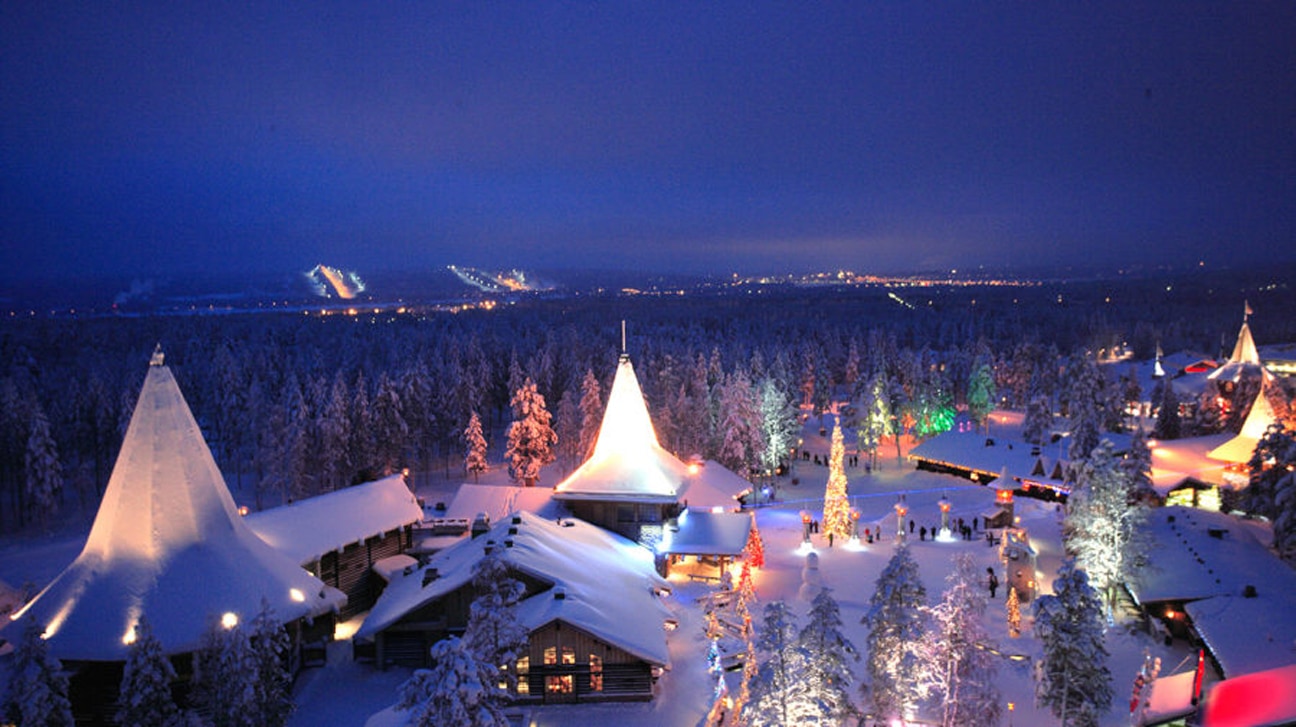 festival that took place at the winter solstice.
One of the practices in Northern Europe was to place boots near chimneys so that Odin would leave a gift inside them for the children. This practice remained in Germanic countries, even after they were Christianized. The modernization of the Christmas practice in the Northern Hemisphere transformed the boots into stockings.
In Norse myth, Odin rode through the skies on Sleipnir, his eight-legged horse. In modern myth, Santa Claus flies through the skies in his sleigh pulled by reindeer. Odin was also depicted as an old man with a white beard. Furthermore, the association of Odin and Saint Nicholas relates to the proximity of pagan and Christian celebrations. Yule was celebrated on December 21, and the Christian Christmas was celebrated on December 25.
The Reindeer
Santa Claus’s reindeer are the only reindeer in the world that can fly, helping him deliver gifts to children all over the world on Christmas Eve. When Santa Claus asks them to be quick, they can be the fastest reindeer in the world. But when he wants, they become slow.
The number of reindeer pulling the sleigh is controversial, all because of the reindeer known as Rudolph. There is a legend that says Rudolph joined the team of lead reindeer because he has a red and shiny nose, which helps guide the other reindeer during storms. And from that year on, the number of reindeer became nine, unlike traditional sleighs, which are pulled by eight reindeer; this legend was created in 1939.
The names of the reindeer in English are: Rudolph, Dasher, Dancer, Prancer, Vixen, Comet, Cupid, Donner, Blitzen, and Bernard. And in Portuguese, they are: Rodolfo, Corredora, Dançarina, Empinadora, Raposa, Cometa, Cupido, Trovão, Relâmpago, and Bernardo.
The agency that controls American airspace (North American Aerospace Defense Command) also installed a “Santa Tracker” in seven languages, where one can see Santa Claus’s current location and upcoming stops, accompanied by his reindeer.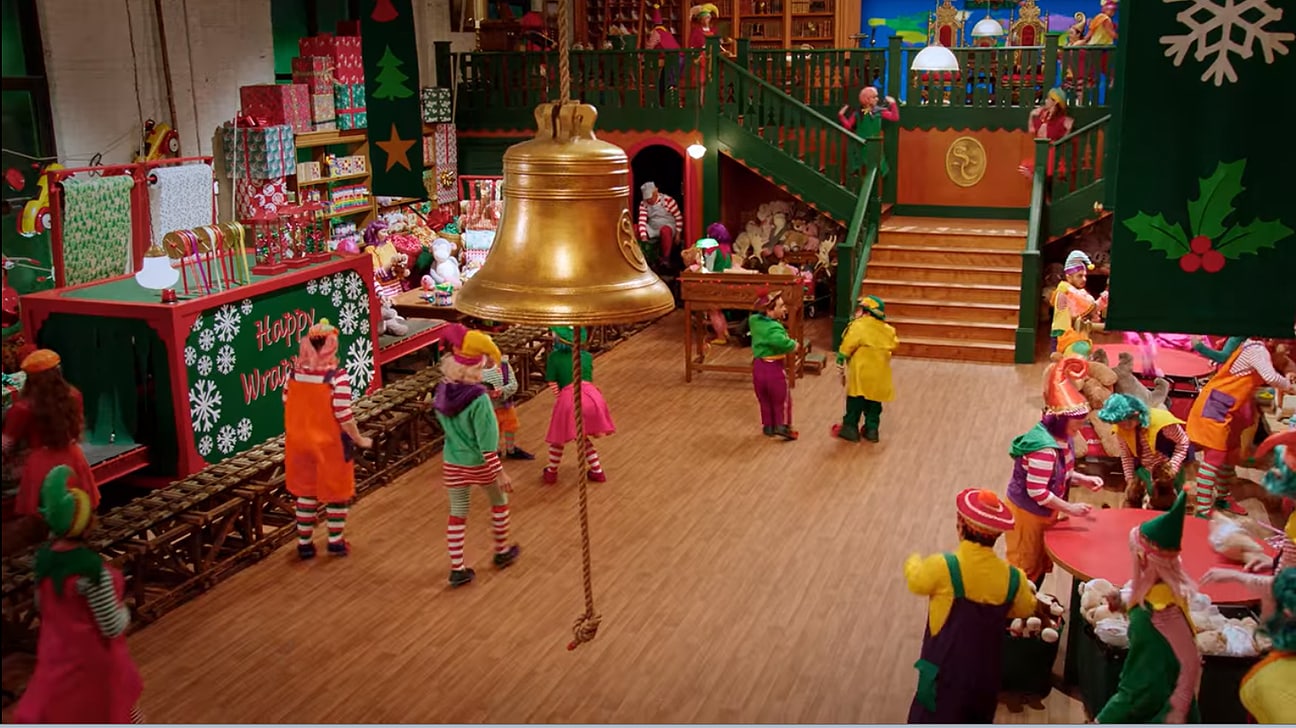 Elf Factory
The legend of Santa Claus had already developed into the image of the old Christmas figure who made gifts for children.
After the intense industrialization of the world, the most advanced countries in industrial development began to play with the idea of a Santa Claus factory, especially in the 1930s.
As there was already a mystical aura around the good old man, his employees would be magical creatures.
Mail Delivery
Letters to saints or of a religious nature have been a practice since ancient times, but only from the 20th century did the act of sending letters to Santa Claus emerge as a family custom, that is, the child’s parents read her letters, and on the condition that she behaves well throughout the year, she receives a gift as if it were from Santa Claus; sometimes so rehearsed that they come to believe wholeheartedly in his existence.
In Brazil, the Post Office has officially received letters addressed to Santa Claus since 2001. The messages are sent to the Post Office employees, but all Brazilians can “volunteer” as a Santa Claus directly at the country’s Post Office branches.
In the Northern European countries, tradition says that Santa Claus does not actually live at the North Pole, but rather in Lapland, specifically in the city of Rovaniemi, where there is indeed the “Santa Claus Office” as well as the park known as “Santa Park,” which has become a tourist attraction in the area. The letters received with a return address receive a response in eight different languages. An official address has even been created as Santa Claus’s residence, namely: Recipient: Santa Claus, Postal Code: FIN-96930, Arctic Circle, Rovaniemi – Finland.
Because of this, the region of Penedo, a district of Itatiaia, in Rio de Janeiro, a Finnish colony, has declared itself the “summer residence” of Santa Claus.
Curiosities About Santa Claus
Legend has it that he lives with his wife, Mrs. Claus, elves, and his reindeer.
A very curious question present in children’s imaginations is: How does Santa Claus manage to deliver all the gifts on Christmas Eve? According to logic, the existence of various time zones would give him a few extra hours, allowing him to deliver everything in 31 hours.
Santa Claus likes to snack while delivering presents. That is why many people tend to leave milk and cookies for him, and carrots for his reindeer.
Santa Claus in Brazil On Christmas Eve, everyone gathers with their wrapped gift. Brazilian children eagerly await Santa Claus’s visits every year and leave stockings out for him to exchange for gifts. Just like the North American Santa Claus, he lives at the North Pole, wears a red and white outfit, and drives a sleigh pulled by reindeer. In Brazil, however, you can also see him wearing red and white silk to combat the heat of the Brazilian summer.
According to tradition, Christmas decorations remain in place only until Epiphany, on January 6, a holiday that marks the official end of the Christmas season.
And Santa Claus in the USA?
The story of Santa Claus reached the USA through Dutch immigrants who went there in the late 18th century. It is said that these immigrants gathered to celebrate Sinterklaas, a figure that corresponded to Saint Nicholas.
The red and white look gained momentum in 1931 when Coca-Cola launched a major advertising campaign featuring a Santa Claus dressed according to Nast’s creation. One of the people who helped strengthen the legend of Santa Claus was Clement Clarke Moore, a professor from New York, who published the poem “A Visit from St. Nicholas” in 1822, written for his six children. In this poem, Moore spread the version that he traveled in a sleigh pulled by reindeer. He also helped popularize another feature, such as entering through the chimney.
This is one of the excerpts where Clement describes Santa Claus:
“Descending the chimney, Santa Claus came resolute,
All dressed in furs, from head to toe,
And with his clothes all stained with ashes and coal;
A sack of toys on his back, he looked like a peddler opening the sack.
His eyes — how they shone! His cheerful dimples!
His cheeks like roses, his nose like a cherry!
His little mouth curved upward like a bow,
The beard on his chin as white as snow;
The handle of the pipe firmly held in his teeth,
The smoke enveloping his head like a garland;
He had a round face and a big belly,
That shook when he laughed, like a bowl of jelly.
He was chubby and jolly, a perfect old elf,
And I laughed when I saw him, unable to help it; A wink of his eye and a nod of his head,
At that moment made me understand that I had nothing to fear;
He said not a single word, but went straight to his work,
And stuffed all the stockings; then turned on his heel, and placing a finger beside his nose,
And nodding his head, up the chimney he rose;
He jumped in his sleigh, to his team he whistled,
And away they flew, like the down of a dandelion.
But I heard him exclaim, as he drove out of sight, “Merry Christmas to all, and to all a Good Night!”
Sources: wikipedia, brasilparalelo.com.br, todamateria.com.br