



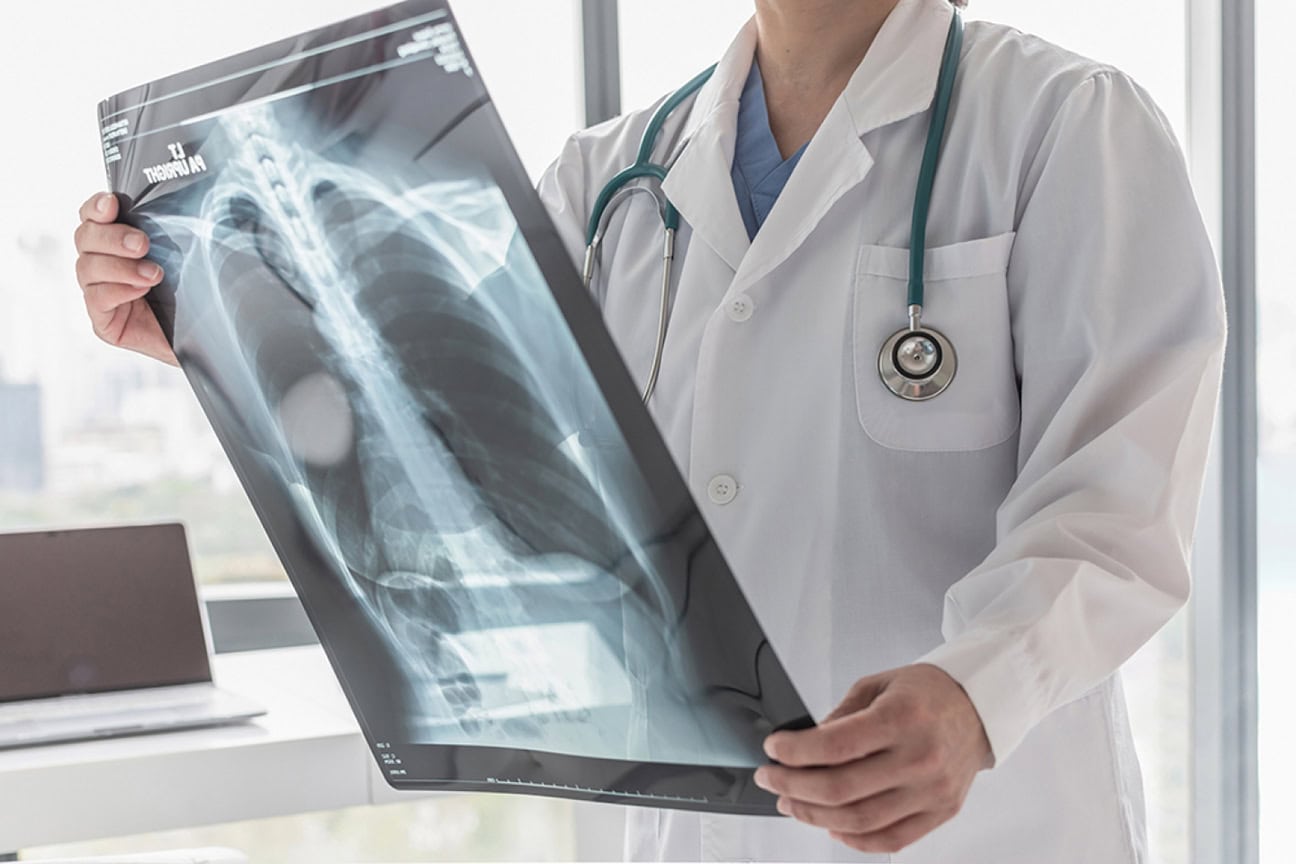
Approximately 238,000 people in the United States will be diagnosed with lung cancer this year. That’s about one person every two and a half minutes. Fortunately, more Americans are surviving lung cancer thanks in part to early detection, innovative research, and new treatments. However, the path from diagnosis to treatment can be confusing. Advocates say understanding lung cancer staging is essential to empower patients and their families.
The staging of lung cancer means figuring out where lung cancer cells are located, the size of lung cancer nodules, and whether and where lung cancer has spread.
“Accurate, complete, and timely staging of lung cancer directly impacts treatment options and prognosis,” says Harold Wimmer, President and CEO of the American Lung Association. “That’s why it’s imperative to educate people on how this process works, so they can ask questions and advocate for the highest standard of care throughout the cancer journey.”
The American Lung Association and Olympus have teamed up in a new educational campaign that provides easy-to-understand information and resources for families facing lung cancer. As part of the campaign, they are sharing these important facts about lung cancer staging:
1. There are three main scenarios in which lung nodules are found: Lung nodules are small masses of dense tissue that can be an indicator of lung disease. They appear on imaging tests like X-rays and CT scans in one of three ways: through lung cancer screening in high-risk patients, when patients have symptoms and doctors are looking for a cause, or when patients are being treated for other conditions. If a nodule is found, doctors assess its size, shape, and the patient’s health history to determine the next steps.
2. Sometimes, waiting is recommended: Patients are often eager to start treatment, but not every lung nodule needs to be treated. In some cases, the most appropriate next step is to rescan the lungs in a few months to see if there are any changes.
3. Staging uses numbers and letters to describe how far cancer has spread: If the nodule looks cancerous (malignant), doctors gather information to confirm cancer and understand its type, size, location, and spread. Based on this information, lung cancer is diagnosed and then assigned a stage using numbers and the letters T, N, and M — primary tumor size (T), the number and location of regional lymph nodes (N), and the presence or absence of metastasis (M).
4. Doctors need information before starting treatment: Doctors need to know exactly how far cancer has spread, which lymph nodes are involved, and if there are any biomarkers, in order to recommend the most appropriate treatment. People should work closely with their care team to know what to expect based on their cancer and understand the risks and benefits associated with each care decision.
5. New resources are available: Through this campaign, resources are available to provide more information about lung nodules at Lung.org/lung-nodules and staging at Lung.org/staging. Additionally, the American Lung Association’s Lung Helpline features a Lung Cancer Patient Navigator to help answer any questions a person or their family may have.
“There is hope for every stage of lung cancer,” says Wimmer. “By understanding the different stages and the diagnostic process, individuals can have greater control over their care.”
Source: StatePoint