



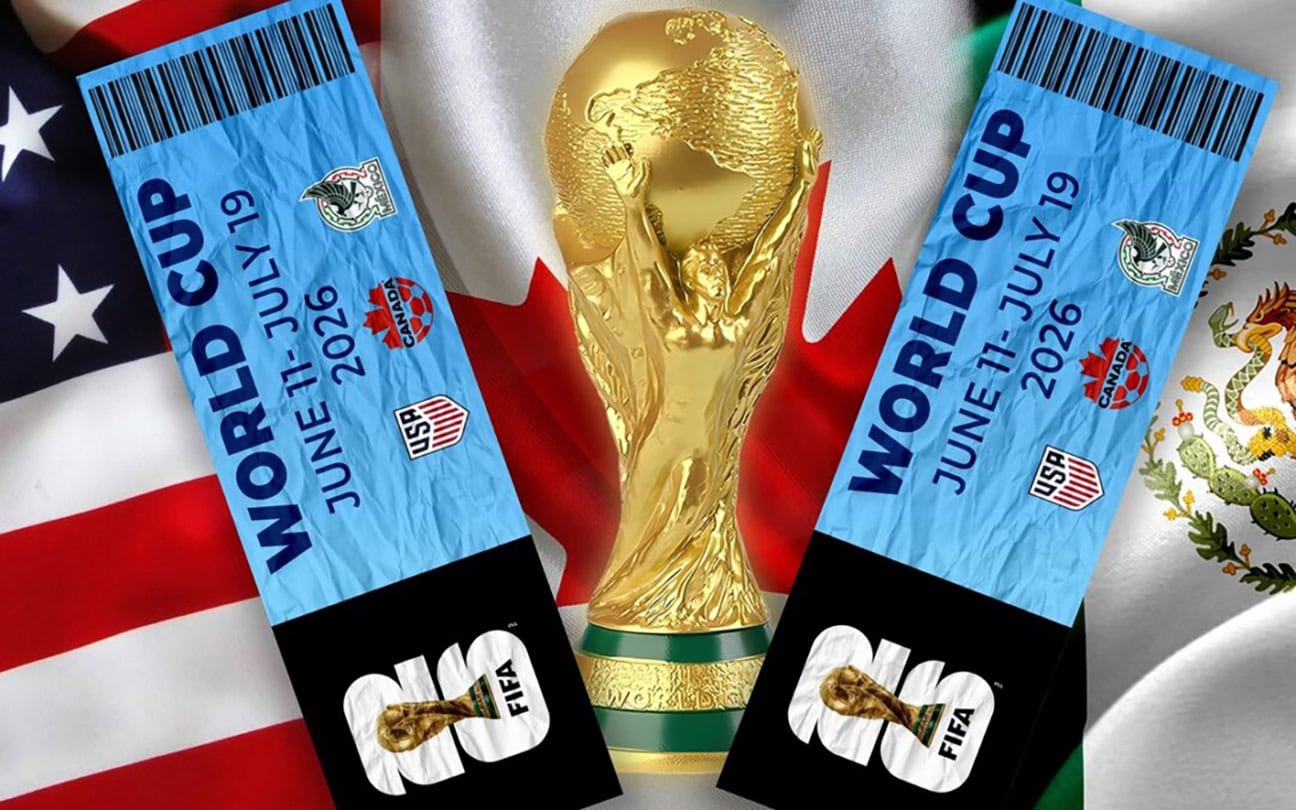
The first opportunity to acquire regular tickets for the 2026 World Cup will be on Wednesday. But be warned: the tickets may not be easy to get — and they probably won’t be cheap.
Demand for the popular men’s tournament is expected to skyrocket even more when the tournament begins in the United States, Mexico, and Canada, in June.
FIFA, the organization behind the World Cup, is also revolutionizing the way it sells tickets for its flagship tournament, which could exacerbate the challenges in obtaining them.
The most notable is that FIFA is about to unveil a controversial pricing system: they say it’s not the same as dynamic pricing — but prices will be adjusted based on demand.
Here’s what you need to know about World Cup ticket sales.
There will be several ticket sale dates
The first window to get tickets will open on September 10 and end on September 19 — but only for eligible VISA cardholders. And they must first register their interest with FIFA. And people won’t be able to actually buy tickets at that time.
According to information provided by FIFA, those who sign up will be entered into a lottery. If successful, they will receive a specific date and time to buy tickets starting October 1.
The selected buyers will have the chance to buy tickets for any of the 104 games that will be held in the three countries next year — including the final. Buyers just won’t know who will actually be playing in them, since the draw will only take place on December 5.
Specific venue ticket packages, i.e., tickets for a handful of games in a specific host city like Boston or Mexico City, will also be available. In addition, spectators can buy tickets specific to a national team, but only for the three group stage games that each team will play.
Other ticket purchase opportunities will follow, including at the end of October, after the group draw, and next year.
FIFA will also operate a resale platform for ticket holders who no longer want to attend a game, as it did in previous tournaments.
Tickets will start at US$ 60 per game — with a big caveat
FIFA has promoted that some group stage tickets will start at US$ 60, saying this will offer “an accessible entry point to the tournament.” Still, the organization notes that the “most exclusive” tickets could go up to US$ 6.730 for the final.
But what they’re not promoting as loudly is that the organization will also implement pricing that fluctuates based on demand, a first for the World Cup.
It’s not dynamic pricing per se; they’re calling it “variable pricing.” But the differences between the two can be blurry.
Heimo Schirgi, FIFA World Cup 26 Operations Director, says variable pricing means that “the way prices are adjusted is not as sharp and is more balanced across different phases.”
A FIFA official also told NPR that pricing won’t be set by “automated algorithms,” but guided by a team of people who will regularly monitor and make “real-time adjustments” to ticket prices based on supply and demand — which suggests that FIFA officials may ultimately decide how high they’re willing to let prices rise. (The official declined to be identified because they were not authorized to speak to the media in an official capacity.)
FIFA justified its decision by saying it’s simply adapting to the US and Canadian markets, where professional teams regularly use the controversial practice of demand-based ticket pricing, just like airlines or hotels.
FIFA’s “variable pricing” will apply from the actual start of the sales window in October, meaning that the US$ 60 “accessible entry point” could rise quickly, depending on how aggressive the organization is with pricing.
Demand-adjusted prices may also be implemented on the resale platform planned by FIFA in the US and Canada, although FIFA has not given exact details.
However, in Mexico, the resale platform will operate as an exchange platform, meaning buyers can receive up to the amount they spent buying a ticket from FIFA — and no more. That’s how FIFA operated its resale platforms in the past.
Demand for the 2026 World Cup will likely be enormous
Of course, adjusting prices based on demand doesn’t necessarily mean prices will rise more. In the FIFA Club World Cup — a tournament held in the US this year — prices actually fell for several games because demand was lower than expected.
But the World Cup is much bigger and more established than the Club World Cup. FIFA has previously said it expects more than 5 million people at next year’s edition.
That would break the previous record from 1994, the last time the US hosted, which attracted more than 3.5 million spectators.
That’s partly a function of the vastly expanded tournament, which will now consist of 48 teams, more than the 32 that participated in the previous World Cup in Qatar. The 2026 World Cup will also be held in three countries and venues like MetLife Stadium, which has capacity for more than 80,000 people.
Nevertheless, demand will likely exceed supply, and getting tickets could prove difficult.
During the 2022 World Cup in Qatar, FIFA said it received more than 23 million requests for about 3.4 million available tickets, meaning buyers who wanted tickets had a success rate of only about 15%.
There are other ways to get tickets — including hospitality and a “right to buy” system. For those who don’t want the uncertainty of trying to buy regular seats during a sales window, there’s another way to attend — but it will be expensive.
They are called “hospitality tickets,” and these premium tickets are well known to American fans. They give the holder access to a reserved seating area, like a suite, along with a variety of drinks and food.
But they are expensive. Hospitality tickets have been on sale since the beginning of this year, including for individual games and packages that at one point reached US$ 73.200.
Prices have also fluctuated throughout the year based on demand. Now, the cheapest hospitality ticket for a single game is listed at US$ 1.350.
FIFA has also introduced a new ticket sales method called “right to buy,” or RTBs. These offer buyers a guaranteed opportunity to purchase tickets for specific games, including the final. To get one, fans have to buy digital cards that FIFA releases periodically, or “drops.” They are kind of like electronic baseball cards; typically containing a scene or video from a previous World Cup game.
Prices range from hundreds of dollars for guaranteed opportunities to buy knockout games to cheaper “surprise” packages that may or may not contain an RTB. This doesn’t even consider the actual ticket price, which buyers will need to pay when FIFA makes them available.
FIFA even operates a market where RTB owners can buy and sell these opportunities.
It could be the most profitable World Cup tournament ever
The combination of variable pricing and more games will likely lead to the most profitable World Cup ever.
Bloomberg Intelligence estimates that FIFA could raise a record US$ 4.4 billion, not just from general ticket sales, but also by heavily relying on hospitality seats. Such revenue would also mark a 378% increase from the last men’s tournament in Qatar, according to stock research analyst Kevin Near, reflecting in part the expanded tournament with 104 matches and 48 national teams.
“These stadiums are huge, have great occupancy,” says Near. “And because there’s been such a big focus now for some time on building premium and luxury spaces, that’s where a lot of that money will come from.”
FIFA, however, is particularly sensitive to criticism that it’s just chasing profits, saying that the vast majority of the money it raises from its tournaments is intended to be distributed among its 211 member associations to help grow soccer worldwide.
“As part of that mission, which we take very seriously, we are looking to optimize revenue, but also optimize stadium attendance, so it’s always a balance between different factors,” said Schirgi from FIFA World Cup 26 in an email statement.
Of course, achieving that balance doesn’t necessarily mean ticket prices will be low. So, when that first ticket sales window opens on Wednesday, one thing is certain: Buying a World Cup ticket could become a big game.
Source: npr.org by Rafael Nam