



The idea of building a large statue atop Corcovado was first suggested in the mid-1850s when Father Pedro Maria Boss proposed placing a Christian monument on Mount Corcovado to honor Princess Isabel, regent of Brazil and daughter of Emperor Dom Pedro II.
In 1889, the country became a republic, and with the official separation of Church and State, the proposal was discarded.
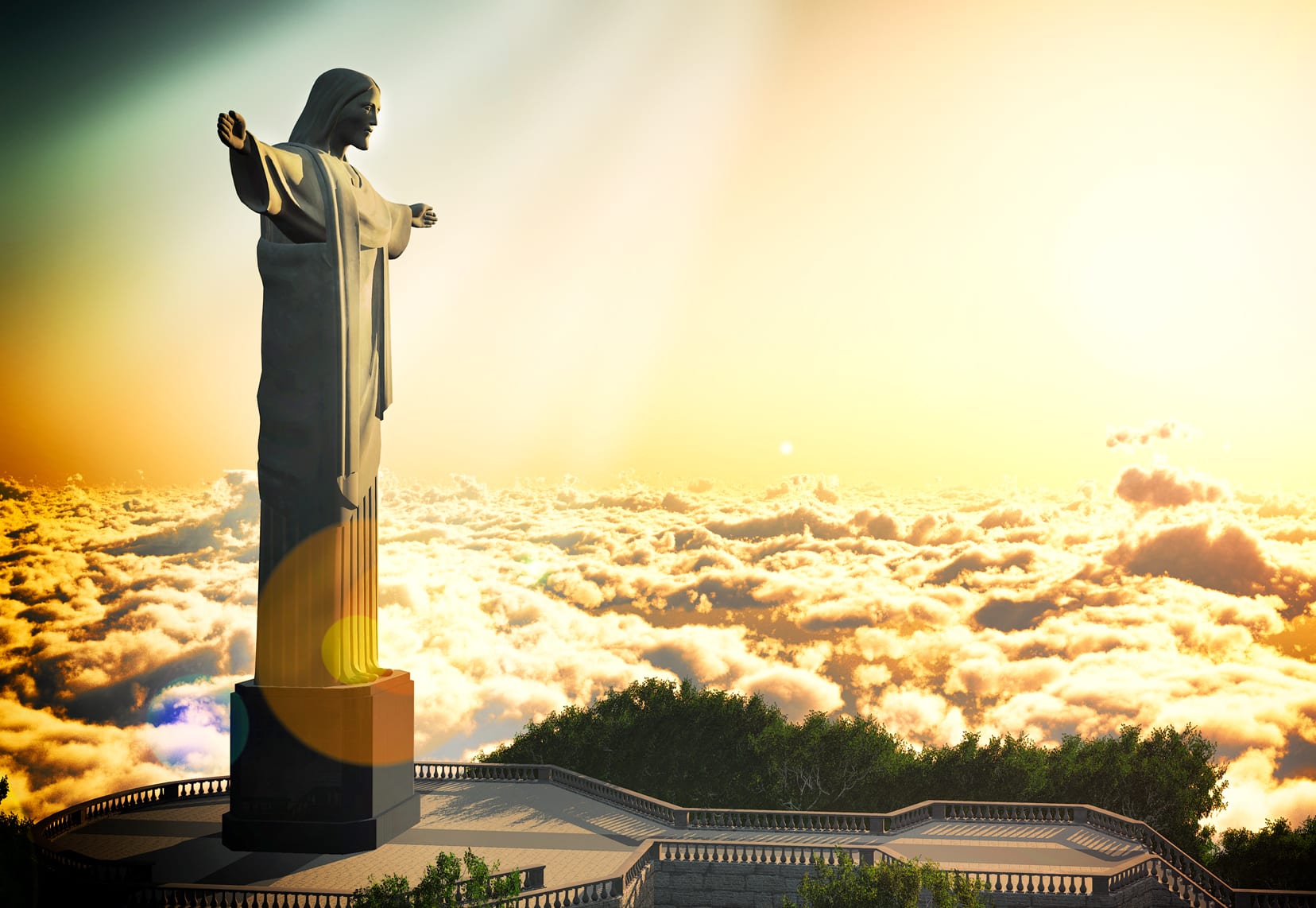
The second proposal for a statue on top of the mountain was made in 1920 by the Catholic Circle of Rio de Janeiro. The group organized an event called “Monument Week” to attract donations and collect signatures to support the construction of the statue. The designs considered for the “Statue of Christ” included a representation of the Christian cross, a statue of Jesus holding a globe, and a pedestal symbolizing the world. The statue of Christ the Redeemer with open arms, a symbol of peace, was the chosen design. Local engineer Heitor da Silva Costa designed the statue, which was sculpted by Paul Landowski, a Franco-Polish sculptor.
The face of the statue was created by sculptor Gheorghe Leonida, who was born in Galati, Romania, in 1893. He became famous in France as a portrait artist and was included by Paul Landowski in the team that began working on Christ the Redeemer in 1922. Gheorghe Leonida contributed by portraying the face of Jesus Christ in the statue.
Engineers and technicians decided to build the structure in reinforced concrete (designed by Albert Caquot) instead of steel, which was more suitable for a cross-shaped statue. The outer layers are made of soapstone, chosen for its durable qualities and ease of use. Construction lasted nine years and was inaugurated on October 12, 1931.
During the inauguration ceremony, the statue was illuminated by a battery of floodlights activated remotely by the pioneer of shortwave radio, Guglielmo Marconi, who was 9,200 kilometers away in Rome, Italy. Its inaugural mass took place at the Laranjeiras Stadium, also on October 12, 1931.
In October 2006, on the 75th anniversary of the statue’s completion, the Archbishop of Rio de Janeiro, Cardinal Eusébio Oscar Scheid, consecrated a chapel in honor of Our Lady Aparecida, the patroness of Brazil, beneath the statue. On July 7, 2007, during a celebration held in Portugal, Christ the Redeemer was included among the New Seven Wonders of the World. The decision, following an informal contest, was based on popular votes, which exceeded one hundred million votes.
In 1990, a restoration project was carried out through an agreement among several organizations, including the Archdiocese of Rio de Janeiro, media company Rede Globo, the oil company Shell Brazil, the environmental regulator Ibama, the National Institute of Historical and Artistic Heritage, and the government of the municipality of Rio de Janeiro.
In 2003, further transformations to the statue and its surroundings were made when a set of escalators, walkways, and elevators were installed to facilitate access to the platform around the statue. In 2010, a massive restoration of the statue was conducted. The monument was washed, the mortar and soapstone covering the statue were replaced, the internal iron structure was restored, and the statue became waterproof.
• Tijuca National Park: The monument is located in an area ceded by the Union to the Archdiocese of Rio in the 1930s, but access to the statue is through Tijuca National Park.
• Corcovado Train: The Corcovado Train is a railway line that starts in the Cosme Velho neighborhood and goes up to the summit of Corcovado Mountain, at an altitude of 710m. The line was inaugurated by Emperor Dom Pedro II on October 9, 1884. It is therefore older than the Christ the Redeemer monument, which opened for visitation in 1931. In fact, the pieces for assembling the statue of Christ were transported by the train itself over four years.
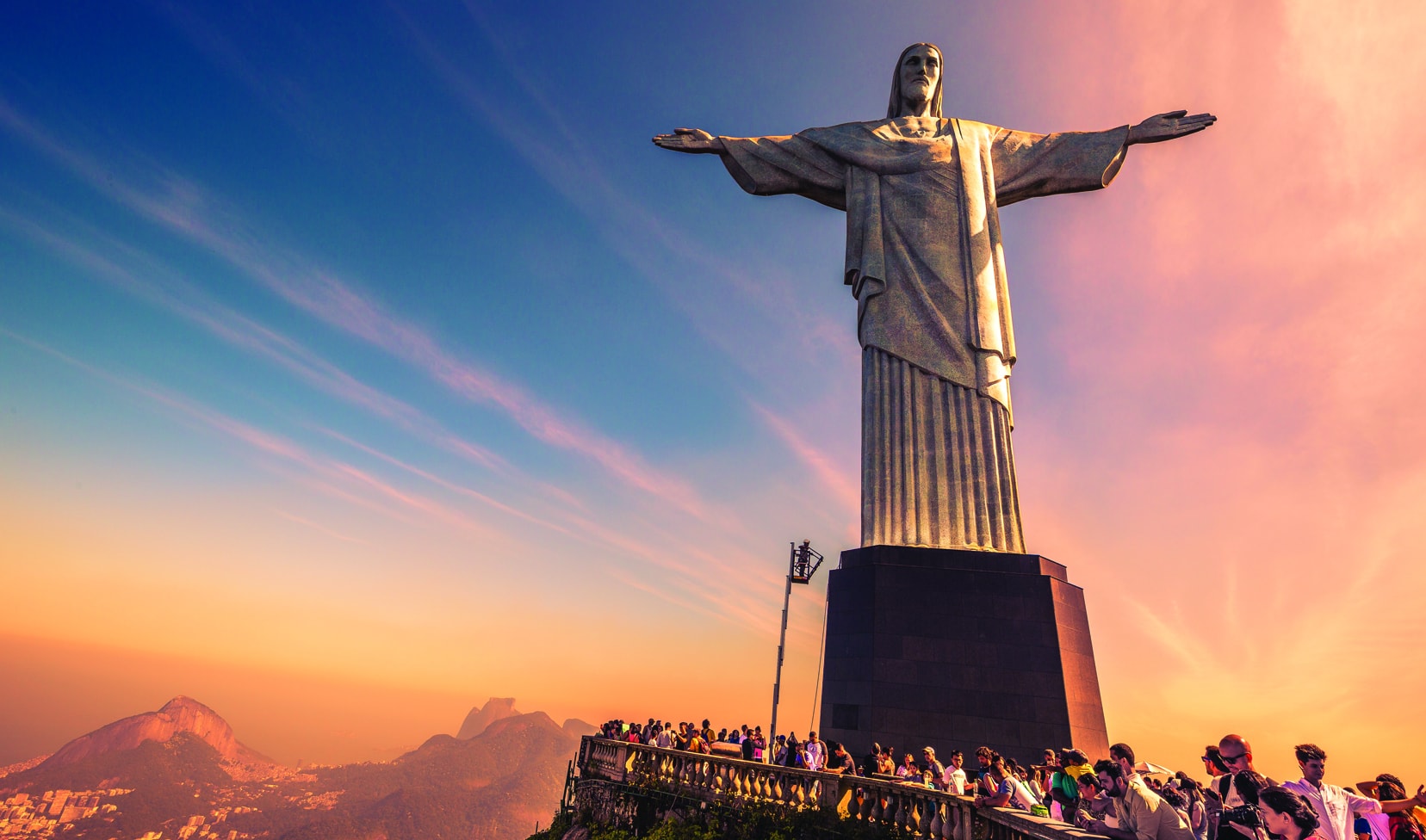
The monument appears in various songs, either as a theme or mentioned in songs by various artists and bands, and is also referenced in cinematic works, both Brazilian and international.
In 1991, comedian Renato Aragão climbed Christ the Redeemer in Rio de Janeiro to thank for the success of his career, especially as the character Didi from Os Trapalhões. In July of that year, the comedian emerged from inside the monument and went to kiss Christ’s right hand.
In 2012, it was presenter Eliana’s turn to climb Christ the Redeemer, repeating the gesture of gratitude for the success of her television career. The presenter also emerged from inside the monument and this time went to the right side of Christ’s head to kiss it.
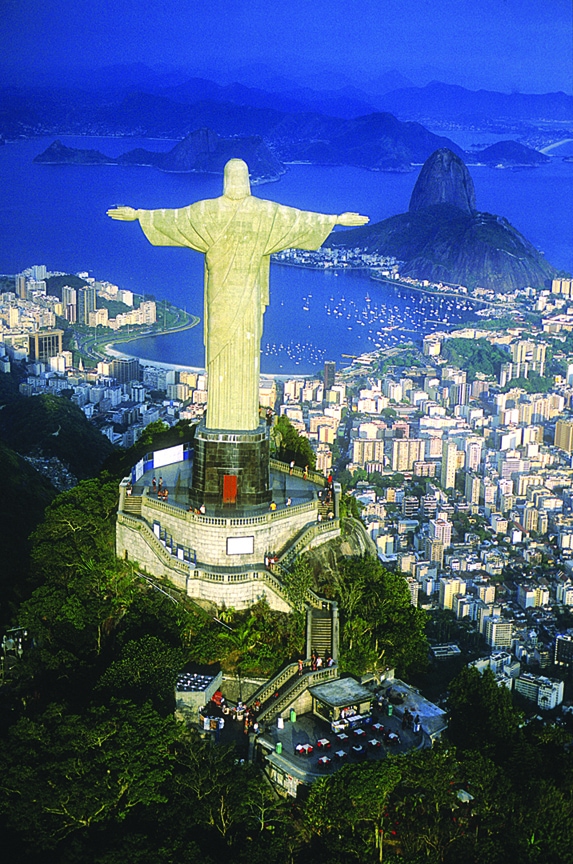 Photo: shutterstock-T photography[/caption>
CURIOSITIES
• The builder converted: The architect responsible for the design and construction of the great monument that is Christ the Redeemer was named Heitor Levy and was Jewish; he was the right-hand man of Heitor da Silva Costa. While studying the meaning of Christ the Redeemer and undertaking the great work, which lasted five years, Heitor Levy became a Christian. The time, the difficulties, and the extraordinary victories showed him that he was not just building a monument, but the image of the one who divided the history of humanity into “before and after.” The effect that the image had on people also helped in his conversion. Heitor Levy understood the grandeur and love of Christ the Redeemer.
• 12 men and a Redeemer: Christ the Redeemer was built by only 12 workers, led by Heitor Levy. History has symbolically repeated the mystery of Jesus Christ and his 12 apostles. Twelve men knew the Master and spread his message around the world. Twelve men knew a project and built a 30-meter image that became a symbol of a city, a country, and a continent.
• Sanctuary of Our Lady Aparecida: The base where the statue of Christ the Redeemer is supported is a chapel dedicated to Our Lady Aparecida. Baptisms and weddings are celebrated there.
• Redeemer: First, let’s look at the meaning of the word Redeemer: it means ‘the one who redeems.’ The word comes from the verb “Redeem” or “Ransom,” therefore, the word Redeemer summarizes the entire mission of Jesus concerning humanity: he came to save human beings in every sense.
• The head of Christ the Redeemer: The head of Christ the Redeemer has a slight inclination downward. And the meaning is clear: Christ is high, in the heavens, and from there, he looks down upon humanity.
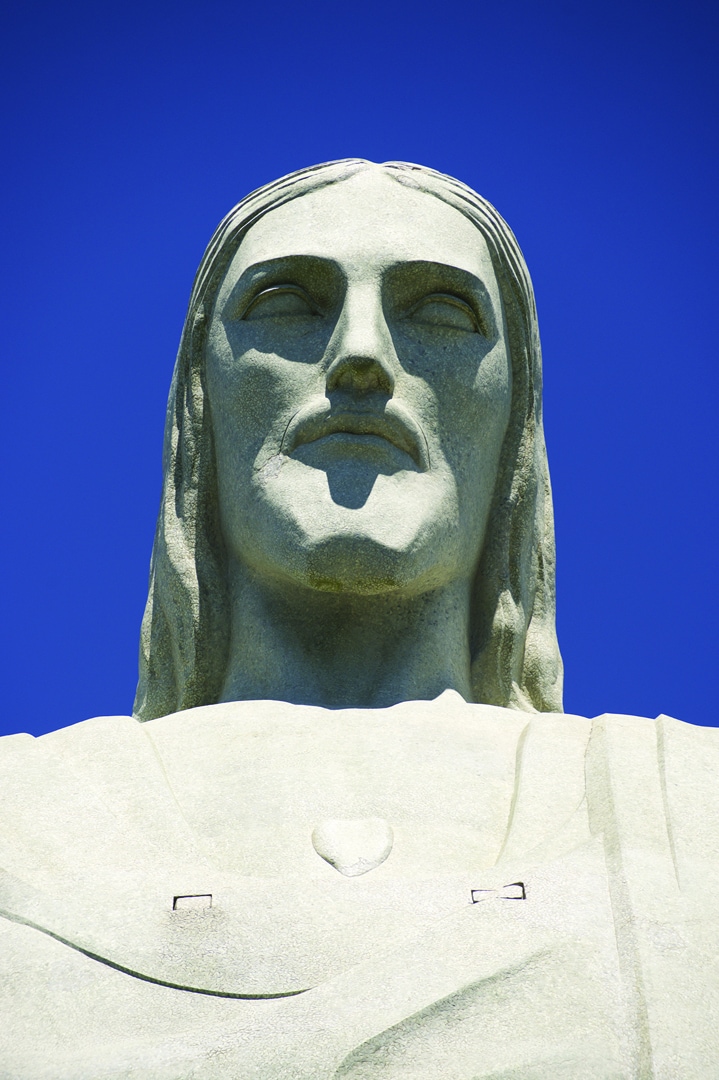 Photo: shutterstock- lazyllama[/caption>
• The open arms of Christ the Redeemer: Symbolize his love for humanity. Being open-armed is to welcome, receive, and love.
• The exposed heart of Christ the Redeemer: Few people notice, but the statue of Christ the Redeemer has the heart exposed in high relief, at chest height. Therefore, it is an image of the Sacred Heart of Jesus. The exposed heart signifies Christ’s total love for each of us, for humanity.
• The wounds in the hands of Christ the Redeemer: The image of Christ the Redeemer shows the wounds that the nails made in Christ’s hands. It is another detail that goes unnoticed by most people, but it also has a profound meaning. The hands symbolize action, doing, making.
• The resurrected Christ: The image of Christ the Redeemer with open arms, the exposed heart, and the wounds in the hands signifies that this is the resurrected Christ. He has already passed through death and conquered it. He signals to us that death has been defeated and that our life is eternal. The time we spend in this world is temporary. Our destiny is eternity with God.