



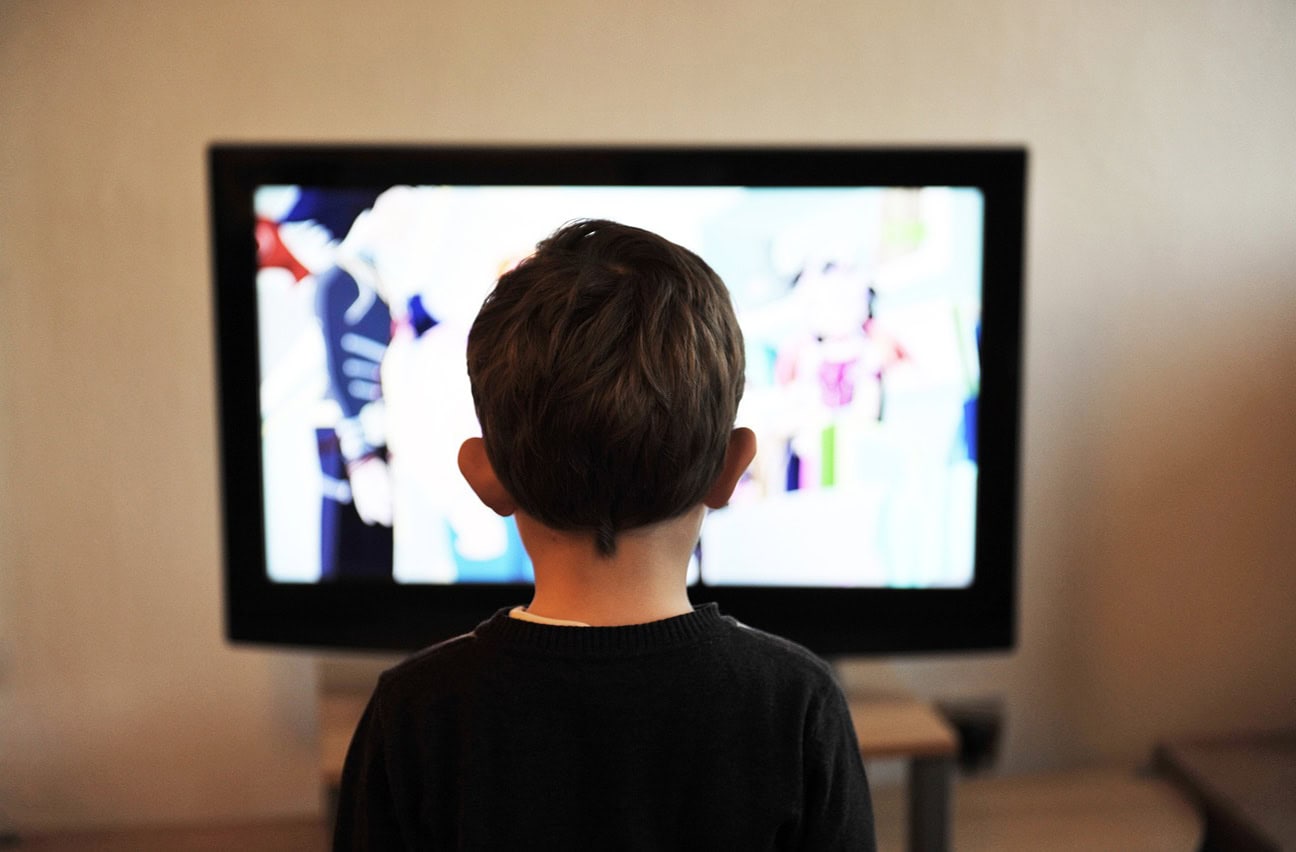
Like many parents, Michaeleen Doucleff struggled with her young daughter’s screen use. Doucleff, author of the bestselling book Hunt, Gather, Parent, followed the daily limit recommended by the American Academy of Pediatrics. However, when Rosy’s screen time ended every night and Doucleff tried to put away the iPad, the 7-year-old would burst into tears and often rage.
It became a nightly battle that Doucleff dreaded, and she worried about depriving her daughter of something she clearly enjoyed. Why else would she react so strongly when the iPad was taken away?
Doucleff tells this story in her new book, Dopamine Kids: A Science-Based Plan to Rewire Your Child’s Brain and Take Back Your Family in the Age of Screens and Ultraprocessed Foods. Doucleff initially turned to parenting books for guidance on how to loosen technology’s grip on her family and found that many contained advice backed by psychology and neuroscience research that was 25 to 50 years out of date.
A trained biochemist and longtime science journalist (previously for NPR), Doucleff dove into current research to figure out how to reduce her family’s dependence on technology and ultraprocessed foods. What she found was a revelation: Contrary to previous scientific theories, dopamine doesn’t give us pleasure. Since the 1990s, neuroscientists have accumulated evidence refuting that idea. Instead, dopamine makes us want.
Rosy didn’t love her videos, Doucleff realized. Nor did she love the ultraprocessed Ritz crackers she begged for at the supermarket. Rosy was caught in a desire feedback loop. The more she watched and snacked, the more she wanted to watch and snack.
There is a separate system, the second one, in our brain that makes us like what we’re wanting and feel satisfied when we get it, Doucleff told NPR. Modern technology separates these systems, leaving us always wanting more, even when what we’re doing—whether scrolling TikTok or eating french fries—doesn’t bring us much, or any, pleasure.
“One of the big illusions is that children stay on screens because it makes them happy and brings all this joy and pleasure to their lives,”
Doucleff said. The data told a different story. “In many ways, it’s stealing the pleasure from our lives.” Doucleff set out to replace that constant desire in Rosy’s life—and her own—with satisfaction and joy, and hopes her book can help other parents do the same.
“I really want to give parents tools that actually work with these products and that don’t just create more struggle and exhaustion,” Doucleff said. “That’s how I felt. I felt that by following the available guidelines, we were just fighting every day. There was conflict every day to get off the screen, to eat the right foods.”
Doucleff spoke with NPR about her new book.
This interview has been edited for clarity and length.
How does technology hijack the brain’s dopamine system?
Tech companies have an arsenal of tricks and tools they use. Many were borrowed from the gambling industry. In the 2000s, the tech industry started adopting some of them and applying them to games and social media platforms with the explicit goal of keeping children on devices as long as possible.
The core of the algorithm is that the app, the game, gives the impression that it will satisfy the child’s fundamental needs. There is solid evidence that children use social media to try to satisfy their need for belonging, so there’s this huge promise. What researchers are now clearly showing is that social media never satisfies a teenager’s need for belonging and social support. It feels like it does. That’s the trick. It gives the feeling of progress. We release more dopamine when we feel like we’re progressing toward our goal. Ah, if I just try a little harder, right? But it never actually delivers.
This reminds me of being stuck in infinite scroll, thinking: “Wait, why do I keep doing this?” But then you continue.
Yes, exactly. What happens when you get lost in infinite scroll, thinking “again, again, again,” is pure dopamine. Your desire for the activity, the craving to do it, is much, much greater than the pleasure you get from it.
How do ultraprocessed foods fit into this?
Ultraprocessed foods promise to satisfy a fundamental need of life: food, calories, nutrition. If you examine them—it’s a broad category—many are skeletal versions of foods. They are openly designed not to satisfy us. The industry spent decades creating foods that make us desire them, that prevent us from stopping eating. There is much evidence that they lead us to overeat. And, just as social media prevents us from seeking real friendships, or can over time, these ultraprocessed foods prevent us from eating whole and minimally processed foods because we lose our appetite for them.
Some parents think that if children get bored, they’ll find something to do. Just send them outside, take away the screens, and done, problem solved.
Yes, I call it the boredom mistake. Many excellent parenting experts tell us that they need to learn to deal with boredom. I thought that myself. “Ah, just go out and be bored.” But, from personal experience, if you’re used to screens, to the phone or iPad, and suddenly it’s taken away and you’re told to sit there, it’s horrible. All that dopamine rushing tells you: “Go do that. I want it.” It’s miserable, and I think children hate it, that’s why they react. And then they crave the screen even more.
Behavioral psychology tells us what works: if you’re going to take something away and want it gone for real, replace it with something desirable, engaging, and interesting to the child.
If I say: “Ok, Rosy, no screens tonight. Instead, I’ll teach you something you’re dying to do.” In our case, riding a bike alone through the neighborhood to the market. Now I use a tool similar to the tech industry’s, tapping into her basic needs—adventure, autonomy, physical exercise—to excite her with something off-screen. The result was incredible. She now bikes alone to piano and soccer practice and loves being outside. Over time, you teach the child’s brain to seek and desire off-screen activities, weakening the desire for on-screen ones.
So you’re activating the child’s motivation?
Yes, exactly. Science confirms it. The dopamine system is super flexible in humans. We can put anything in that “reward pocket” if we link it to a need. So, as parents, we can swap screens or ultraprocessed foods for something that really makes the child feel good and benefits them.
Can the same approach rewire the brains of teens raised on tech and ultraprocessed foods?
The human brain is super flexible, even at my age, but even more so in youth. Of course teens can rewire their brains. It’s still developing, and habits change at any age, so never think it’s too late to help a child change.
Another fascinating thing from my research: teens want help from parents. They tell psychologists and researchers that they want guidance, limits. They’re afraid to ask because they don’t want their phone just confiscated. It has to be collaborative. Not “we’re doing this,” but “look, I want help with my screens. Shall we do it together?”
Source: npr.org