



When Carlos Magno de Medeiros Morais states that “The Sertão resists in the face of climate change,” he is not talking about an academic abstraction. He is talking about a concrete territory, a lived experience, and a productive agricultural model that has endured for generations in Brazil’s Semi-Arid region.
With a master’s degree in Agroecology and coordination of the Centro Sabiá, he built his career in the sertões of Paraíba. His defense of family farming stems from this experience and gains strength amid the climate emergency.
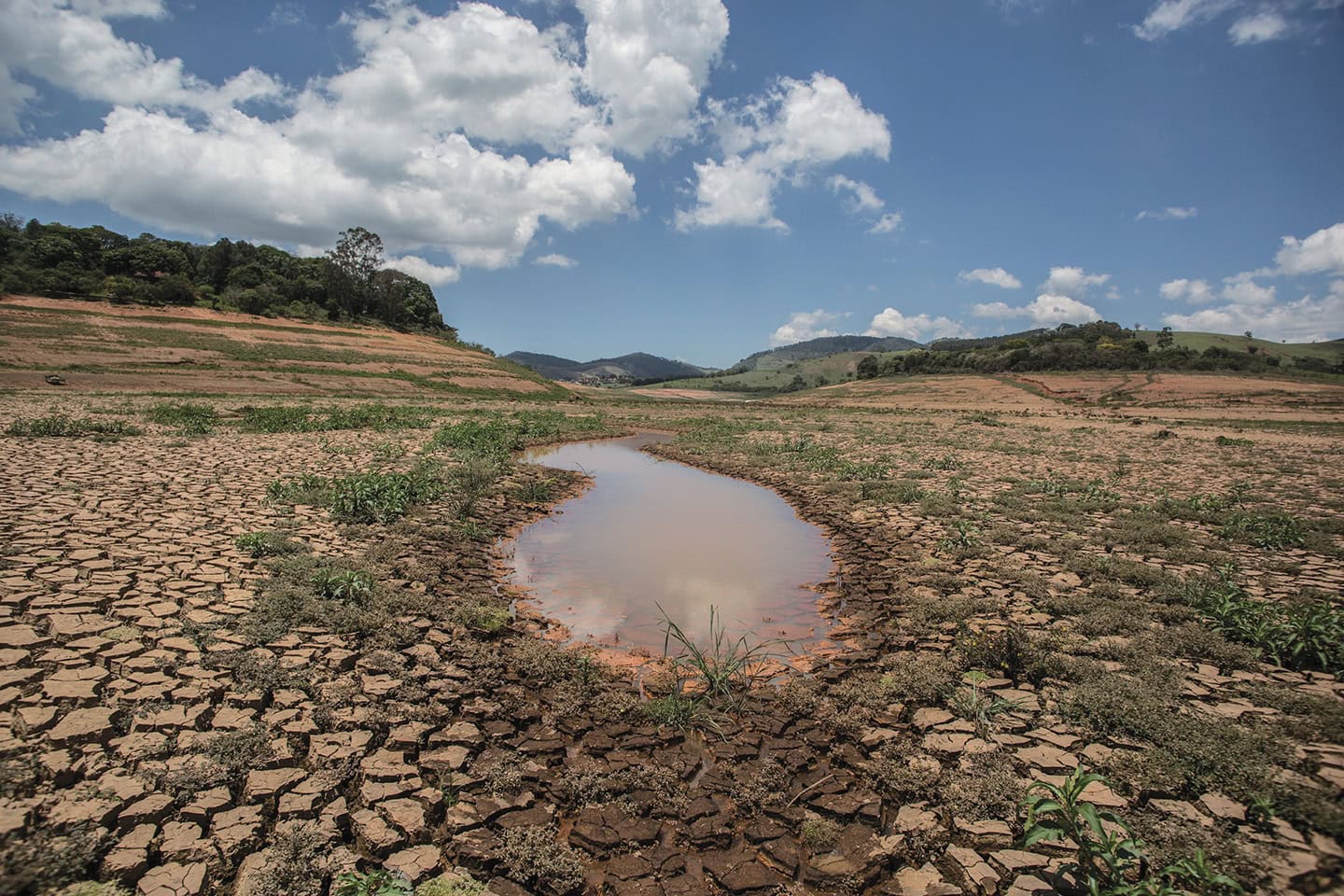
Brazil’s Semi-Arid region is the most populous in the world. Approximately 30 million people live in a territory where rainfall is concentrated in just a few months and evaporation exceeds precipitation. This is compounded by rainfall concentrated in three or four months and long periods of drought. With climate change, the situation worsens.
Research from the National Institute for Space Research indicates that the Semi-Arid region is one of the country’s most vulnerable territories. Carlos cites the example of Jataúba, on the border between Pernambuco and Paraíba, which has already lost 40% of its annual average rainfall in just a few years. Moreover, rainfall irregularity has increased: the annual volume can fall in just a few days, making planting impossible.
It is in this context that family farming reveals its centrality.
Where is Brazil’s food?
Nearly half of Brazil’s family farming is concentrated in the Northeast, with a large part in the Semi-Arid region. It is predominantly rainfed agriculture, dependent on rainfall patterns.
Without large irrigation systems, farmers plant at the right time, integrate cultivated areas and native vegetation, diversify crops, and ensure food security even in adverse conditions. This model, based on diversity and adaptation to the territory, is what Carlos considers capable of sustaining the region’s food security.
According to him, while agribusiness operates with monocultures vulnerable to extreme weather events and dependent on external inputs, family farming works with more resilient systems connected to the soil, biodiversity, and knowledge accumulated over generations.
The defense of family farming is linked to a concept built over three decades by social movements in Brazil’s Northeast: living with the semi-arid.
“If we’ve always lived here, why do we have to leave? Why do we have to fight the drought?” Instead of treating the climate as an enemy, the proposal is to adapt to it, valuing traditional knowledge and incorporating science. Rainwater harvesting, agroecological management, preservation of the Caatinga biome, and productive diversification are strategies that increase the resilience of farming families.
“It is essential for Brazilian universities to focus on trying to solve these problems as well. Scientific knowledge helps us understand reality and act in the best way. However, this cannot be done without also looking at the knowledge accumulated by the population,” he said.
According to the researcher, the response to the climate and food crisis will not come from isolated or top-down imposed solutions. It emerges from the combination of science, ancestral knowledge, and strengthening family farming — an equation that, in his view, is simple and urgent: it is from this alliance that food on the table can emerge in times of climate instability.
The reality is that the climate crisis is already impacting food production worldwide. Floods in the South and Southeast, prolonged droughts in the Northeast, record heat waves. The industrial food system is showing its weaknesses.
From the sertões of Paraíba, Carlos Magno argues that the response will not come from miracle solutions or exclusively technological ones. It will come from strengthening those who already produce food adapted to the territory.
The claim may sound bold, but in the Semi-Arid region, it is commonplace. Where rainfall decreases and the land demands care, those who continue producing food are not the concentrated model, but farming families. Perhaps the future of global food lies less in commodities and more in these territories that have learned, for centuries, to live with recurrent crises.
Source: brasil247.com