



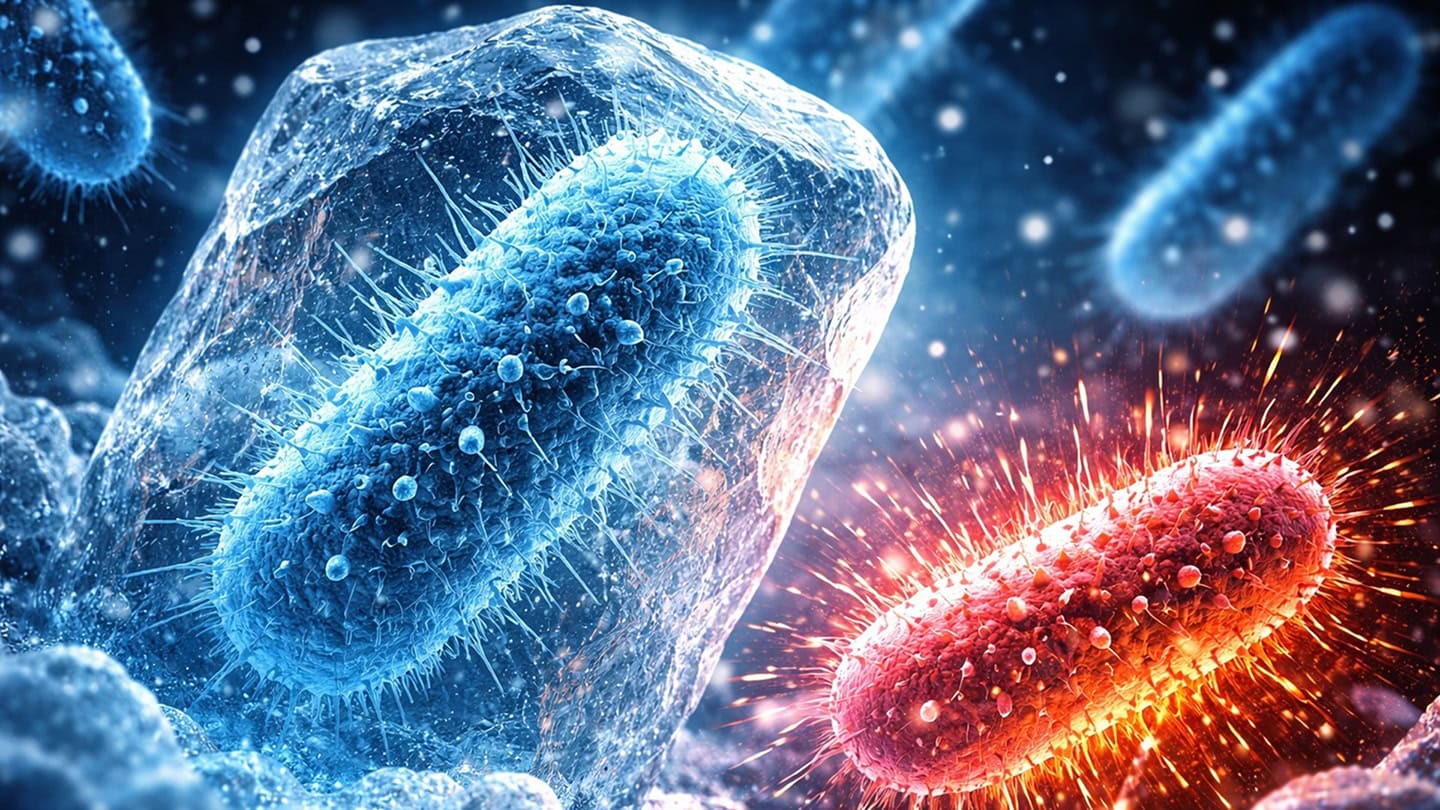
A bacterium preserved in ice for about 5,000 years has been identified as resistant to several currently used antibiotics, in a discovery that reinforces the global alert about the advance of so-called superbugs. The microorganism, named Psychrobacter SC65A.3, was found in a cave in Romania and analyzed by researchers who point to potential risks associated with ice melting and the release of ancient organisms into the environment.
The study, published in the scientific journal Frontiers in Microbiology, draws attention to the possibility that resistance genes present in ancestral bacteria could be transferred to current microorganisms, worsening a problem that already threatens health systems worldwide.
The strain was located in the Scărișoara cave in central Romania, where scientists drilled a 25-meter ice core in the so-called “Great Hall.” The collected material acts as a kind of natural record, equivalent to a timeline of about 13,000 years, allowing access to microorganisms preserved for millennia.
After genome sequencing, the researchers discovered that Psychrobacter SC65A.3 belongs to a genus known for surviving in extremely low temperatures, which would explain its preservation in glacial conditions for thousands of years.
The most concerning discovery, however, came from resistance tests: the bacterium demonstrated the ability to resist 28 antibiotics from 10 different families, including widely used drugs like rifampicin, vancomycin, and ciprofloxacin. Moreover, it is the first strain of the genus with detected resistance to substances like trimethoprim, clindamycin, and metronidazole.
Researcher Cristina Purcarea, the study’s author, highlighted the risk associated with advancing ice melt and the potential spread of these genes in the contemporary environment. “We could face a serious problem if the ice melt releases these microbes,” she stated.
Genetic sequencing also revealed that the microorganism possesses more than 100 genes linked to antimicrobial resistance, plus about 600 genes whose function is still unknown, increasing uncertainties about its potential impact on ecosystems and public health.
Scientists’ main concern is that the release of ancient bacteria could introduce resistant genes into the environment that do not circulate in the current world, strengthening modern pathogenic strains and making the fight against infections even more difficult.
Despite the alert, the researchers also highlighted that the discovery could bring opportunities for science. The bacterium showed the ability to produce enzymes and antimicrobial compounds capable of inhibiting the growth of some current superbugs, opening avenues for research focused on developing new drugs.
Purcarea highlighted the potential of these discoveries for medicine and industry. “These ancient bacteria are essential for science and medicine. They can inspire new antibiotics and industrial enzymes,” she explained.
The study also identified 11 genes with potential to eliminate or inhibit other microorganisms, including bacteria, fungi, and viruses—a result considered promising amid the global antibiotic resistance crisis, which is already a concern for scientific organizations and health authorities.
Source: brasil247.com