



The group stage draw for the 2026 World Cup was held this Friday (5) at the Kennedy Center in Washington, officially defining the 12 groups for the edition that will mark the debut of the 48-team format.
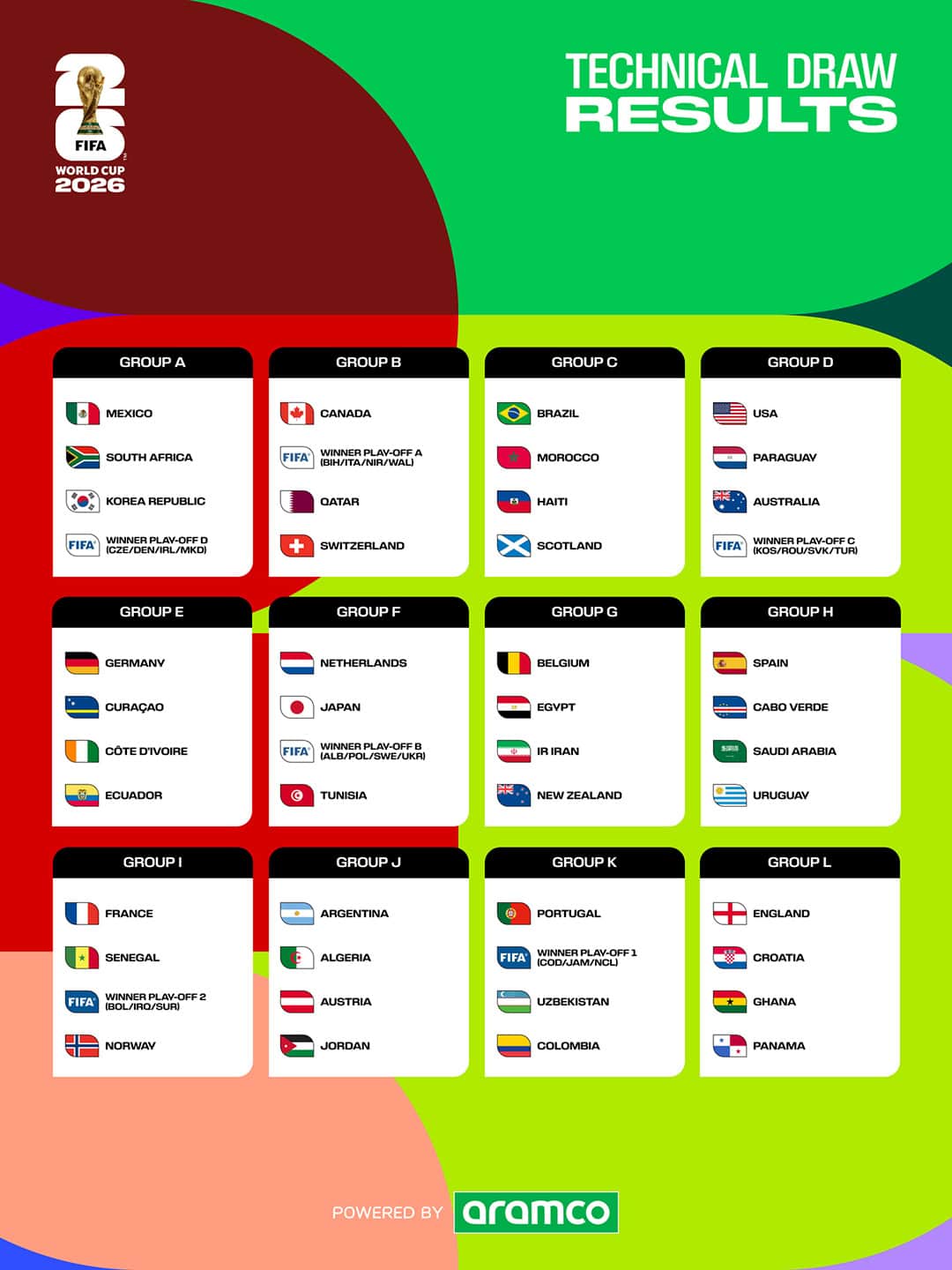 The teams were divided into four pots, each with 12 participants. The three host countries — the United States, Canada, and Mexico — were placed in Pot 1 alongside the highest-ranked teams, while the others were distributed into the intermediate pots. Each group received one team from each pot, maintaining the logic of sporting parity.
The draw and the new World Cup structure
With the new format, the World Cup will have 12 groups of four teams each. Only the top two from each group advance automatically, while a group of third-placed teams will also proceed, increasing competitiveness from the initial stages. This expansion makes the draw even more crucial for the teams’ paths, especially for those that end up in more balanced groups.
Group I: favorite to be the “group of death”
Among all the defined groups, Group I quickly stood out as the most challenging. The presence of the French team, one of the strongest in the world, alongside competitive teams like Senegal and Norway, creates an environment of absolute unpredictability. The high technical level combined with the physical and fast-playing style of the opponents reinforces the risk of stumbles even for the favorites.
The group configuration brings together tradition, talent, and teams with a recent history of growth, making every match an open confrontation. It’s the kind of group where no result can be considered a surprise, which fuels its informal classification as the big “group of death” of this World Cup.
What changes for the teams and fans?
With the groups defined, teams and technical staffs begin the crucial planning phase. For those in less balanced groups, the goal will be to secure an advantage in the first rounds. For those in Group I, the alert is on: every point earned could be decisive for survival in the tournament.
Source: brasil247.com