



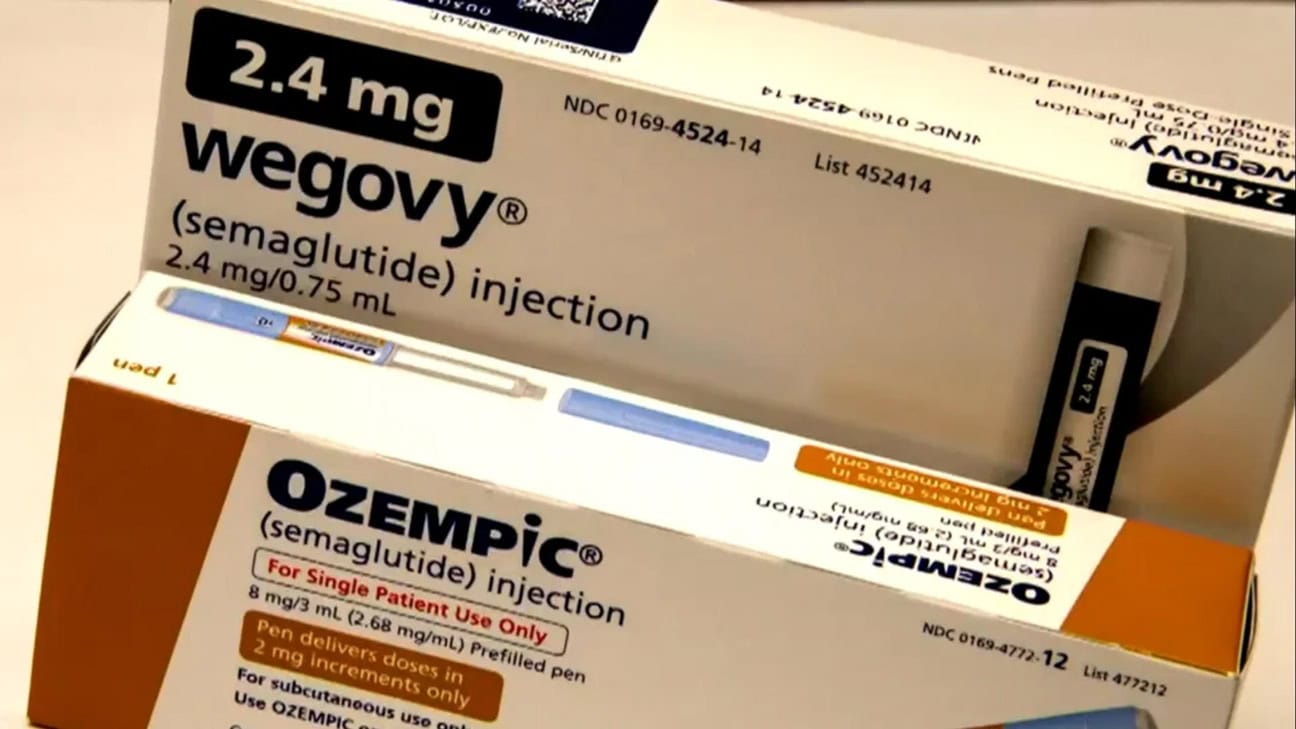
People who rely on Medicare for their health insurance will soon be able to obtain blockbuster obesity and type 2 diabetes medications with monthly copayments of US$ 50 under two new deals announced by the Trump administration on Thursday.
President Trump and his team announced the deals with Novo Nordisk, which manufactures Ozempic and Wegovy, and Eli Lilly, which manufactures Mounjaro and Zepbound, from the Oval Office.
The deals are part of a broader administration initiative called most favored nation drug pricing, which is an attempt to lower drug prices in the US and obtain the same or lower prices than in other developed countries.
“We believe that these deals, in two years… based on our health improvements, we will be budget neutral,” said Dr. Mehmet Oz, who leads the Centers for Medicare and Medicaid Services, during the press conference. While access to the medications increases, their use would reduce spending on other health services. “These medications won’t cost us money,” Oz said. “American taxpayers will get their money back.”
The companies have committed to offering their blockbuster obesity and type 2 diabetes medications to Medicare and Medicaid programs for US$ 245 per month, with copayments for Medicare beneficiaries set at US$ 50 per month starting in April. State Medicaid programs will have to opt in separately.
The programs already cover the companies’ medications approved by the Food and Drug Administration for type 2 diabetes, but under the deals they will also be covered for some overweight or obese patients.
There are some restrictions, according to senior officials who spoke to reporters on condition of anonymity ahead of the White House announcement. The medications will only be covered if patients have:
• a body mass index greater than 27 and established prediabetes or cardiovascular disease;
• a body mass index greater than 30 and uncontrolled hypertension, kidney disease, or heart failure;
• or a body mass index greater than 35.
“This is not about losing weight,” said a senior administration official during the conference call. “It’s about making America healthier. It’s about preventing strokes. It’s about preventing heart attacks and diseases. Preventing end-stage kidney disease.”
“Reducing the cost and leveraging the scale of Medicare and Medicaid to increase access to revolutionary weight loss medications is a transformative step in the battle against chronic diseases and obesity,” said Dr. Bobby Mukkamala, president of the American Medical Association.
As in previous deals with Pfizer and AstraZeneca, the deals with Novo Nordisk and Eli Lilly include lower prices in Medicaid, a commitment to launch new medications in the US at prices equivalent to those in other developed countries, and discounted medications for patients who pay out of pocket without insurance, which will be available through TrumpRx.gov.
The deals with Novo Nordisk and Eli Lilly also include a promise to offer initial doses of their next obesity pills — if they receive FDA approval — for US$ 149 per month for people on Medicare, Medicaid, and using TrumpRx. Eli Lilly said in a press release that it also requested a voucher from the FDA, which could accelerate its review and approval.
The current medications, administered by injection, will be available through TrumpRx without insurance for an average of US$ 350 per month — a reduction from about US$ 500, which is what the companies offer to patients buying directly today. Those prices will drop to US$ 245 over the next 24 months, officials said.
Specifically, Eli Lilly says it will reduce US$ 50 from its existing direct-to-consumer price for Zepbound, making it US$ 299 per month for the starting dose and US$ 449 for higher doses.
“I think manufacturers were open to this in part for political reasons, but also because it would dramatically expand their patient population,” said Geoffrey Joyce, health economist and director of health policy at the USC Schaeffer Center.
In addition, in exchange for these commitments, Eli Lilly and Novo Nordisk will receive a three-year exemption from certain tariffs.
The White House unveiled its plan for TrumpRx and the first deal with Pfizer on September 30. It also announced a deal with AstraZeneca on October 10 and with EMD Serono on October 16, though that deal only includes EMD Serono’s fertility medications, not its cancer or multiple sclerosis drugs.
All the deals follow an executive order in May and letters sent to 17 pharmaceutical companies over the summer to pressure them to voluntarily lower prices.
The TrumpRx website is expected to launch sometime in 2026 and would direct consumers to the pharmaceutical companies’ direct-to-consumer websites to fulfill orders.
Source: npr.org by Sydney Lupkin