



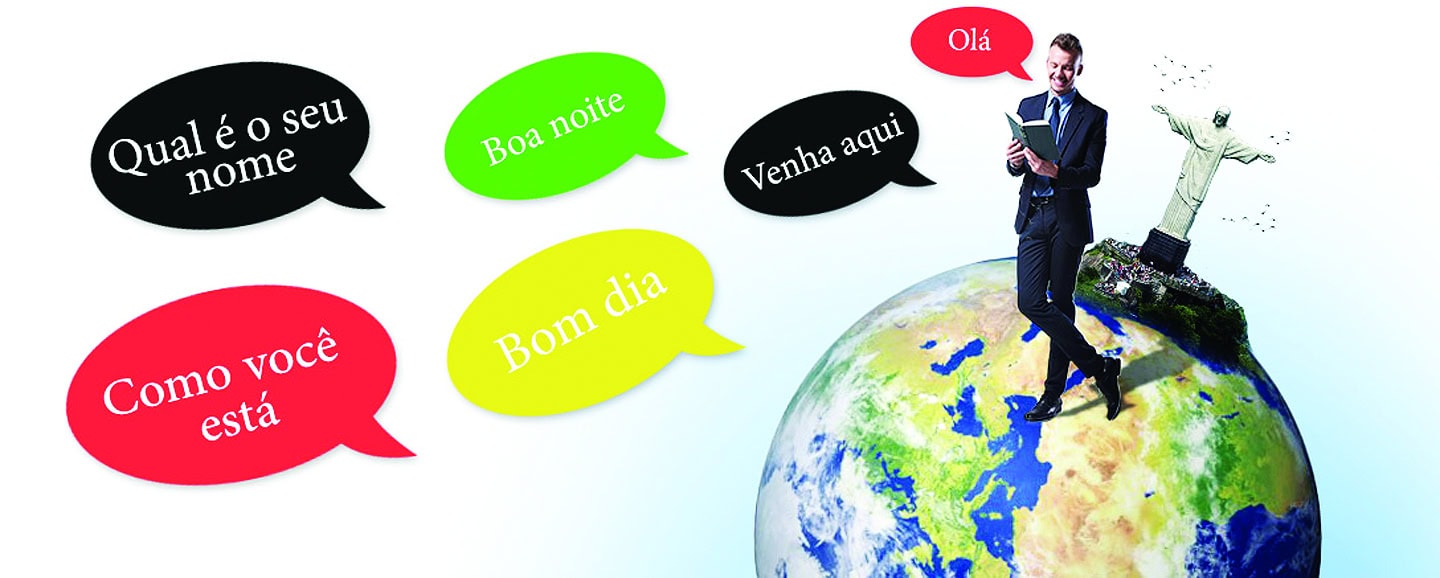
To the surprise of many, Portuguese is not spoken only in Portugal, but also in Brazil, Africa, and Asia. In total, nine countries use Portuguese as their main language. They are: Angola, Brazil, Cape Verde, Guinea-Bissau, Equatorial Guinea, Mozambique, Portugal, São Tomé and Príncipe, and Timor-Leste. The combined population of these countries is approximately 270 million people, according to the Brazilian Ministry of Foreign Affairs.
Yes, Portuguese and Spanish are very similar languages. Both are based on Latin and share many grammatical structures and patterns. But they are not the same. Assuming that because you speak Spanish, you will speak and fully understand Portuguese and vice versa would be a mistake.
Portuguese Community
The Portuguese language holds a very important place in the world; it is no wonder that Portuguese-speaking countries have come together in a community that has the language as an element of unity. The Community of Portuguese Language Countries (CPLP) organization was created in 1996 by the nine Portuguese-speaking countries with the mission of fostering political-diplomatic dialogue, increasing cooperation in all areas, and promoting the Portuguese language. Brazil currently holds the rotating presidency of the organization for 2016-2018.
In the last twenty-one years, the CPLP has managed to consolidate itself as a platform for integration and dialogue among Portuguese-speaking countries and between these countries and the world, and has become an international organization with credibility in the international community. For Brazil, the CPLP is a valuable forum for political dialogue, offering opportunities for the development of South-South cooperation and for the continued recognition of its common language on the world stage.
The uniqueness of the CPLP lies in the fact that its member states are spread across different continents and that it has built, on the solid basis of a common language and historical and cultural ties, a network of shared values and interests that goes beyond geographical distances.
The CPLP was built on principles that, from the Brazilian perspective, are essential. First, decisions are taken by consensus, giving them unquestionable legitimacy. As a result, dialogue among members takes place in a horizontal and democratic manner, with recognition and respect for existing asymmetries.
The presence and activities of the Community have contributed to the international projection of the Portuguese language; to the institutional and political strengthening of its members in situations of crisis or instability; to the joint assertion of common interests of its members in other international forums; and to the development of cooperation programs in various areas.
Headquartered in Lisbon, the Executive Secretariat is the operational arm of the organization and its main objectives are to implement the decisions of the governing bodies and ensure the execution of cooperation programs. The position of CPLP Executive Secretary has been held since July 2012 by Isaac Murade Murargy, from Mozambique.
The CPLP is funded both through the operational budget of the Executive Secretariat, financed by mandatory contributions from member states, and through a Special Fund, promoted by voluntary contributions and intended to finance cooperation programs, projects, and thematic initiatives.
The Future
Portuguese continues to be an important language worldwide. It is a mandatory subject in schools in Argentina and Uruguay. In addition, it is being taught in Venezuela, Republic of Congo, Senegal, Zambia, South Africa, Namibia, and Eswatini. The United Nations Educational, Scientific and Cultural Organization (UNESCO) has identified Portuguese as the fastest-growing language in Europe (after English) and with potential to be the fastest-growing foreign language throughout southern Africa and South America. Due to economic ties between Asian and Portuguese-speaking countries (especially Brazil), interest in speaking the language has grown. This is seen in China, Korea, and Japan. China has even received large numbers of Brazilian immigrants who are slowly spreading their special dialect of Portuguese. The expected future of Portuguese is one of continued growth.
Source: Itamaraty and British Council