



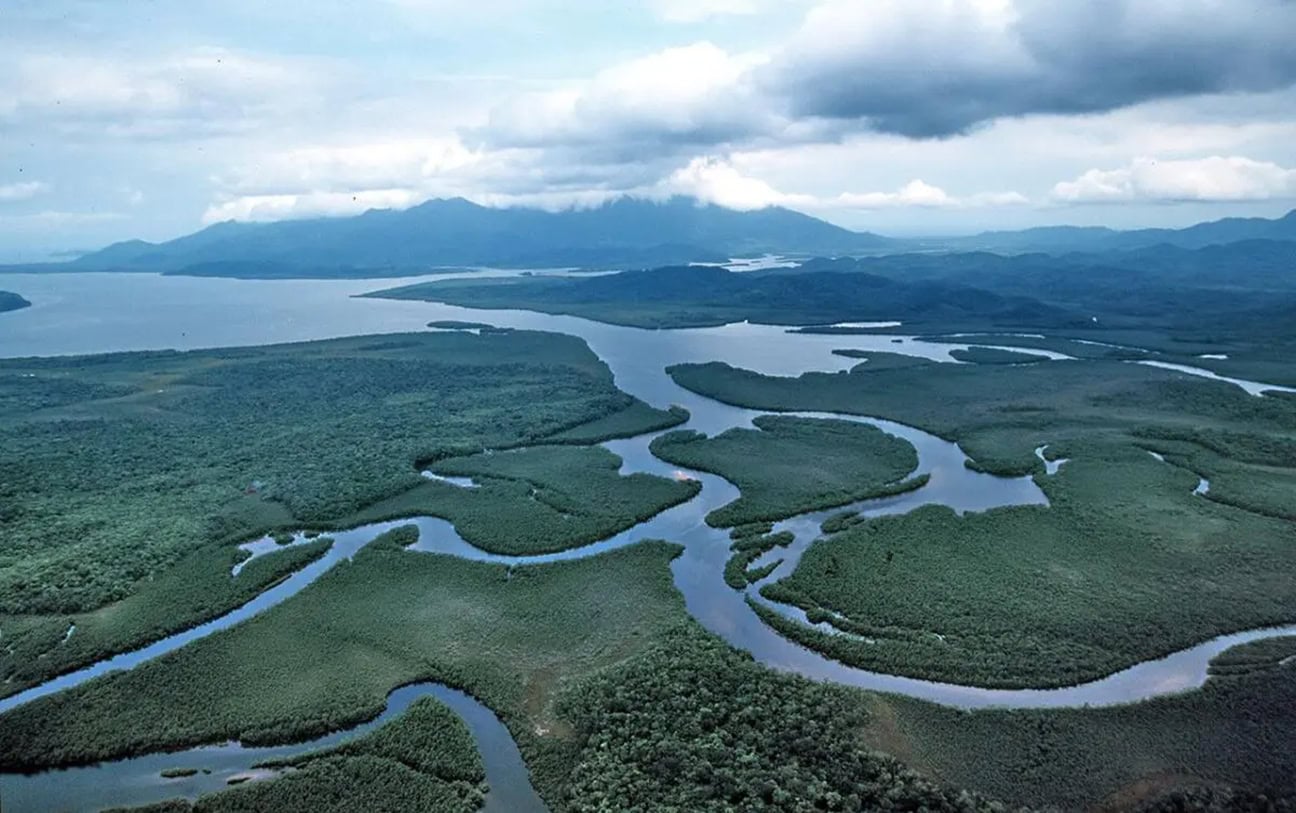
The Atlantic Forest is the biome that has undergone the most significant changes in land cover and use in Brazil between 1985 and 2023. Over 39 years, its territory recorded a 91% increase in agricultural area, but also a recovery of native vegetation in 45% of municipalities after the implementation of the Forest Code in the country, according to an analysis by Mapbiomas.
With only 31% of its vegetation cover preserved and 67% of the region occupied by human activities, the Atlantic Forest continues to lose vegetation. During the analyzed period, there was a 10% reduction, equivalent to 3.7 million hectares.
The study reveals that 60% of the municipalities in the Atlantic Forest currently have less than 30% of their native vegetation. Over the years, only the states of Rio de Janeiro, Rio Grande do Norte, and São Paulo managed to recover more vegetation than they lost in their biome.
Where natural areas have been lost, forests have been the most affected, including savanna and forest formations, mangroves, and restingas. In total, 2.7 million hectares of this category were lost between 1985 and 2023.
Grassland formations, although they lost the smallest area in absolute terms — 2.45 million hectares — experienced the greatest proportional reduction. Over 39 years, 27% of this class was converted, mainly into agricultural and pasture areas.
“The Atlantic Forest simultaneously experiences deforestation and regeneration, but in regions that do not overlap. We continue to lose forests in areas with a significant proportion of remnants, while gains occur in regions devastated for decades where very little remains,” says Luis Fernando Guedes Pinto, executive director of the SOS Atlantic Forest Foundation.
Although pastures occupy 26.23% of the entire territory originally covered by the Atlantic Forest, agriculture showed the greatest expansion. Between 1985 and 2023, the agricultural area in the Atlantic Forest region increased from 10.6 million hectares to 20.2 million hectares. The states of Rio Grande do Norte, Mato Grosso do Sul, and São Paulo were the most affected proportionally by this conversion.
Soy and sugarcane represent 87% of the temporary crops in the biome, which also produces rice, cotton, and other similar crops. During this period, sugarcane cultivation expanded by more than 4.2 million hectares, and soy reached an additional 8.2 million hectares in 2023.
Forestry has also expanded in the last 39 years, with more than 3.6 million hectares planted, representing 50% of the practice nationwide. Most of the forestry in the Atlantic Forest (60%) was planted in the states of Santa Catarina, Paraná, and Bahia.
Considering the total area occupied by agriculture, including crops, pastures, land use mosaics, and forestry, 71.99 million hectares have been converted by 2023.
Source: Agência Brasil