



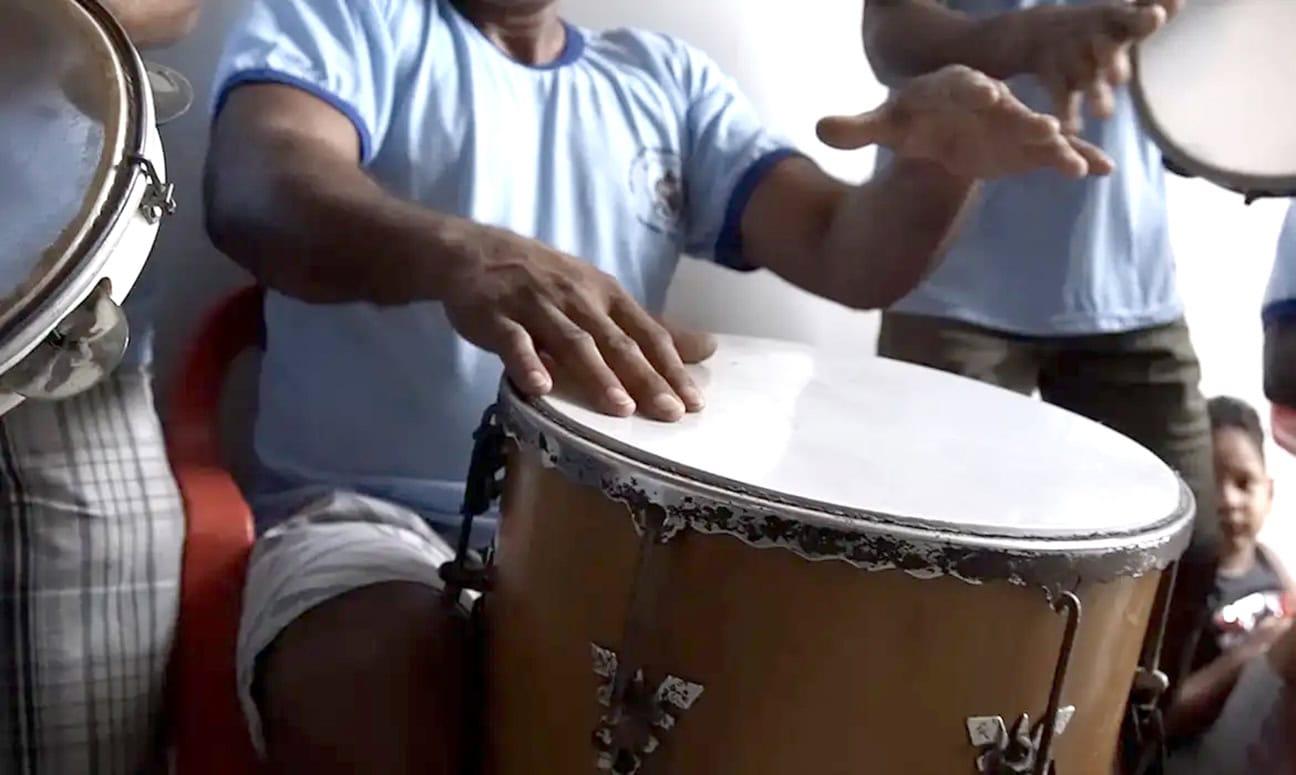
A total of nine samba musical instruments, including the pandeiro (a type of hand-played frame drum), tam-tam (a percussion instrument often referred to as a gong), cuíca (a type of friction drum), and tamborim, have been officially recognized as part of Brazil’s national cultural heritage. The law formalizing this recognition was signed by President Luiz Inácio Lula da Silva.
The craftsmanship techniques used to create these musical instruments are also recognized as valuable cultural practices and traditions.
The list of the nine percussion instruments commonly used in samba circles and samba schools also includes the surdo (a type of bass drum), rebolo (another type of drum), frigideira, timba, and repique de mão (hand drum).
As established in the new law, these instruments must be recognized as expressions of national culture when they follow specific traditional practices and methods of their craftsmanship. Details regarding the production processes of these instruments will be specified in a future decree.
Master percussionist Jackie Cunha, 32, from São Paulo, is skilled in playing all these instruments except for the cuíca. She fondly recalls being introduced to them as a child when her mother took her to samba circles in the city. By the age of seven, she had already mastered her first pandeiro.
For the percussionist, the official recognition of samba instruments is a cause for celebration, although it seems long overdue.
“The importance of this recognition is immense. Instruments like the surdo, caixa de madeira, tamborim, and pandeiro are used in many different rhythms, not just samba, because they bring a distinct sound, a richness of detail, and a variety of tones,” she explained.
Percussionist Glauber Marques represents the third generation of cuíca players in his family. He learned the instrument from his grandfather, a sambista, at Nenê de Vila Matilde — one of the most traditional samba schools in São Paulo.
“The soul of samba is in the instruments. The true essence is in the rhythm, in the sound. Without instruments, there is no samba,” he explains. “As my grandfather used to say, the cuíca is the most cunning instrument; it cries and laughs at the same time.”
Master drummer Rafa specializes in samba instruments and currently leads 172 percussionists at the samba school Imperatriz da Pauliceia. In 2015, she made history by becoming the first woman to lead the drum section of a samba school in São Paulo.
For Rafa, regardless of tuning or melodic timing — whether in a samba circle or in the drum section of a samba school during Carnival — musical instruments give body and soul to samba.
Source: Agência Brasil