



In July 2022, a law established April 19 as Indigenous Peoples Day in Brazil — no longer “Indian Day” — with the aim of celebrating their culture and heritage in the country. Approved by Congress, the measure eliminates the term “Indian,” considered prejudiced against indigenous peoples.
Still, in the view of Dinamam Tuxá, executive coordinator of the Articulation of Indigenous Peoples of Brazil — APIB — prejudice is, at its core, reinforced by stereotypes that persist in celebrations and textbooks.
“Schools make children dress like this. They try to fit indigenous peoples into a frame, into a little box. Indigenous people are the ones who live in the forest, walking around in their traditional clothes. This creates a scenario stained by racism, as these children grow up thinking of indigenous people as having straight hair, slanted eyes, and reddish skin. We have gone through miscegenation. We have been victims of violence. How many indigenous women have suffered sexual abuse? Miscegenation was forced upon them,” Tuxá said in an interview with Agência Brasil.
The history of indigenous peoples in Brazil is marked by centuries of violence. In Dinamam Tuxá’s view, this persists in the form of racism — a remnant of Portuguese colonization.
“It was a process of fierce violence and forced assimilation. Indigenous peoples were abused, stripped of their language, and forced into a reality that does not belong to them, with unmarked indigenous lands and no public policy to encourage their culture. This also contributes to the spread of violence both inside and outside indigenous territories,” Tuxá noted.
Genocide
History professor Fabrício Lyrio from the Federal University of Recôncavo da Bahia observes that the arrival of the Portuguese brought a series of attacks on indigenous peoples, resulting in genocide. While about 5 million indigenous people lived in Brazil in 1500, that number is below 1 million today.
“Above all, there is the symbolic violence of asserting presence in a land where other people already lived. This action had repercussions. Both intentional violence 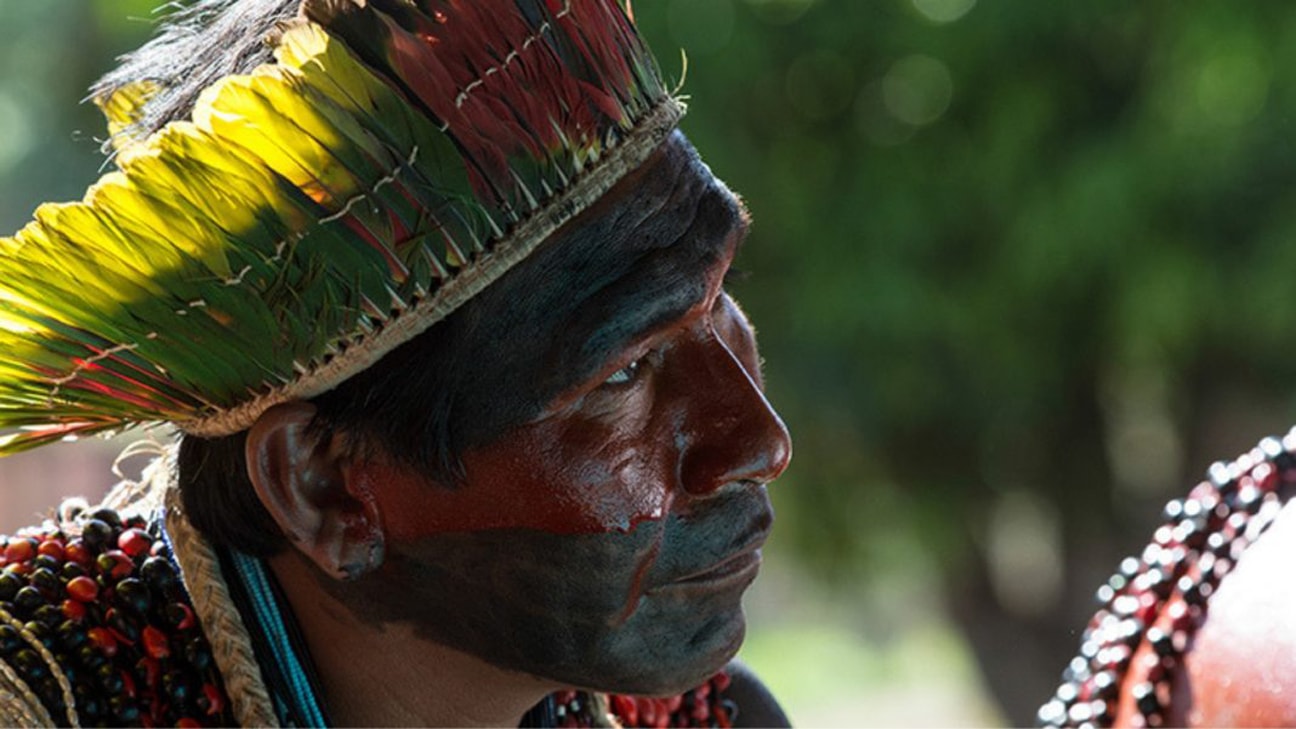 of war and enslavement, as well as unplanned violence, but which had a huge impact on native peoples — the arrival of new infectious agents — undoubtedly brings to the scene a dimension of genocide,” said Professor Lyrio.
Indigenous peoples were the first to be enslaved by the Portuguese in Brazil — even before immigrants and African peoples, the professor recalls. The first sugar mills in the country, he added, were built with indigenous labor, mostly enslaved.
The Portuguese who landed here in 1500 believed they had arrived in India. As a result, they called the locals Indians. The correct term, however, is “indigenous,” a Latin term meaning “native of the place where one lives.”
Indigenous Peoples Achieve Decisive Victory in Brazil
On September 21, the Federal Supreme Court upheld the rights of indigenous peoples to their traditional lands by ruling against the so-called temporal framework thesis, a legal argument that indigenous peoples should not obtain title to their ancestral territories if they were not physically present on them on October 5, 1988, the day the current Brazilian Constitution was adopted.
After the decision, indigenous peoples across Brazil celebrated what they called “the decision of the century.” It also has significant implications for the global climate, as the demarcation of indigenous territories has repeatedly been shown to be one of the most effective barriers against deforestation in the Amazon.
The case, which had been on the Federal Supreme Court’s agenda for years, stems from a dispute in which the state of Santa Catarina used the temporal framework argument to contest lands claimed by the Xokleng indigenous people. Even before deciding on the merits, the Court determined that its decision in this case would apply to similar cases throughout Brazil.
Indigenous peoples from across the country traveled year after year to Brasília, coming from remote locations, to ask judges and lawmakers to respect their rights. This decision will strengthen their tenacious struggle to preserve the environment and their way of life, which significantly depends on the land.
The decision brings immense relief to indigenous peoples. If upheld, the arbitrary temporal framework would have made it impossible for indigenous territories to be titled for communities that were expelled from their lands before 1988 and could not prove they were involved in an ongoing dispute over their claim at that time.
However, the ruralist bloc in Congress, closely linked to agribusiness, also presented an initiative that would enshrine the temporal framework thesis into law. The fate of this proposal remains to be seen.
The court’s decision is consistent with precedent from the Inter-American Court of Human Rights, which recognized the rights of indigenous peoples to their land and stated that this right continues as long as their “material, cultural, or spiritual connection” to the land persists.
Source: Agência Brasil and Human Rights Watch