



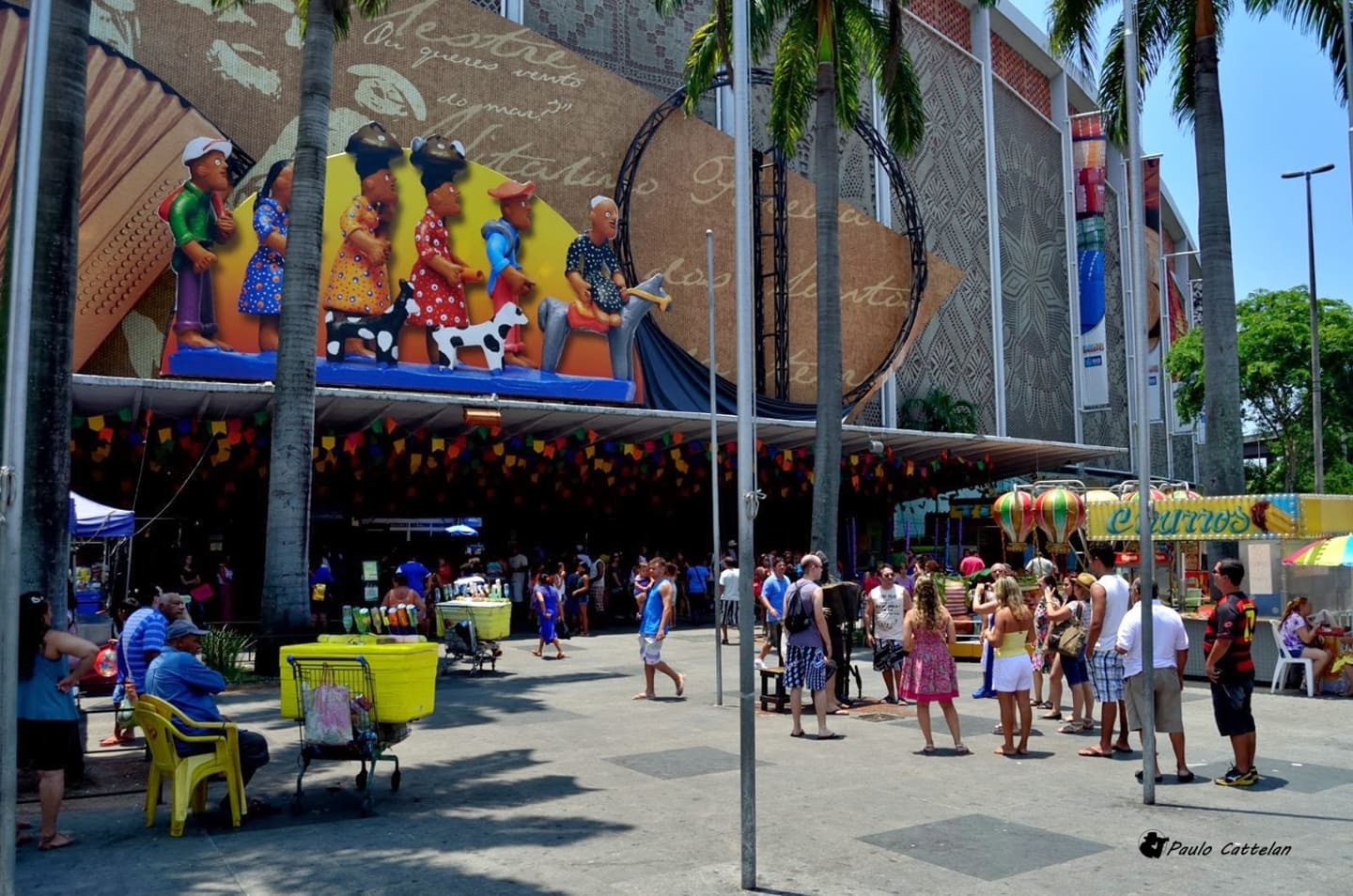
The governor of Rio de Janeiro, Cláudio Castro, enacted a law in November that designates the ‘Centro Luiz Gonzaga de Tradições Nordestinas’ as Historical, Touristic, Cultural, and Gastronomic Heritage of the State of Rio. The project, authored by state deputy Tia Ju, was approved by the Legislative Assembly of the State of Rio de Janeiro.
More commonly known by locals as ‘Feira de São Cristóvão’ (Northeastern Fair of São Cristóvão), the pavilion is located in the northern zone of the capital of Rio de Janeiro and was already recognized as Intangible Cultural Heritage of Brazil. Covering 37,000 square meters, the fair brings together options for northeastern cuisine, cordel literature, typical products from the region, handicrafts, and clothing, in addition to shows featuring northeastern and northern rhythms. Besides the northeastern tradition, the fair is also famous for the strong presence of karaoke bars.
The Beginning
“The beginning of the activities of the Feira de São Cristóvão dates back to 1945, when the cordel poet Raimundo Santa Helena read, on September 18, 1945, in Campo de São Cristóvão, a cordel he had written about the end of World War II. As a result of this reading, a movement of people interested in listening to and selling cordel literature began to emerge. Thus, the fair is said to have started from this initiative.
There is another historical version that argues that the fair emerged during the 1940s as a result of a movement of northeasterners who disembarked and camped while waiting for a place to live or a job.
Source: Agência Brasil