



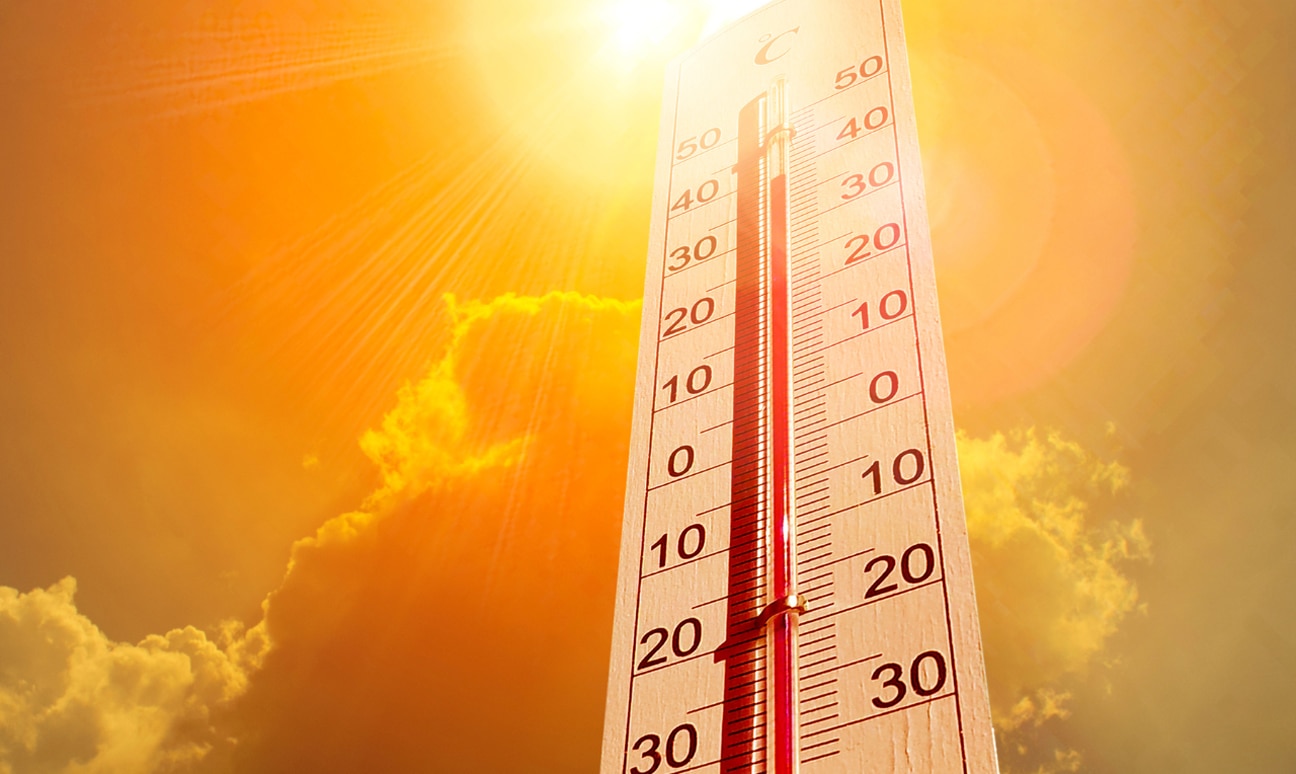
Brazil has recently experienced a severe heatwave that has broken records and caused widespread discomfort and even health problems for many residents. The heatwave began in mid-November and has persisted for several weeks, with temperatures in some parts of the country reaching up to 46 degrees Celsius (115 degrees Fahrenheit). This is well above the average temperature for this time of year (summer begins only in December in the Southern Hemisphere), and the prolonged heat has been particularly difficult for vulnerable populations, such as the elderly and the poor.
The heatwave has been attributed to several factors, including climate change, El Niño, and deforestation. Climate change is causing global temperatures to rise, making heatwaves more frequent and intense. El Niño is a natural climate pattern that occurs every few years and can cause changes in weather patterns around the world, including higher temperatures in Brazil. Deforestation is also contributing to the heatwave, as trees help regulate the climate, and their removal can lead to warmer temperatures.EL Niño
Researchers in Brazil believe that the heatwave is strongly associated with the El Niño phenomenon. It is characterized by the weakening of the trade winds (which blow from east to west) and the abnormal warming of the surface waters in the eastern part of the equatorial Pacific Ocean. Changes in the interaction between the ocean surface and the lower atmosphere have consequences for weather and climate in different areas of the planet. This occurs because the circulation dynamics of air masses take on new moisture transport patterns, affecting temperature and rainfall distribution.
Geographer Marcos Freitas, a researcher at the Federal University of Rio de Janeiro (UFRJ), draws attention to measurements taken by the National Oceanic and Atmospheric Administration, linked to the U.S. government. The agency, he highlighted, measures the water temperature in the so-called Zone 3.4, located in the central equatorial portion of the Pacific Ocean.
“We are approaching a 2ºC anomaly. Normally, we have a medium or weak El Niño every two years, when we see an anomaly of at most 1ºC. When it exceeds 1ºC, we call it a strong El Niño. This changes the air masses over our continent.”
“We are facing a strong El Niño,” he argued, which is blocking the entry of moisture-laden air masses into part of the Southeast and a bit in the Midwest.
The trend also points to a stifling summer, he continued. “This El Niño is not going to dissipate now,” he added.
The World Meteorological Organization estimates that the effects of the phenomenon will be felt at least until April next year. Marcos Freitas noted that a strong El Niño occurs roughly every seven years, but its intensity has been increasing as a result of global warming.Source: Agência Brasil