



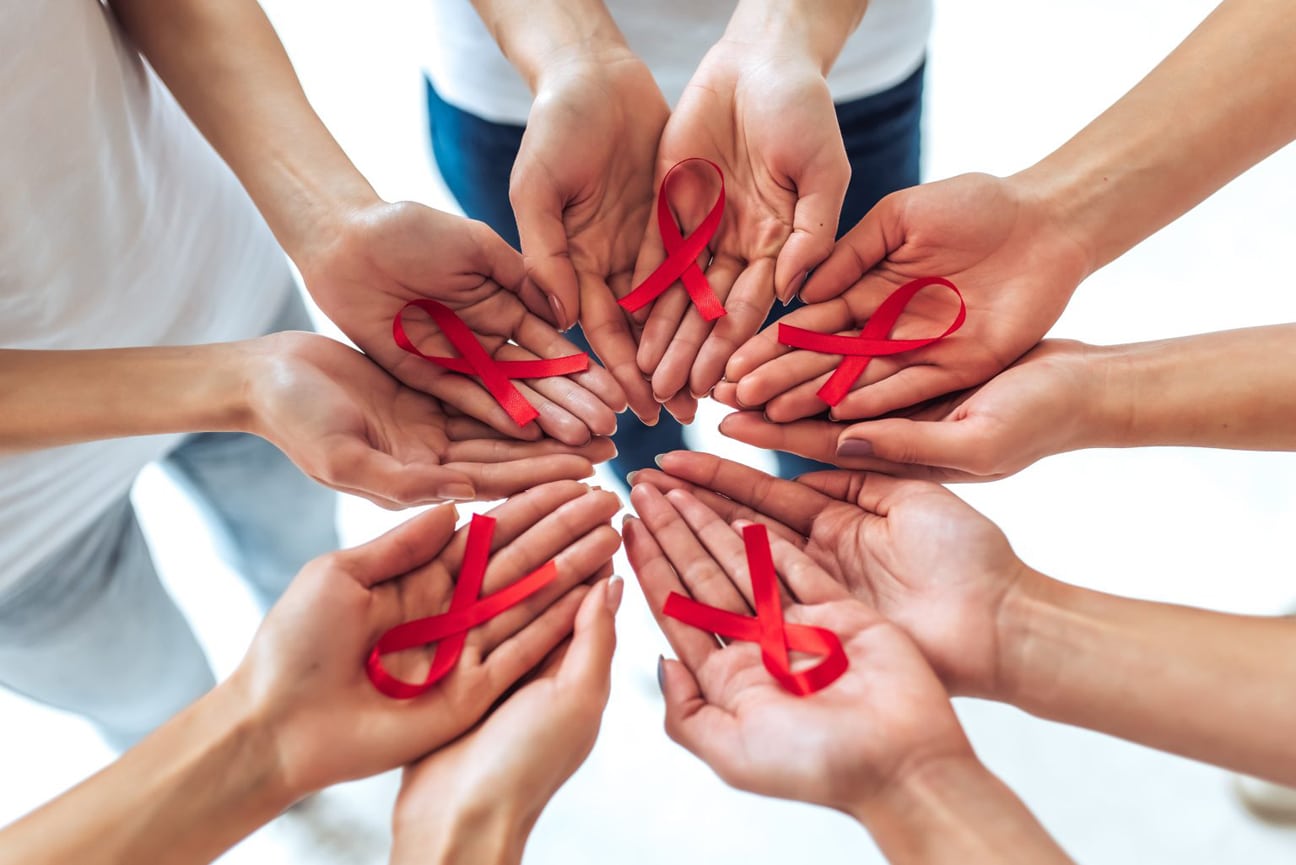
A new report from UNAIDS shows that there is a clear path to ending AIDS. The study titled ‘The Path that Ends AIDS’ contains data and case studies highlighting that ending AIDS is a political and financial choice, and that countries and leaders already following this path are achieving extraordinary results.
Botswana, eSwatini, Rwanda, the United Republic of Tanzania, and Zimbabwe have already reached the “95-95-95” targets. This means that 95% of people living with HIV know their HIV status, 95% of those who know they are living with HIV are on life-saving antiretroviral treatment, and 95% of those on treatment have a suppressed viral load. An additional 16 countries, eight of them in Sub-Saharan Africa, the region that accounts for 65% of all people living with HIV, are also close to achieving this.
“The end of AIDS is an opportunity for a uniquely powerful legacy for today’s leaders,” said Winnie Byanyima, Executive Director of UNAIDS. “They could be remembered by future generations as those who ended the world’s deadliest pandemic. They could save millions of lives and protect everyone’s health. They could show what leadership can do.”
The report highlights that responses to HIV succeed when anchored in strong political leadership. This means following the data, science, and evidence; addressing the inequalities that hinder progress; empowering communities and civil society organizations in their vital role in the response; and ensuring sufficient and sustainable funding.
Progress has been strongest in countries and regions with the highest financial investments, such as East and Southern Africa, where new HIV infections have been reduced by 57% since 2010.
Thanks to support and investment in ending AIDS among children, 82% of pregnant and breastfeeding women living with HIV worldwide were accessing antiretroviral treatment in 2022, up from 46% in 2010. This has led to a 58% reduction in new HIV infections among children from 2010 to 2022, the lowest number since the 1980s.
Progress in the HIV response has been strengthened by ensuring that legal and political milestones do not undermine human rights but enable and protect them. Several countries repealed harmful laws in 2022 and 2023, including five (Antigua and Barbuda, Cook Islands, Barbados, Saint Kitts and Nevis, and Singapore) that decriminalized same-sex relations.
The number of people on antiretroviral treatment worldwide increased nearly fourfold, from 7.7 million in 2010 to 29.8 million in 2022.
However, the report also states that ending AIDS will not happen automatically. AIDS claimed a life every minute in 2022. About 9.2 million people still lack access to treatment, including 660,000 children living with HIV.
Women and girls are still disproportionately affected, particularly in Sub-Saharan Africa. Globally, 4,000 young women and girls were infected with HIV every week in 2022. Only 42% of districts with an HIV incidence above 0.3% in Sub-Saharan Africa are currently covered by dedicated HIV prevention programs for adolescent girls and young women.
Almost a quarter (23%) of new HIV infections occurred in Asia and the Pacific, where new infections are alarmingly rising in some countries. Sharp increases in new infections continue in Eastern Europe and Central Asia (up 49% since 2010) and in the Middle East and North Africa (up 61% since 2010). These trends are primarily due to the lack of HIV prevention services for marginalized and key populations and the barriers imposed by punitive laws and social discrimination.
Funding for HIV also fell in 2022, both from international and domestic sources, returning to the same level as in 2013. Total funding amounted to $20.8 billion in 2022, far below the $29.3 billion needed by 2025.
According to the authors of the study, there is now an opportunity to end AIDS by increasing political will through investments in a sustainable HIV response, funding what matters most: evidence-based HIV prevention and treatment, integrated health systems, non-discriminatory laws, gender equality, and empowered community networks.
In 2022, it is estimated that:
- 39.0 million people worldwide were living with HIV
- 29.8 million people accessed antiretroviral therapy
- 1.3 million people were newly infected with HIV
- 630,000 people died from AIDS-related illnesses