



At the first review conference of the Amendment to the Convention on the Physical Protection of Nuclear Material (A/CPPNM), held from March 28 to April 1 in Vienna, the United States and other parties were working to reduce risks of crimes related to nuclear material and facilities used for peaceful purposes, such as theft, smuggling, or sabotage.
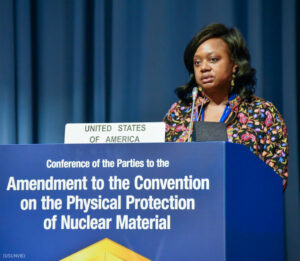
The U.S. Under Secretary of State for Arms Control and International Security, Bonnie Jenkins, told the conference on March 28 that as the need for nuclear energy and technology continues to accelerate, nations must be vigilant about the evolving challenges that threaten the security of nuclear materials and facilities.
“We are here today because we recognize that all States benefit from strong global nuclear security, because a nuclear terrorism act anywhere will have serious consequences for all,” Jenkins said. “Our mission here this week is critical and relevant.”Strengthening Nuclear Security
The A/CPPNM requires parties to establish standards for protecting nuclear material. The original convention came into force in 1987 and addressed the protection of civil nuclear material during international transport. The 2005 amendment expanded the scope of the convention to cover the physical protection of nuclear facilities and nuclear material in domestic use, storage, and transport, and broadened the list of offenses that parties must criminalize, including smuggling and sabotage.
At the A/CPPNM review conference in Vienna, parties are sharing best practices, lessons learned, and challenges in protecting civil nuclear material. The CPPNM has 164 parties, and 129 of them are parties to the amendment, with Brazil being the most recent to ratify.
On May 8, 2021, on the fifth anniversary of the amendment’s entry into force, the Director General of the International Atomic Energy Agency (IAEA), Rafael Mariano Grossi, called for more countries to become parties to the convention, stating that universal adherence would harmonize approaches to prevent the unauthorized handling of nuclear material.
“The Convention and its Amendment play a critical role in ensuring that nuclear material used for peaceful purposes does not fall into the hands of those who may wish to misuse it,” he said.
The Resident Representative of Thailand to the IAEA, Ambassador Morakot Sriswasdi, stated in the IAEA declaration that the A/CPPNM has helped Thailand strengthen its nuclear security measures. “Becoming a Party to the Convention and its Amendment allows Thailand to foster cooperation and expand access to nuclear technology and its peaceful applications,” Sriswasdi said.
Source: share.america.gov