



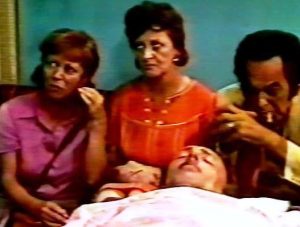
On September 18, 2020, Brazilian television completed 70 years of existence. A date to celebrate greatly, as Brazil is also one of the countries with the highest concentration of open television networks, which, despite some bankruptcies during this period, remains strong and increasingly robust.
One of these losses occurred in 1980, after thirty years of operation, with TV Tupi from São Paulo. Just like the pioneering Dumont in the United States, we also lost one of our first broadcasters. In this case, TV Tupi was not only the first open television station in the country but also in South America. Many pioneers began their careers there in 1950, such as Vida Alves, Walter Forster, Lima Duarte, Laura Cardoso, Dionísio Azevedo, Lia de Aguiar, and many others. A history so rich that it evokes envy of the stellar cast the station had in its golden years. Fortunately, many of those who started there and continue to work are part of the main networks in the country, especially Globo. Actors, writers, producers, presenters, and many others.
Young people, supported by Assis Chateaubriand and his company, Diários Associados, took flight in those 1950s. Young people with such great, contagious energy that they are not behind Brazilians living abroad who feel an immense urge to shout the importance of being Brazilian. They had that desire back then: from radio to television, or from theater and cinema to the new medium, those young people wanted to use television as a tool to not only create a country, whose culture would be disseminated in productions, but also a foundation to transform the world.
After so much time, we still see part of that spirit alive, but it was reignited during this phase of social isolation and pandemic, when television in Brazil had to definitively change to continue: remembering that improvisation was necessary, thinking – all TVs, in general – that content is ahead of technology (which should always be a concern, but should take a back seat to assist in communication with the viewer) and creativity is above all. The result will be good content and good audience engagement. It was with this spirit that everything was born, curiously, when Chateaubriand showed that Brazil had the capacity to make things happen, paying the necessary price, by acquiring two stations in New York: one from RCA, for the future TV Tupi of São Paulo, and one from GE (General Electric), for TV Tupi of Rio de Janeiro. It is always important to think that all content must touch us deeply, evoke emotions, inform, and nourish the soul. Love what you do, always. We need to remember that the spirit of Brazilians must always be energetic, even in the most difficult moments, with the determination to overcome challenges regardless of where each one is.
In these seven decades, much has changed. Telenovelas emerged, gained the world, starting with the distribution of “O Bem Amado” (Globo, 1973) abroad. We moved from black and white, from live broadcasts, from regional… We ended up at national, international, via satellite, even with images from outside the planet! Who doesn’t remember the arrival of man on the Moon in 1969? We then transitioned to analog color in 1972, and to vibrant high definition in 2007.
In these seventy years, we have had memorable moments, never forgotten by Brazilians: the teleplays of TV Tupi, the shows of TV Excelsior, the music festivals of TV Record, the telenovelas of TV Globo, the journalism of TV Bandeirantes, the auditorium programs of SBT, the modernity of TV Manchete, the children’s shows of TV Cultura… How many stories and how many broadcasters transformed Brazilian customs as well.
Important moments that stirred our culture, our history, and often make those living outside the country nostalgic when they see our productions thousands of kilometers away, such as through the signal of TV Globo International, which reached homes worldwide starting in 1999. Not to mention the human warmth that demonstrates the connection of TV when the population is called by Globo to take to the streets for BRDAY NYC! It is a connection that overflows at the event and shows the relationship that television has with its audience, driven by such an important initiative as Brazilian Day, which we could summarize in two words: Brazilian identity and essence!
So much has changed. Technology has improved, and what was difficult in the early years, such as closing a link to transmit an image over long distances, taking hours to find the right angle, today can be done in a matter of seconds after pressing a button. Only one thing hasn’t changed: the passion of Brazilians for television, which today, supported by new platforms and new ways of consumption – through cell phones, tablets, and computers, shows that content will always come first, whether inside or outside the television. Only one thing remains the same: the essence and spirit of Brazilians, who continue to be connected to the great stories told by television… for 70 years.
ELMO FRANCFORT
Coordinator of Memória ABERT, Writer and Journalist.
elmo@francfort.com.br