



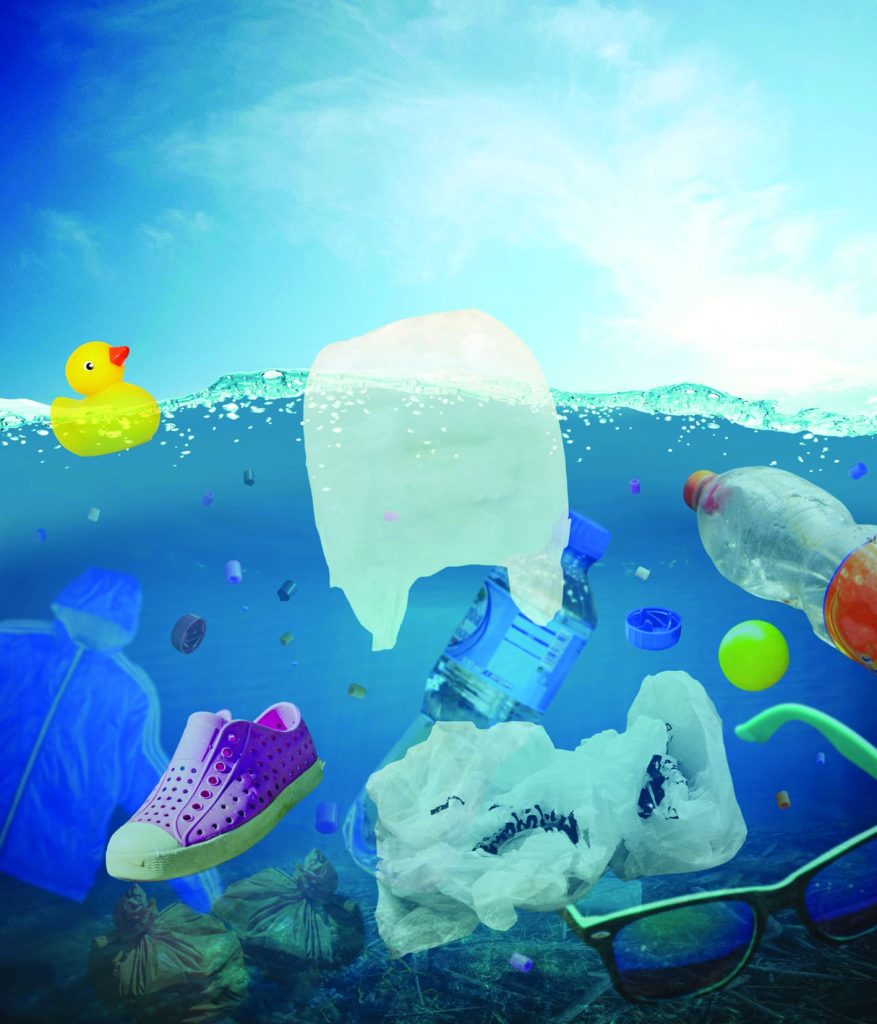
Plastic waste, discarded indiscriminately, has been accumulating in the world’s oceans for years and is increasingly harming local industries that depend on the oceans and coastal waters — especially tourism and aquaculture.
Supporting economic vitality is one of the reasons the U.S. International Development Finance Corporation (DFC) launched its Ocean Plastics Initiative. By supporting specific projects, the initiative will reduce plastic disposal in oceans and waterways and help remove existing debris.
The DFC aims to catalyze $2.5 billion in investments for infrastructure projects that will reduce plastic waste and marine debris in the oceans of developing countries.

The investment will support the following objectives:
• Conversion of plastic waste into energy;
• Recycling of plastic;
• Promotion of proper plastic disposal;
• Cleanup of ocean waste.
Support for the development of products made from non-plastic materials.
Currently, about 150 million tons of plastic pollute the world’s oceans, a quantity that grows by 11 million tons each year. (For reference, 10 million tons is approximately the weight of one hundred aircraft carriers.)
This pollution harms economies and people’s livelihoods. According to a 2020 report from the Asia-Pacific Economic Cooperation (Apec), the damage caused by marine debris to fishing, aquaculture, shipping, shipbuilding, and recreational boating cost Apec economies $11.2 billion in just one recent year.
Sources of the Problem
The majority of ocean plastic waste comes from land-based sources, especially in rapidly urbanizing areas in the developing world, where waste management systems struggle to keep up with rising consumption, leading to more trash.
Countries that are sources of plastic pollution include Indonesia, the Philippines, Vietnam, Sri Lanka, Thailand, Malaysia, Egypt, and Nigeria. (According to its own report, the People’s Republic of China is also a major polluter, but the DFC does not support investments in the country.)
Solutions
By attracting support for plastic cleanup, the DFC will evaluate proposals that boost trade between the U.S. and Africa (in part, through the U.S. government’s Prosper Africa initiative), support women (in part through the 2x Women Initiative), or advance the initiative’s goals for the Indo-Pacific.
The Ocean Plastics Initiative seeks to leverage economic benefits while simultaneously bringing cleaner waterways and coastal areas to communities.
“The DFC’s Ocean Plastics Initiative aims to catalyze private investment to address an urgent need to clean and preserve our oceans and waterways,” said CEO Adam Boehler in a statement. These projects will “support emerging economies by promoting economic growth and development,” he added.
Source: www.share.america.gov