



According to historians, the city of Itacaré, in Bahia, was inhabited since the mid-16th century by indigenous tribes of Tupi origin. It was only in the late 19th and early 20th centuries that the city experienced a moment of accelerated growth, when cocoa planting
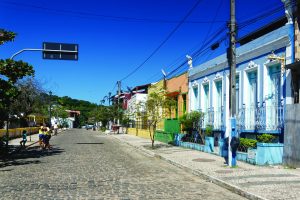 Photo: shutterstock-Miroslaw Skorka
brought economic resources.
Itacaré is today one of the most sought-after tourist destinations in the Costa do Cacau region, in southern Bahia. In 1993, the government of Bahia created an Environmental Protection Area (APA) in the city, and ecotourism began to be strongly encouraged in the region.
Protected by a belt of Atlantic Forest, the city is home to paradisiacal beaches with white sands surrounded by coconut groves. Rivers, waterfalls, virgin forests, trails, restingas, and mangroves complete the stunning natural scenery.
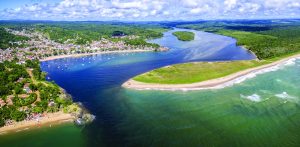 Photo: Sergio Rocha/Shutterstock.com
Itacaré offers natural conditions for various sports activities, such as trekking and mountain biking through the Atlantic Forest, rafting on the Rio de Contas, rappelling at Praia da Ribeira and in Taboquinhas (30 km from the city), Stand Up Paddle (SUP), and surfing along the coast, as well as off-road, tree climbing, and much more.
Old mansions and townhouses mark the local architecture, which reflects nearly a century of prosperity resulting from cocoa production. The city has a complete infrastructure, ranging from rustic inns to luxury resorts.
Many bars and restaurants make the nightlife in Itacaré one of the liveliest in the region. Pedro Longo Street concentrates most of the bars and restaurants, where you can savor typical regional delicacies and the famous meter-long pizza.
Among its main tourist attractions are Praia da Concha, which is highly frequented due to its proximity to the city center and excellent tourist infrastructure, Cachoeira do Tijuípe, which surprises visitors with its 15 meters in width and only 4 m in height, Praia de Itacarézinho, which is less crowded and very sought after by divers, and Prainha, a surfers’ haven and the city’s postcard.
Source: www.visitbrasil.com