



Love it or leave it!! This is the great truth about one of the most phenomenal playwrights of all time, William Shakespeare. A writer of extreme intelligence, sensitivity, and literary acerbity, he has enchanted and continues to enchant the world with his tragedies, sonnets, comedies, and historical dramas. And as it could not be otherwise, Martin Claret brings a new edition of one of my favorite stories by the English bard: The Tragedy of Hamlet, presented in a hardcover format with a jaw-dropping graphic design that is so well done.
But all the beauty and luxury of the edition would be pointless if the content were not so deserving. But Hamlet, in itself, guarantees a place on any shelf in the world, as long as there are readers who dare to venture into the style of 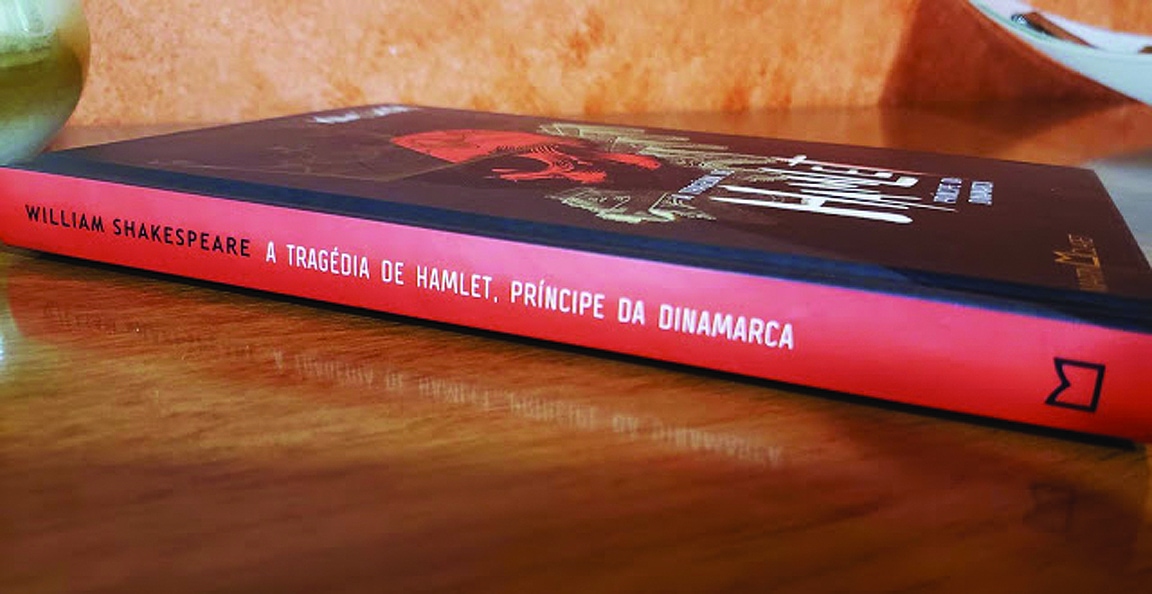 theatricality that Shakespeare so mastered.
The reader begins their tragic adventure with just one question: Who’s there? which is spoken by Bernardo, a guard officer of the Castle of Denmark. It is thus that we soon encounter a ghostly figure that seemed to be the former King of Denmark, Hamlet’s father, who, despite all the questions and demands, refused to speak to anyone on guard during the nights he appeared to haunt the poor officers and night guards. But the resemblance to the King awakened among the guards a single chance to resolve what that poor wretched ghost might want; Hamlet, the son, would have to come and see with his own eyes that apparition.
“Why have your sacred bones, laid in the coffin, burst your shroud, why has the tomb in which we saw you gently buried opened its heavy and marble jaws to cast you here again? What does this mean, that you, dead corpse, once again equipped in steel, revisit thus the moon’s glimmers, making the night horrible, and us, fools of nature, so horrendously disturb our serenity with thoughts beyond the capacity of our souls?”
And so it was that Hamlet, after meeting the ghost, discovered the vile and disgusting plan that culminated in the murder of his father and, worse, by a man and a woman who now ruled as King and Queen of poor Denmark; uncle and mother, betrayers of the trust of his deceased father and of him. It was from there that Hamlet began to devise his plan for revenge that would expose once and for all, and without any doubt, the true face of those rulers.
And thus, Hamlet did it. Through Shakespeare’s beautiful script, we, the readers, become involved in a plot that demonstrates how cruel the human being can be when, many times, they want to have what does not belong to them. Hamlet is the very personification of the avenging angel, plotting for the guilty to answer for their crimes. In this scenario, we see that betrayal is used freely, further demonstrating the vileness and depravity of the human being.
Fragility is also well explored in Hamlet, as madness and death come easily for some characters who are already oppressed by nature and also by the rules of society at the time. Rules that make us see how impressive and filled with such irony and hypocrisy it is, for example, to see a murderer with social scruples before his own, as if he were a defender of good customs, according to the same rules mentioned, something 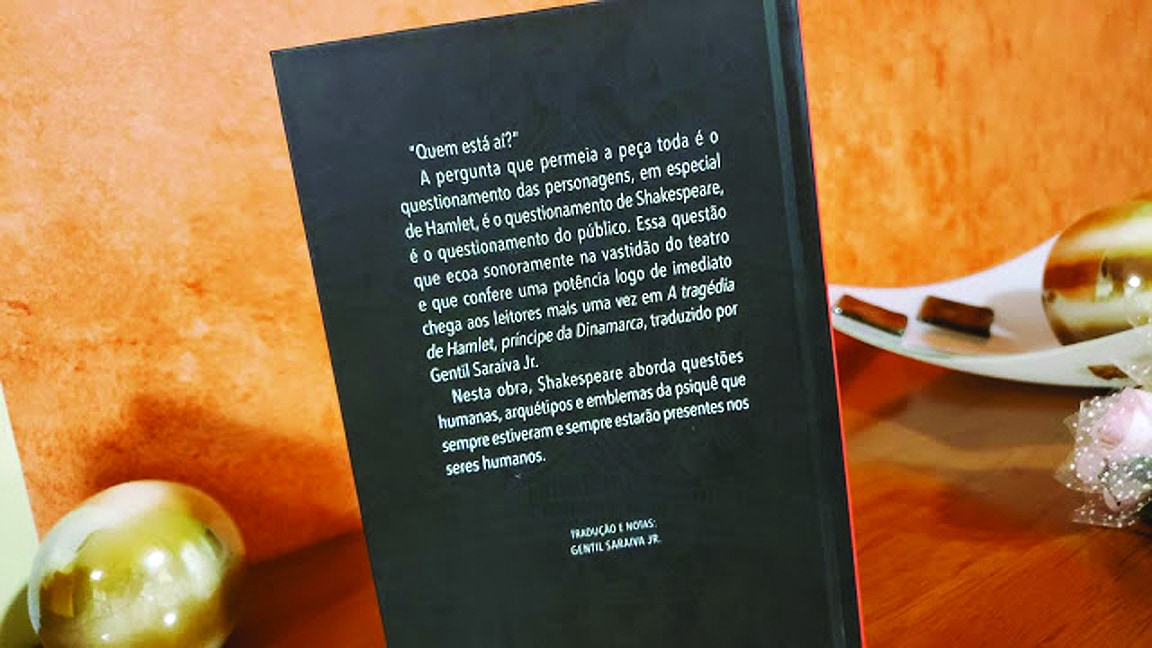 still astonishingly relevant today.
“To be or not to be; that is the question: Whether ’tis nobler in the mind to suffer the slings and arrows of outrageous fortune, or to take arms against a sea of troubles, and by opposing end them.”
Shakespeare plays with the human psyche in such a spectacular way that it becomes almost impossible to stop reading the play, as with each act, each scene, his actors gift us with the best and worst of the human species. I do not believe anyone could understand the everyday man and woman, even if they are noble, as well as Shakespeare understood. He explores all possible emotions of each character to give the reader or the spectator, in the case of a presentation of his plays, the best emotional experience possible.
And for those who think his writing is difficult, I say they should take the risk, especially with this edition of The Tragedy of Hamlet, Prince of Denmark, and discover that all this fear is clearly unfounded. Despite his works, the corresponding ones, of course, having presentations in script format, it does not hinder the reading and immersion, such is the writer’s skill, for as soon as you meet the character, you receive a total charge to love or hate him almost instantly and, perhaps for this reason, Shakespeare is so acclaimed, studied, appreciated, and loved even to this day and, certainly, in the distant future as well. Absolutely I-M-P-E-R-D-Í-V-E-L.
Jeffa Koontz
Literary Critic
https://literalmente-koontz.blogspot.com/
Instagram: @literalmente_koontz