



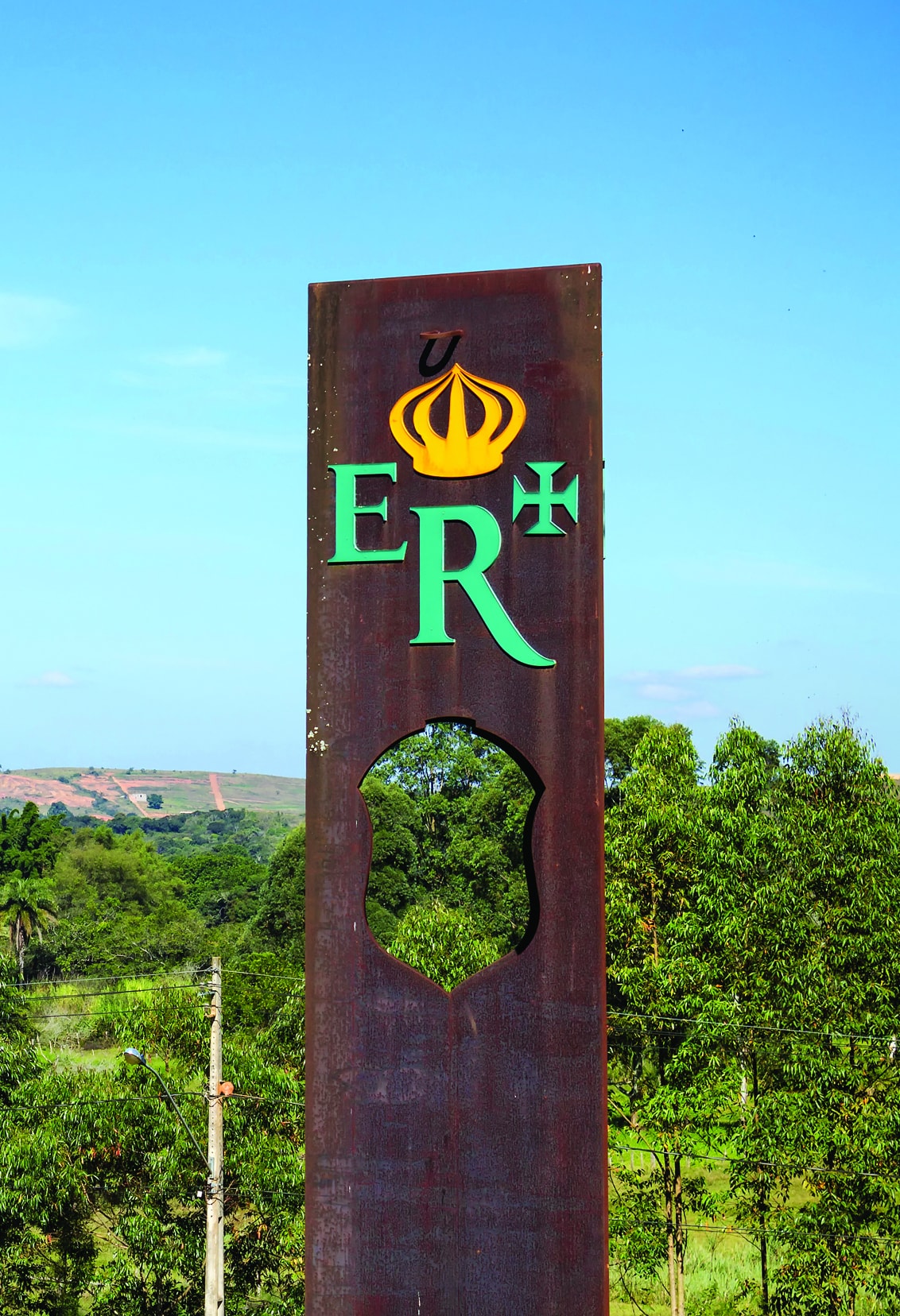
The Estrada Real is the largest tourist route in the country. It spans over 1,630 kilometers, passing through Minas Gerais, Rio de Janeiro, and São Paulo. Today, it revives the traditions of the route, valuing the identity and beauty of the region. Its history dates back to the mid-18th century when the Portuguese Crown decided to formalize the paths for the transit of gold and diamonds from Minas Gerais to the ports of Rio de Janeiro. The trails delegated by the royalty became known as the Estrada Real. Stories and memories permeate every corner of the Estrada Real. The paths are rich not only in the stories told in books but also in those passed down orally through generations. The routes of the ER are closely linked to the very history of Brazil, and those who travel it will have the chance to carry in their luggage centuries of struggles, conquests, and discoveries that were fundamental to the development of the country.
Due to being the only authorized access routes to the gold and diamond reserves of the captaincy of Minas Gerais for a long time, the royal paths acquired official status from their opening. The circulation of people, goods, gold, and diamonds was mandatorily done through them, and opening new paths constituted a crime of lese-majesty. The fiscal interest, the basis of the metropolitan policy for the mining region of the colony, prevailed over any other: it was essential, above all, to have the communication routes to the mines duly controlled and monitored, so that an ever-increasing mass of taxes could be extracted for the royal treasury. The name Estrada Real thus came to refer to those routes that, due to their antiquity, importance, and official nature, were the property of the metropolitan Crown. Throughout the 18th century, and also part of the 19th, when the mining era had passed and the paths became free and impoverished, the royal roads were the main road trunks of the central-southern colonial territory.
Along the royal paths, ancient records and customs posts were spread out, some of which can still be appreciated today. They were of various types: gold records, which monitored the transport of the metal and collected the fifth; entry records, which charged for the traffic of people, goods, and animals; records of the Demarcation Diamantina, responsible for the strict policing of smuggling and the collection of entry fees in the diamond zone; and counts, which taxed the transit of animals. The buildings of the records were installed in strategic locations along the paths: passages between mountains, gorges, and riverbanks. Inside, the employed personnel included an administrator, an accountant, a clerk, and two or four soldiers. A gate with a padlock closed the road.
The royal roads were also the main axes of the intense urbanization process of southern Brazil. Along their bed or on their banks, hundreds of settlements, towns, and villages were distributed, where the population involved in mining and its associated economies was organized. The settlement by the roadside, with the cross, the chapel, the pillory, the troop ranch, the shop, the workshop, and the half-timbered houses symbolized, for a long time, the urban nucleation process of the southern colony. Typical towns and villages were visited and described by European travelers of the 19th century, who left us pages and pages of travel notes about the landscapes and urban centers they encountered on their journeys along the Brazilian colonial paths.
At the height of mining, these paths were traversed by immigrants from São Paulo, Bahia, Pernambuco, and Europe, by drovers from the south and São Paulo, by cattle drivers from the São Francisco and das Velhas rivers, by backwoodsmen from Bahia and the São Paulo villages, by black slaves and indigenous people, by peddlers, royal administrators, tax officials, mercenary soldiers, and official militias.
The original expansion of the first major roads in the central-southern colonial territory shaped one of the most significant movements of appropriation of the Brazilian interior and its integration with the coastal strip. By expanding the territorial base of Portuguese America, the roads now grouped under the name Estrada Real were thus fundamental in the history of the settlement and colonization of vast regions of Brazilian territory, becoming true historical-cultural axes in the construction of part of our history.
• Caminho Velho: With many stories to tell, the Caminho Velho was the first route officially opened by the Portuguese Crown for traffic between the Fluminense coast and the mining region.
They are locations with typical Minas Gerais culture, a blend of indigenous, African, and European roots. This richness is responsible for attractions such as the unique architecture of Ouro Preto, the internationally recognized cuisine of Tiradentes, the large hydro-mineral resorts of the Circuito das Águas, and the latent culture of Paraty.
• Caminho Novo: The Caminho Novo is the youngest of the Estrada Real. Its creation began to be defined in 1698, but it was between 1722 and 1725 that the route was finally established. Full of tourist attractions, it holds dozens of vestiges from the mining era, a true invitation for travelers. Opened to be a faster and easier alternative to the Caminho Velho, the Caminho Novo offers tourists a series of elements from the time of the bandeiras and the first explorations of the territory. There are tunnels, fountains, and farms, now transformed into comfortable accommodations, that revive constructions and customs from the 18th and 19th centuries.
• Caminho dos Diamantes: The Caminho dos Diamantes gained great importance starting in 1729, when the precious stones from Diamantina became prominent in the Brazilian and Portuguese economies. In addition to the history of its municipalities, the latent culture, and typical cuisine, the Caminho dos Diamantes stands out for its natural beauty.
Attractions that combine adventure, nature, history, and culture set the tone for journeys along the Caminho dos Diamantes of the Estrada Real.
• Caminho do Sabarabuçu: About three hundred years ago, the steep mountains of the stretch, cut by waterways like the Rio das Velhas, were seen as true treasures, where it was possible to find gold and other precious stones. This belief was due to the shine that the current Serra da Piedade (formerly Pico de Sabarabuçu) has. What the bandeirantes imagined to be gold is, in fact, the iron ore at the top of the mountain, which reflects sunlight. To reach the shining mountain, these travelers sought an alternative route between Ouro Preto, on the Caminho Velho, and Barão de Cocais, on the Caminho dos Diamantes.
It was there that the Caminho de Sabarabuçu emerged. The path follows along the Rio das Velhas and has the Serra da Piedade, at its height of 1,762 meters, as one of its attractions. Besides the mythical story of the shining mountain, it also served as a reference point for reaching the mines from Raposos, Sabará, and Caeté.
• Museu do Ouro: The museum is housed in the building where the Mint and the Intendancy operated in 1731. In this house, the miner would leave the payment of the famous tax of the “fifth of gold.” The museum has, in its collection, furniture, images, and important pieces related to mining activity.
• Maria Fumaça: Inaugurated in 1881 by Dom Pedro II, the train connects the cities of Tiradentes and São João del Rei on 76 cm tracks (the only ones in the world), providing one of the most beautiful and enchanting rides in the region.
• Museu Imperial: The Imperial Museum operates in the former Imperial Palace of Petrópolis, the summer residence of Dom Pedro II, noted by the emperor in diaries as one of his favorite places.
The collection, which includes emblematic pieces such as the famous crown of the emperor, is distributed across rooms that reconstruct the daily life of the family in Petrópolis and present cultural, political, social, and economic aspects of Brazil in the 19th century.
• Igreja N. Senhora do Bom Sucesso: One of the beautiful examples of baroque architecture, the Matriz de Nossa Senhora do Bom Sucesso was the first masonry church in Brazil. Built in 1757 by Friar Henrique Pereira, it has a design attributed to Manoel Francisco Lisboa.
• Teatro Municipal de Sabará: The theater was inaugurated in 1819 and is one of the oldest opera houses still in operation in Brazil. It hosted emperors D. Pedro I (1831) and D. Pedro II (1881).
It has one of the best acoustics known. In its architectural lines, the influence of English theaters from the time of Elizabeth I can be seen, which is why it is popularly known as the Elizabethan Theater.
• Casa de Tiradentes: The Fazenda Carreiras, located along the banks of the old Estrada Real in the municipality of Ouro Branco, holds a curiosity: it is known as Fazenda Tiradentes or Casa Velha de Tiradentes, as it is believed that the Inconfidente stayed there during a trip from São João del-Rei to Vila Rica in 1788.
• Palácio de Cristal: A location inaugurated in 1884, the pre-assembled structure was commissioned by the Count d’Eu and inspired by the Crystal Palace in London and the Crystal Palace in Porto.
In 1957, the palace was listed by the National Institute of Historical and Artistic Heritage (IPHAN). Initially built to host agricultural exhibitions, it now serves as a venue for exhibitions and events.
• Obras de Aleijadinho: A UNESCO World Heritage Site since 1985, the city houses the Sanctuary of Bom Jesus de Matosinhos. Its fame is not only due to its religious significance but also because it holds one of the largest artistic heritages in Brazil: the splendid works executed by master Antônio Francisco Lisboa, known as Aleijadinho.
There are 78 life-sized sculptures, including 12 prophets made of soapstone. The others, made of cedar, form and represent the Stations of the Passion of Christ. The set of images is so monumental that it was considered by the Frenchman Germain Bazin, a scholar of the baroque in Minas Gerais, to be one of the most beautiful on Earth.
He went even further: he believed it to be “the last appearance of God evoked by the hand of man.” And all of this in the heart of Minas Gerais, thousands of kilometers away from the great European centers that shaped Western society.
Source: www.institutoestradareal.com.br & Márcio Santos, Researcher of historical routes, www.descubraminas.com.br/estradareal