



“Halloween is a traditional North American festival that originated in the British Isles and is celebrated in various countries, including Brazil. This festival takes place on October 31 and is marked by children dressing up as monsters and going out in search of candy. Historians believe that this festival may have originated from celebrations held by the Celts in honor of the dead.”How did Halloween originate?Historians point out that the likely origin of Halloween was a festival practiced by the Celts called Samhain. This festival was one of the most important celebrations in the Celtic calendar and was held as a marker of the end of summer. It was also a New Year’s celebration for this people.Samhain also had a mystical meaning, as the Celts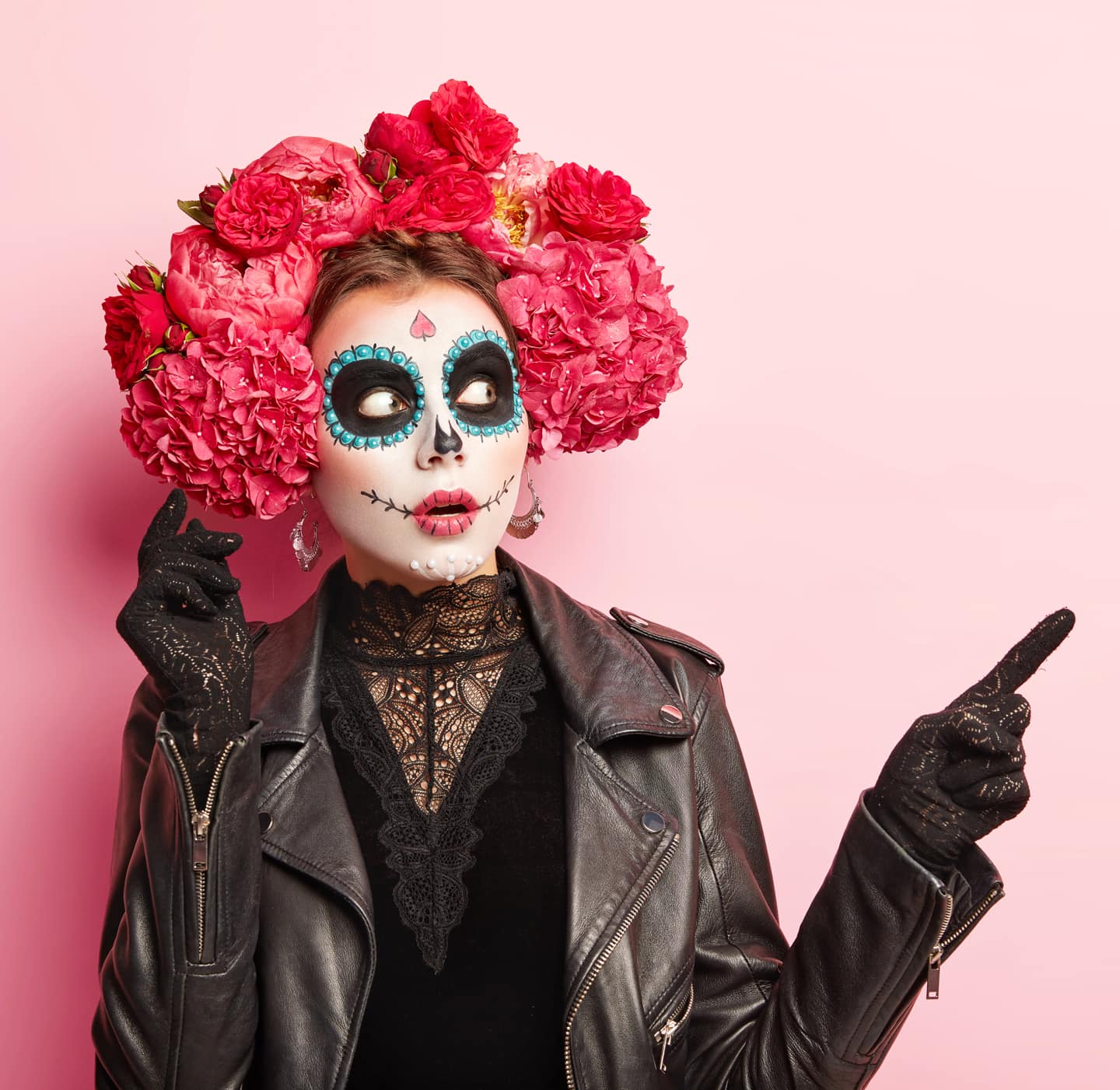 Photo: www.shutterstock.com/Cast Of Thousands
believed that during the festival – which took place annually on November 1 – the barriers separating the world of the dead and the world of the living ceased to exist.With this, it was believed that the souls of the dead from the past year could roam the Earth.During Samhain, the Celts held celebrations with bonfires and an abundance of food. The bonfires (or lanterns) aimed to keep the dead away from the living and were lit in various places where Samhain was celebrated. The food was meant to honor the dead and to celebrate the harvests that would sustain them during the winter.How did Halloween come about?The emergence of Halloween occurred sometime between the 14th and 18th centuries and is closely related to the Christianization of areas that practiced Samhain (Ireland, Scotland, and Wales). A very common practice of the Catholic Church during the Christianization of Europe was to create Christian festivities on the same date as pagan festivals.This was a way to Christianize people while simultaneously erasing traces of the previous religion, and it was no different with the Celtic peoples. During the High Middle Ages, the Church had a feast called All Saints Day, or Dia de Todos os Santos in Portuguese. This date was celebrated in May, when the Romans held a festival to ward off evil spirits.However, in the 8th century, Pope Gregory III moved the date to November 1, exactly when Samhain was celebrated. The feast initially took place only in Rome, but the next pope, Gregory IV, decided to extend it to all the faithful of the Church. Historians speculate that this action may have been taken to weaken the pagan festival in the British Isles, as despite the Christianization, the resistance of pagan traditions in the area was strong. Still, it is not possible to say for certain if this was indeed the intention of the two popes mentioned.With this, a great tradition began in countries like England, which celebrated All Saints Day on November 1 (a day to honor the saints) and All Souls Day on November 2 (a day to pray for the dead). October 31 eventually transformed into All Hallows’ Eve, which means “the eve of All Saints Day.”The celebration on October 31 ended up incorporating numerous characteristics from the time of Samhain. Thus, some associations can be made between the practices carried out in the pagan festival and the Christian feast. Let’s see some of them:• Both pagans and Christians believed that on the night of the 31st, there was a connection/meeting between the spiritual and material worlds. Most people believed that these spirits would do something bad to them and their harvests. So, they began to perform some rituals on this day.• Among these rituals were making bonfires, as they would serve as a symbol of the path to be followed by the souls of the dead; candles also had this function. The Celts would throw coins into cauldrons, making requests to the dead.• The “Trick or Treat” also originated among these rituals. People would go door to door in search of a piece of “soul cake” (a cake filled with currants). In exchange for the cake, people would pray for the spirits of the family of the donor. Over time, this ritual was replaced by costumed children asking for candy.• Another common tradition to ward off the dead was to carve faces into turnips, just as is done with pumpkins today, with candles inside. In the past, turnips were used as they were more abundant in Ireland, but with their arrival in the USA, people began to use pumpkins.Besides the rituals to ward off the dead, the celebration on the 31st also had some customs for predicting the future. For example, a person would pull a cabbage or a head of cabbage from the ground, and depending on the taste and shape of the vegetable, they could provide clues about the profession and personality of the future spouse of the person.In the case of the belief in monsters during Halloween, its origin also dates back to Samhain, as the Celts believed that during the festival, evil beings could take advantage of the presence of the dead to harm living people. Additionally, during Samhain, it was common for people to go door to door wearing masks to avoid being recognized by evil beings. The belief in monsters and the use of masks are part of the modern Halloween tradition.How did Halloween end up in the USA?In 1845, several countries in Europe, but mainly Ireland, went through a period called the “Great Famine,” which lasted until 1849. The most likely cause of the food shortage during this period was an infestation that hit potato crops on a large scale across the continent.The Irish population depended solely on potatoes for survival, so this infestation was a true tragedy for the country. As a result, there was a mass emigration of Irish people to the USA.And it is no coincidence that from this time, the first references to Halloween began to appear there. Thus, the traditions of European Halloween merged with American harvest rituals.Corn, for example, became a significant symbol of Halloween, and pumpkins began to be carved to become lanterns. Likewise, the old tradition of “trick or treat” became a game among American children.How is Halloween celebrated around the world? Photo: www.shutterstock.com/Lauritta
The explanations and traditions have blended over the years and spread to various places, creating variations in celebrations and intentions.• United States: Halloween traditions in the USA are among the most well-known in the world and are highly anticipated by Americans. When the end of October arrives, many families decorate their homes with props related to witches and horror themes, such as spider webs, skeletons, and toy bats.For children, the celebrations are fun, as one of the most awaited customs for them is dressing up to go to their neighbors’ houses to ask the famous question Trick or treat? or, as we know it in Portuguese, “Doces ou travessuras?” If they don’t receive candy, children play a trick as “punishment”; usually, the little ones throw toilet paper in the yard.Another tradition, which is not exclusive to Americans but is impossible to forget, is the carved pumpkins with a candle inside. Known as jack-o’-lantern, this figure is a must-have in any decoration.• Ireland: In Ireland, Halloween has some symbols and traditions different from North American culture. There, the celebrations begin early in October as a preparation for the 31st. In addition to costumes and decorations, it is common to find bonfires in neighborhoods across cities. Legend has it that objects should be thrown into them to ward off any bad omens.Irish people usually prepare a lot of food to leave for the spirits of deceased relatives and friends who will visit them on the Day of the Dead. One of the foods prepared in abundance is a fruitcake. Some people place a ring in the middle of the batter, and whoever receives the piece containing the object will marry soon.• England: Halloween traditions in England are very similar to those in Ireland. The difference is that instead of carving a pumpkin, the English use beets to decorate their homes and make jack-o’-lanterns.• Germany: For Germans, Halloween has a more religious meaning than festive. Although it is possible to find references to common traditions in the USA, in Germany, the holiday is more introspective. Celebrations begin on October 31 and extend until November 8. During this period, churches hold more masses and services so that everyone can pray for their departed loved ones.• Mexico: The Day of the Dead is undoubtedly the most well-known festival in Mexico. Currently, the Mexican holiday is associated with All Saints Day and All Souls Day, but some believe it actually originated from Aztec practices dedicated to the goddess of the dead.The traditions of this three-day festival vary regionally, but there are a series of practices found throughout the country, such as building altars for deceased family members and visiting graves with offerings like sugar skulls, sweet breads, and bottles of tequila and mezcal.In Brazil, Halloween overshadows Brazilian folkloreThis cultural inversion makes us forget that October 31 in Brazil is dedicated to a genuine character of national folklore: Saci-Pererê, who remains partially forgotten in our imagination.The intense influence, especially from North America, has made Halloween, as it is known in Brazil, celebrated as just another holiday on the national calendar. Characters like vampires and witches, which are not part of our culture, have been incorporated into Brazilian festivities, despite the important legends of national culture that could be celebrated.But why do Brazilians choose to celebrate the date in the same way as in the USA?This scenario can be explained through a concept outlined by the international relations theorist Joseph Nye, known as soft power. Alexandre Ganan Figueiredo, a historian and post-doctoral researcher at the Faculty of Economics, Administration, and Accounting of Ribeirão Preto (FEA-RP) at USP, explains that this term refers to a set of non-military or economic initiatives aimed at a state achieving its foreign policy interests.”Soft power refers to a country’s ability to have direct influence on others through its culture, its ability to project itself as an example to the world,” he explains. In the case of the USA, one example is the “powerful North American cultural industry,” such as Hollywood productions and TV series, which reached Brazil shortly after World War II, “practically along with television.”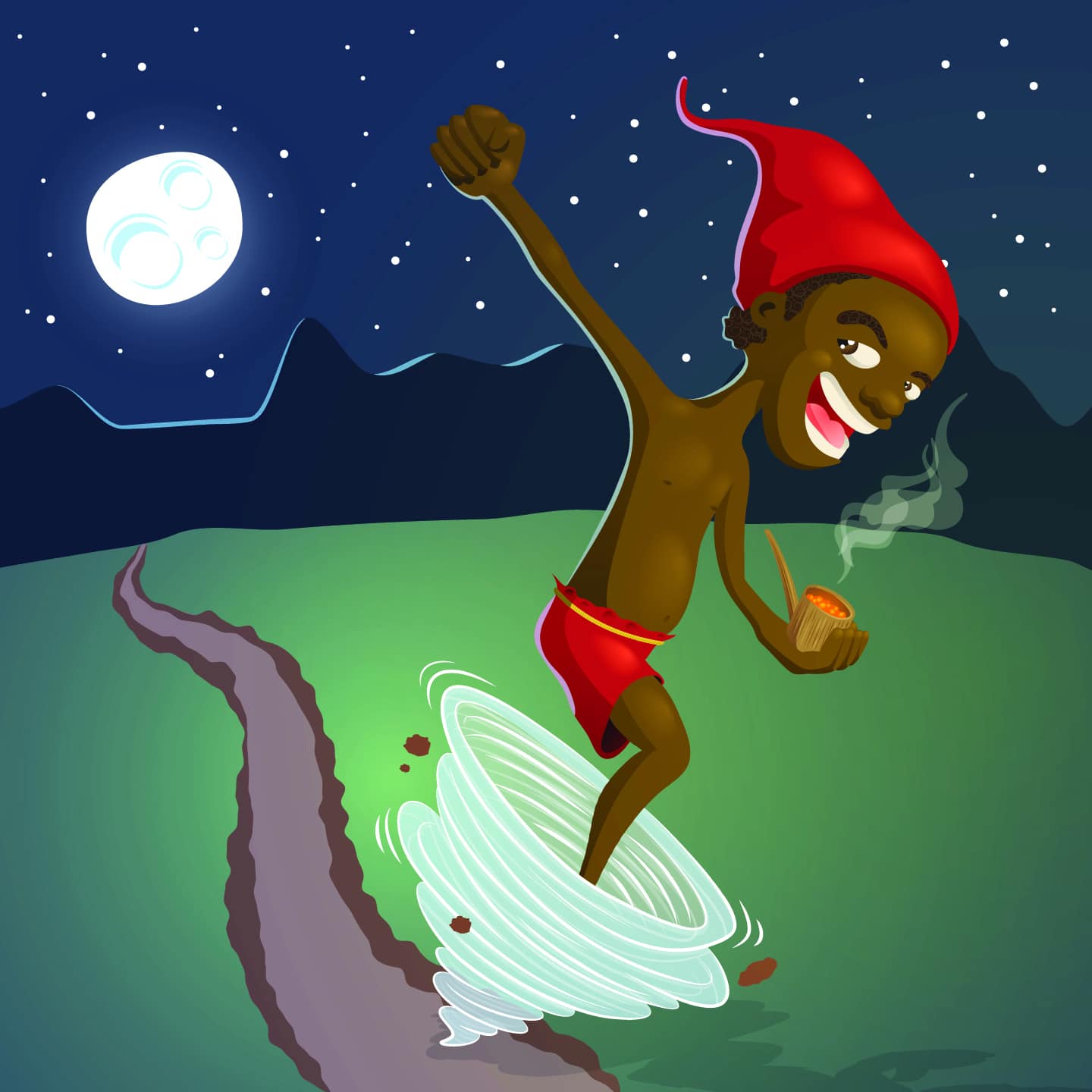 Photo: www.shutterstock.com/Imagetico
Finally, Figueiredo also describes the export of an ideal lifestyle as an element of this type of influence, presented as a model to be copied. “This is very strong here, whether in the consumption of foreign products or even copying their customs, as is the case with the celebration of Halloween in Brazil,” he says.It is from the perspective that there are no connections between the celebration of Halloween and Brazilian culture that, in 2003, a bill was presented to celebrate October 31 as Saci Day in Brazil. In 2010, the date was officially recognized throughout the country.Bruno Baronetti, a researcher and doctoral student in Social History at the Faculty of Philosophy, Letters, and Human Sciences (FFLCH) at USP, sees Saci Day as a response to the American cultural industry.”Moreover, there was a perception that more and more basic education schools were valuing Halloween in the North American model,” he points out. With Brazil having a very rich folklore, with legends and stories stemming from the miscegenation of various peoples, which is inherent to our formation as a country, the question was raised: “Why not promote a reflection on the role of national culture?”Saci-PererêThe Saci is a legend that brings traditions mainly from the South and Southeast of Brazil but presents characteristics intrinsic to Brazil’s formation. “The Saci is a young black man, with his pipe, an indigenous element. Additionally, he brings elements of Arab culture, such as the legend of the boy who can be trapped in a bottle and grant wishes, narrative devices present in ‘One Thousand and One Nights,’ a collection of narratives where the figure of the Genie of the Lamp is found.”Some cities in Brazil, especially in the municipalities of São Paulo, have started to hold parties for these legends of national folklore on October 31. “In São Luís do Paraitinga, in the Vale do Paraíba, we have the Society of Saci Observers, which promotes the Saci Festival every year,” says Baronetti.The researcher explains that folkloric studies in Brazil, since the early 20th century, through the Brazilian Folkloric Movement, and great scholars like Mário de Andrade and Edison Carneiro, seek to insert these themes in schools. “Saci Day has the role of stimulating and rescuing our culture, and it is precisely a counterpoint to this colonizing and imperialist project that seeks to insert foreign elements into our culture.””The idea is not to end Halloween but to create a counterpoint so that children, in addition to the well-known foreign tradition, also come into contact with national traditions and cultures,” concludes the historian, recalling a thought by Plínio Marcos, a Brazilian playwright, saying that “a people that does not love and preserve its most authentic forms of expression will never be a free people.”Sources: www.businessinsider.com, www.americaslibrary.gov, www.hirtory.com and jornal.ups.br (by Bruno Militão).