



Legend has it that Dona Beija was one of the most beautiful women of the Brazilian Empire. She enchanted men and infuriated women, became the name of a book, a soap opera character, and gained an almost folkloric status in Brazilian history. 146 years after her death, the story of Dona Beija still captivates those who visit the springs that bathed the beautiful sorceress of Araxá.Ana Jacinta de São José, the mythological Dona Beija, a woman ahead of her timeOn January 2, 1800, in a town in Minas Gerais called Formiga, a beautiful blonde girl with magnificent sky-blue eyes was born, who would become one of the most influential women of her time in 19th century Brazil. She was a woman who managed to turn the adversities life imposed on her (and life was not easy for her) into opportunities to overcome difficulties, defeat prejudices, make a fortune, and even have influence in the political matters of her time.Her baptismal name was Ana Jacinta de São José, better known by her nickname, “Beija,” given by her grandfather when she was very young.History says that her grandfather compared her to the flower called “beijo” and also to the hummingbird, due to her great beauty and sweetness from a young age.No one knows who her father was, but it was believed to be a Portuguese traveling salesman who seduced her young mother and got her pregnant. But we all know the prejudices of that time regarding a young woman (her mother) who became pregnant out of wedlock. However, her family had a certain status in the town of Formiga, and perhaps because of her birth outside of marriage, 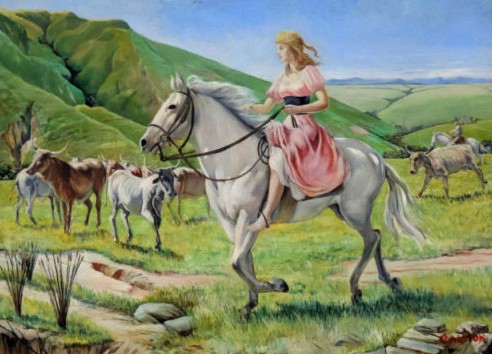 her grandfather and mother decided to move to the town of Araxá in the province of Minas Gerais when she was only 5 years old, in 1805.And although the family had possessions and the respect of the local society, from a young age Ana Jacinta already aroused envy due to her beauty, which only increased as she grew up.During catechism classes, young Ana Jacinta met a boy named Manoel Fernando Sampaio, the son of a wealthy local farmer. With the approval of both families, the teenagers became engaged. Everything indicated that the young farmer and Ana Jacinta would marry soon and form a happy family.But sometimes fate has other plans, and against these strange designs, no one can do anything to prevent them.Thus, when Ana Jacinta was only 15 years old, the town of Araxá received a visit from the King’s Ouvidor, Dom João VI, the Portuguese Joaquim Inácio Silveira da Motta.What no one could ever imagine was that the King’s Ouvidor, despite being a mature man, would become so fascinated by Ana Jacinta’s beauty that he would order her to be kidnapped and take her with him to the city of Paracatú do Príncipe, where he resided in service of King Dom João VI.Her grandfather ended up being killed by the Ouvidor’s dragoons while trying to prevent the kidnapping of his granddaughter.Thus, the young teenager Ana Jacinta was taken to Paracatú do Príncipe, where she was forced to become the mistress of the Ouvidor Joaquim Inácio Silveira da Motta, with no one left to protect her, as her mother and grandfather were dead.In the town of Araxá, no one was willing to go after the young woman who now had no family, as her mother had already passed away by that time, and her fiancé never confronted the King’s Ouvidor.Ana Jacinta’s beauty, Dona Beija, exerted such power over the King’s Ouvidor that he gifted her with very valuable jewels and precious stones and made a point of displaying her by his side at all events of the time in Paracatú do Príncipe.Ana Jacinta was young, beautiful, and intelligent enough to learn everything she could about politics and began to take advantage of the fascination her beauty and intelligence caused in the powerful men of her time.In those days, men had total supremacy over women. It was not common for a woman to know how to discuss topics such as politics and business. And the beautiful “girl of the Ouvidor” had this gift, enchanting not only with her beauty but also with her intelligence.
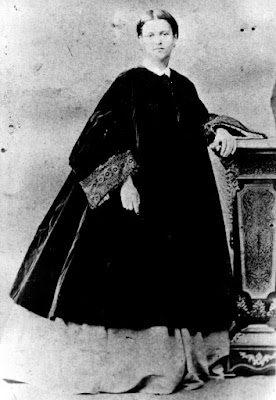 Ana Jacinta was not only beautiful, but when participating in dinners at the palace of the King’s Ouvidor of Portugal in Paracatú do Príncipe, she knew how to entertain guests with her opinions on the political issues of the time and learned a lot about business, politics, and also about the weaknesses of those powerful men through the conversations exchanged there.And it was thus, according to some historians, that Dona Beija managed to influence the Governor of the Captaincy of Goiás, so that in 1816, the then-called “Sertão da Farinha Podre” was definitively annexed to the Captaincy of Minas Gerais.Ana Jacinta lived as “the girl of the Ouvidor” for several years until King Dom João VI called the Ouvidor back. And he had no choice but to return to court and leave behind Ana Jacinta, now known as Dona Beija.However, before returning to court to never come back to Paracatú do Príncipe, the King’s Ouvidor endowed Ana Jacinta with enough means for her to lead a dignified life. This, combined with what she had managed to accumulate during the time she lived as his mistress, including one or two gold mines, made her a rich and free woman.She then decided to return to Araxá, the city she considered her home.Upon arriving in Araxá, she found a very hostile environment. The conservative and hypocritical local society did not see her as a victim but as a seductive woman of dubious behavior.The women of the town considered her a great danger to their marriages and to the prejudiced ethical values of the time. Thus, she became an unwanted and marginalized person in the city’s society.Revolted, Ana Jacinta, who had the illusion of rebuilding her life in Araxá as a decent person, decided that she would give reasons for that society to truly have something to speak ill of her. With her accumulated fortune, she bought a mansion in the city to live in, but she also bought a farm on the outskirts of Araxá and built a magnificent country house, intending to set up a luxurious brothel known as the “Chácara do Jatobá.” At the Chácara do Jatobá, she was simply Dona Beija, and there she welcomed the richest and most powerful men in the region.Every night she welcomed men who had already paid in advance with gold and precious stones during the day for the right to dine in her company, see her dance, converse with her about various topics, and try their luck at being chosen to spend the night with her.Dona Beija reserved the right to choose a different man each night to sleep with her, provided he paid her well.It is said that when Dona Beija slept with the men she selected at the Chácara do Jatobá, she often used the so-called “potion of yes or no.” Together with her friend Fortunato, who was the apothecary in Araxá at that time, Dona Beija created certain potions known as the “potion of yes or no.” When Dona Beija did not want to sleep with the man she had chosen for that night, but was interested in his wealth, she secretly put the “no” potion in his drink. This made it impossible for the man to have relations with her. Of course, the matter never left the bedroom, as men would be ashamed to confess the fact. Thus, Dona Beija, always very discreet, received the man for the night as if everything had been consummated, and the suitor would certainly pay for other nights trying to be chosen again. The “yes” potion, in turn, was used for the opposite, should she be interested.Dona Beija became famous throughout the Brazilian hinterland, attracting the rich and powerful men from the most remote regions. And to experience her charms, these men showered her with money, jewels, and precious stones, and she became richer, more famous, and more powerful every day. And deep down, she rejoiced in avenging all those who had rejected her in Araxá when she returned full of good intentions, thinking she would be well received.Legend has it that in Araxá there was a spring of rejuvenating waters, the “Fonte da Jumenta” or “Fonte do Barreiro,” a miraculous water that granted youth, health, and beauty to Dona Beija and where she bathed every day. Today this spring still exists, preserved as a tourist attraction for visitation in a hotel in the city.This famous spring is now called “Fonte Dona Beija” and is located in the gardens of the Grande Hotel Tauá. It is a radioactive and mineral spring that emerges among volcanic rocks in a stylized grotto.According to specialists, the medicinal properties of this spring activate metabolism and stimulate diuretic assimilation, acting as a hypotensive and detoxifying agent.The waters of the spring also help in the treatment of respiratory diseases, in addition to being good for hair, skin, and the body in general.It seems that Dona Beija, although not claimed by her ex-fiancé, still loved him and even had a daughter with him, Thereza Thomázia de Jesus, after choosing him one night at the Chácara do Jatobá.However, a few years later, one night on a road returning to her mansion in the city, Dona Beija was attacked by two unknown black slaves, from whom she received such a beating that left her badly injured and bedridden for several months.Some time after recovering, she discovered that the instigator of the beating she received was her ex-fiancé, motivated by jealousy, wishing that she would be forced to close the Chácara do Jatobá.After learning of this fact, Dona Beija could not forgive and ordered the murder of her ex-fiancé and the father of her daughter Thomázia. For this crime, Dona Beija was arrested and went to trial, having been completely acquitted with the help of her loyal, sincere, and powerful friends, who despite everything, she had in great numbers in Araxá and the region.Dona Beija had a second daughter, Joana de Deus de São José.In the mid-1853, Dona Beija, then 53 years old, finally decided to leave the city of Araxá and moved to the town of Bagagem (now Estrela do Sul).Immediately, she bought a diamond mining operation in Bagagem and made a lot of money, increasing her fortune.Ana Jacinta, the famous Dona Beija, died of nephritis at the age of 73, in 1873, in the town of Bagagem, now Estrela do Sul (MG), having been buried in a rich coffin adorned with handmade zinc decorations by diligent local artisans.In June 2011, during excavations for the construction of a fountain in the square of the matriz in the town of Estrela do Sul, a coffin adorned with zinc was found, containing the remains of a woman suspected to be Dona Beija.This was the woman, Ana Jacinta de São José, Dona Beija, the goddess of Araxá, who enchanted the most powerful men of that time and influenced the politics and lives of many, like no other woman in her time, in the far reaches of the Brazilian hinterland.
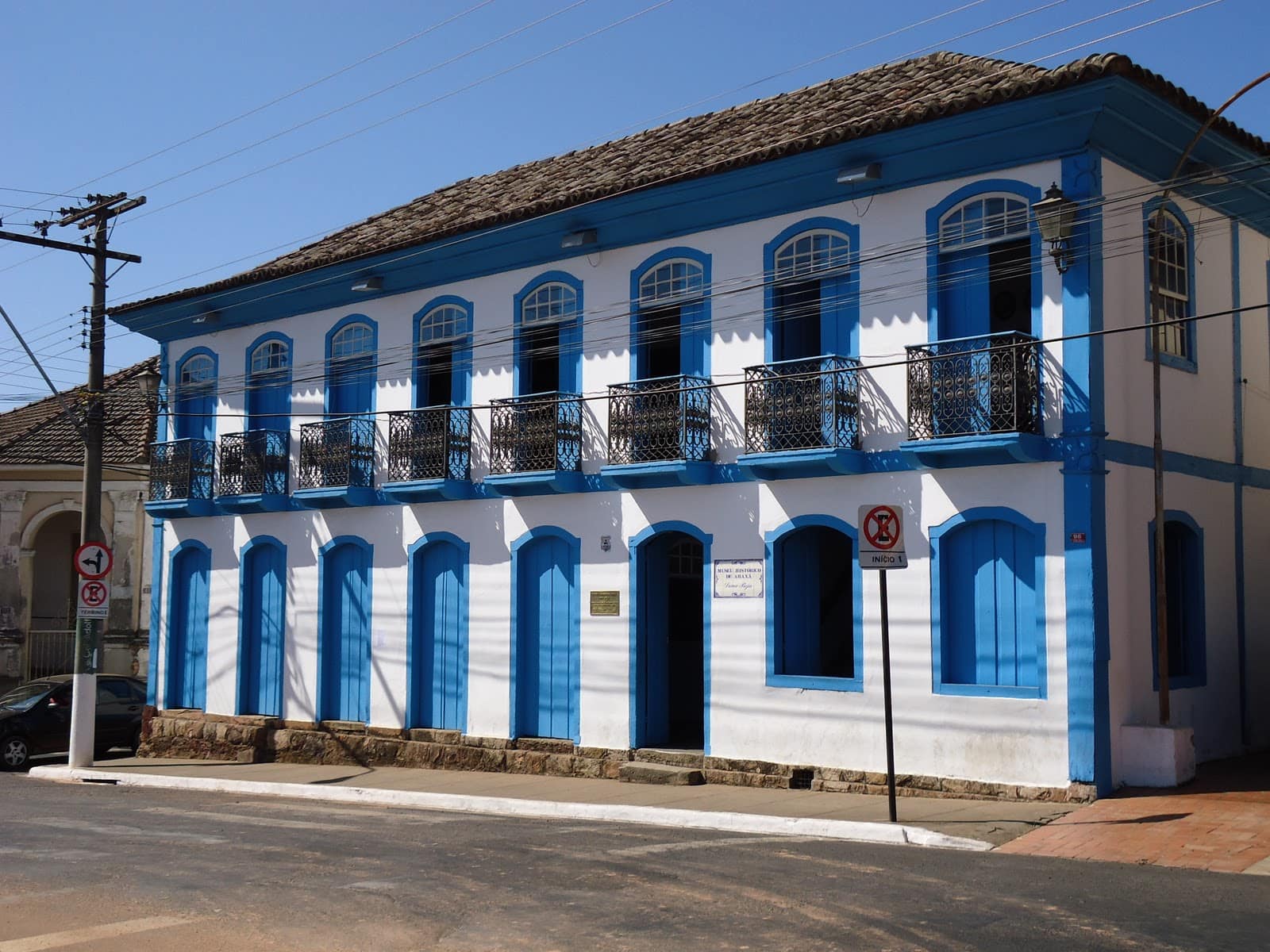 A woman who knew how to turn “lemon” into “refreshing lemonade,” a woman who knew how to face the prejudices of her time and alone, like a phoenix, rose from the ashes that burned her destiny.This was Ana Jacinta de São José, Dona Beija – a symbol of a woman who does not let herself be defeated!The skeleton is the new mystery of Dona BeijaThe mythical blonde, who enchanted men in the region of Araxá, became the name of a book, a soap opera character, and gained an almost folkloric status in Brazilian history. Now, 138 years after her death, the whereabouts of Ana Jacinta de São José may be close to being unveiled.In an old cemetery in Estrela do Sul, a small town in Minas Gerais with just over 7,000 inhabitants, where she is believed to have been buried, bones that likely belonged to the famous courtesan and political leader were found. The discovery is the latest controversy surrounding a woman who, due to her political position and social behavior, marked the first half of the 19th century.The bones were found by chance. During construction work for a fountain in the town’s central square, one of the bricklayers found objects that resembled bones. Historical records show that until 1925 there was a cemetery on the site, where Ana Jacinta would have been buried. The same records confirm that Beija’s family decided not to transfer the remains of the famous Minas Gerais woman when the cemetery was deactivated in the early last century.Besides being one of the few remnants of the old cemetery of Estrela do Sul, another clue links the famous Minas Gerais woman to the found bones. Among the unearthed material, zinc remains were also found. When she died in 1873, she requested that her coffin be adorned with zinc decorations, precisely the material found alongside the bones, which at the time was very uncommon.This is not the first time that the remains of Ana Jacinta have created controversies in the towns of Alto Paranaíba. In 1996, the city hall of Araxá proposed the search for the remains; those that have supposedly been found now; to the city hall of Estrela do Sul. However, a dispute between the two municipalities over when they were found prevented the project from moving forward.Now, researchers are expected to conduct more detailed examinations to determine whether it is indeed Beija or if this will just be another controversy among many that permeate the history of the mythical Minas Gerais woman.The mark of Dona BeijaCarlos Henrique Vieira, curator of the museum created in her honor, talks about the commerce and belongings of Dona Beija: “The museum is 46 years old. Since its founding with Assis Chateaubriand in 1965, it is the myth of Dona Beija and the evidence that she was a woman ahead of her time that attracts tourists from afar to here. The museum has objects that were personally used by her, such as a copper scale, a gold medallion of the sacred heart of Jesus, and documents. There are more pieces and objects that were not hers but illustrate the 19th century. The name has already fallen into the public domain, so there are several products that carry her name in the commerce of Araxá: coffee, cachaça, mozzarella, cheese, and sweets. Thus, all these products are traditional to our city and adopted the name Dona Beija as a brand.”More than a mythRaquel Costa, a history teacher, believes that Dona Beija became a myth because she was not an ordinary woman and speaks a little about her skills and trajectory: “After the romance (fiction) ‘A vida em flor de Dona Beija,’ written by Agripa Vasconcelos, and after the soap opera aired on Manchete in 1986, the name and a little of the story of Dona Beija had a greater repercussion. Contrary to what everyone thinks or knows through fiction, in reality, there is no research that proves that Dona Beija was a courtesan, nor a woman known for enchanting many men due to her beauty. She was a single mother, had two daughters: Thereza Thomázia and Joana de Deus. Studying her story more deeply, I do not see her as the media portrayed or the internet, or even romanticized books. Dona Beija was an intelligent woman, a property owner, an excellent negotiator of slaves, fought for the improvement of her city. She inherited lands, participated in meetings at her farm, had a great interest in diamond mining, and financially contributed to the construction of the bridge over the Bagagem River. She participated so much in political life that she managed to marry her two daughters to influential and traditional men of that time. More than a myth, she was a woman who fought for her ideals.”MusicHer story was set to music by Aurinho da Ilha and sung by José Bispo (Jamelão) in 1968, in the plot “Dona Beija, the Sorceress of Araxá,” the theme of the carioca samba school Salgueiro, in 1968. Her name also had repercussions in the samba-enredo “Araxá – High place where the sun is first seen,” from Beija Flor de Nilópolis (RJ), sung by Luiz Antônio Feliciano (Neguinho da Beija Flor), in 1999.Sources: bomdia.eu, www.correiobraziliense.com.br
Dona Beija
—
by
-
Actor Juca de Oliveira Dies at 91
Brazil lost one of the most prominent names in national performing arts in the early hours of this Saturday (21). Actor, author, and director Juca de Oliveira passed away at 91 years old in São Paulo, victim of pneumonia associated with a cardiac condition. The information was confirmed by the family’s press office to TV…