



José Bento Renato Monteiro Lobato was born on April 18, 1882, in Taubaté, São Paulo. He was the son of José Bento Marcondes Lobato and Olímpia Monteiro Lobato. He was taught to read by his mother and soon developed a taste for reading, discovering the books of his maternal grandfather, the Viscount of Tremembé, who owned an immense library. He read everything available for children in Portuguese.
From a young age, Monteiro Lobato already showed his restless temperament, and at the age of 10, he scandalized his family, traditional farmers from the Vale do Paraíba and friends of Emperor Pedro II, when he refused to make his first communion.
In his early years as a student, he was already writing short stories for the school newspapers he attended.
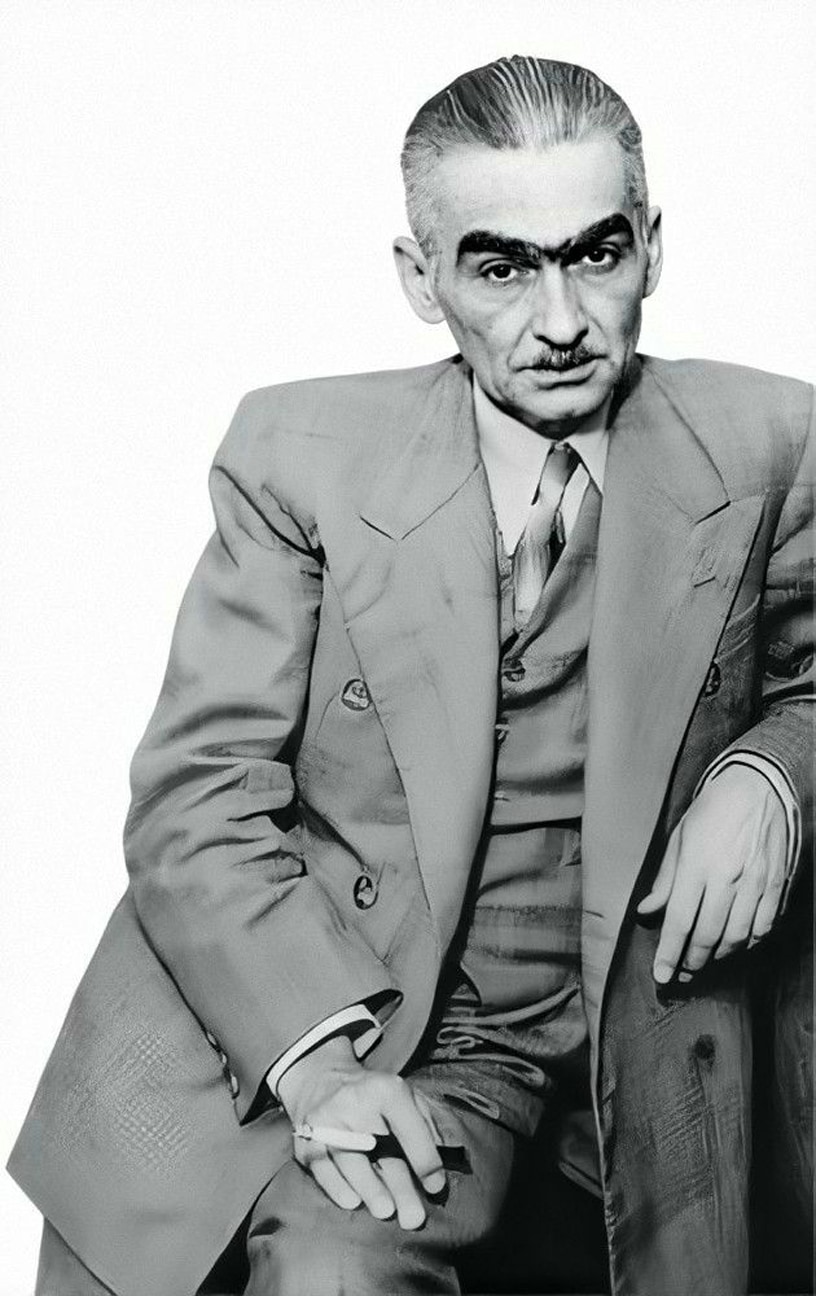 At 14, he was fluent in English and French, and at this age, he wrote “Rabiscando,” which is his earliest known essay.
On June 13, 1898, he lost his father to pulmonary congestion, and his mother, suffering from severe depression, died on June 22, 1899.
At birth, Lobato was registered as José Renato Monteiro Lobato, but after his father’s death, he wanted to use the cane that belonged to his father, which had the initials J.B.M.L. engraved on it. Therefore, he changed his name so that the initials would match his father’s, and from then on, he began to call himself José Bento Monteiro Lobato.
Under his grandfather’s insistence, in 1900, Lobato enrolled in the Law School, although he preferred to study Fine Arts.
He was unconventional by excellence, always saying what he thought, whether it pleased others or not. He defended his truth with nails and teeth, against everything and everyone, regardless of the consequences.
Monteiro Lobato maintained a lasting friendship with one of the boys he lived with, Godofredo Rangel, and they exchanged correspondence for 40 years, which later was compiled into a book called “A Barca de Gleyre.”
Lobato also wrote for the college newspaper, where he already showed his concern for nationalist causes. At his graduation party in 1904, he gave a speech so aggressive that several professors, priests, and bishops left the room.
In 1904, he graduated with a law degree, and the following year, he planned to start a jam factory but temporarily took over the district attorney’s office in Taubaté, where he met Maria Pureza da Natividade de Souza e Castro (“Purezinha”), who lived in São Paulo. Purezinha was the granddaughter of Antônio Quirino de Souza e Castro (“Dr. Quirino”), Lobato’s mentor in 1900. In May 1907, he was appointed public prosecutor in Areias and married Purezinha in 1908. A year later, their first child, Marta, was born. With Purezinha, he had four children: Marta (1909), Edgar (1910), Guilherme (1912), and Rute (1916).
In 1910, he became involved in a railway business. He lived in the countryside and in small towns in the region, simultaneously writing for newspapers and magazines such as “A Tribuna de Santos,” “Gazeta de Notícias do Rio de Janeiro,” and the magazine “Fon-Fon.” He began translating articles from “Weekly Times” for “O Estado de S. Paulo” and works of universal literature.
At 29, Lobato received news of his grandfather’s death, the Viscount of Tremembé, becoming the heir to the Fazenda Buquira, where he moved with his entire family. From prosecutor to farmer, he dedicated himself to modernizing agriculture and raising animals. Still unsatisfied, this time with life on the farm, he planned to commercially explore the Viaduto do Chá in the city of São Paulo.
The Fazenda Buquira later served as inspiration for the characters and landscapes in his books.
On November 12, 1914, the newspaper “O Estado de S. Paulo,” in the section “Complaints and Grievances,” published Lobato’s article “Velha Praga,” describing the “burning.” This chronicle was later published in the book “Urupês.” The newspaper, realizing the value of that letter, published it outside the section intended for readers, which was a good decision, as the letter sparked controversy and led Lobato to write other articles such as “Urupês,” which brought to life one of his most famous characters, Jeca Tatu.
Jeca Tatu was a great slacker, completely different from the idealized country folk and Indians of the romantic literature of the time. His appearance generated enormous controversy throughout the country, as the character symbolized the backwardness and misery that represented the countryside in Brazil.
From then on, events unfolded: financial difficulties led him to sell the Fazenda Buquira and move with his family to São Paulo, intending to become a “writer-journalist.”
He founded the magazine “Paraíba” in Caçapava and organized a vast and cherished research on Saci for the newspaper “O Estado de S. Paulo.” Lobato traveled through the interior of São Paulo during the Great Frost of 1918, writing an important chronicle about it. Still in 1918, known as the “year of the 4 G’s” (Frost, Strike, World War I, and Spanish Flu), Lobato wrote all the editorials for “O Estado de S. Paulo,” as all the editorialists ended up catching the Spanish flu.
On December 20, 1917, he published “Paranoia or Mistification?” the famous unfavorable critique of Anita Malfatti’s painting exhibition, which would culminate as the spark for the creation of the Modern Art Week of 1922. Many began to see Lobato as reactionary, but today, after so many years, it is clear that what Lobato criticized were the “isms” coming from Europe: cubism, futurism, dadaism, surrealism, which he believed were “colonialisms,” “Europeanizations.” Lobato was in favor of a properly Brazilian, indigenous art created here. That is why he criticized Malfatti, although he admitted she was talented.
In 1918, Monteiro Lobato bought “Revista do Brasil” and began to give space to new talents. Under Lobato’s leadership, “Revista do Brasil” thrived, and he was able to establish a publishing company, always giving space to newcomers and modernist artists.
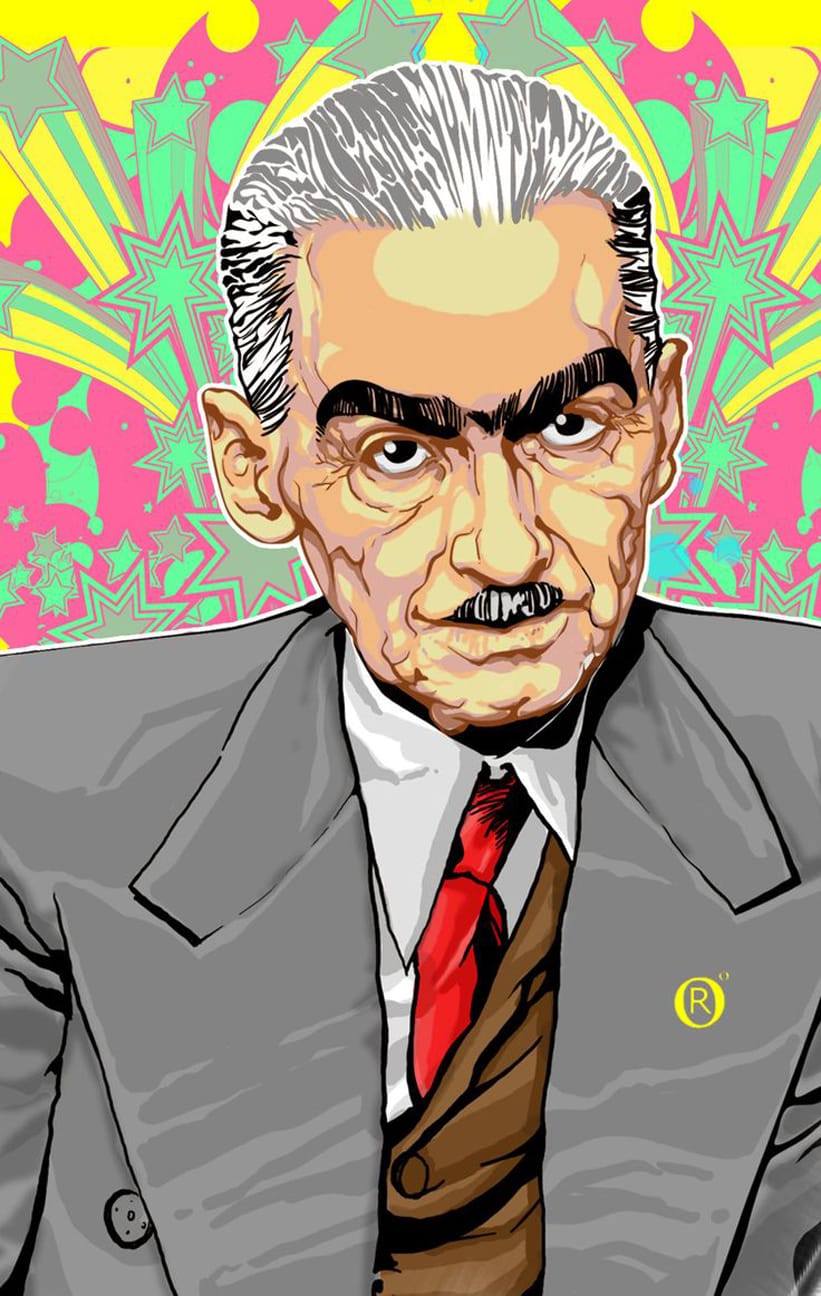 Lobato was also a pioneer of some very interesting ideas in the editorial field. He said that “a book is dessert: it has to be put under the customer’s nose.” With this in mind, he began to treat books as consumer products, with colorful and attractive covers and impeccable graphic production. He also created a distribution policy, a novelty at the time: independent sellers and distributors spread across the country.
He soon founded the publishing house “Monteiro Lobato & Cia.”, later called “Companhia Editora Nacional.” He favored the publication of debut authors like Maria José Dupré, with the successful “Éramos Seis.”
Monteiro Lobato did not use accents, believing they were not useful as a way to represent spoken sounds in written form, and he used three exclamation and question marks to represent a greater change in voice.
In July 1918, he published “Urupês” in book form, achieving resounding success. The popularity led Lobato to also publish “Cidades Mortas” and “Ideias de Jeca Tatu.”
In 1920, the short story “Os Faroleiros” served as the basis for a film. Months later, he published “Negrinha” and “A Menina do Narizinho Arrebitado,” his first children’s work, which gave rise to Lúcia, the Narizinho from Sítio do Picapau Amarelo. The book was released in December 1920 to take advantage of the Christmas season. The cover and illustrations were by Lemmo Lemmi, a famous illustrator of the time.
The demand for books was so great that he imported more machines to increase his graphic park. However, a severe drought cut off the electricity supply, and President Artur Bernardes devalued the currency, creating a huge financial gap and many debts for the writer.
Lobato had only one choice: he filed for bankruptcy. Even so, it did not mean the end of his editorial project. He was already preparing to open “Companhia Editora Nacional” and thus moved to Rio de Janeiro.
From then on, Lobato continued to write successful children’s books. Additionally, being a staunch nationalist, he created adventures with characters closely linked to Brazilian culture, even recovering rural customs and folklore legends.
Lobato crafted stories using Brazilian characters mixed with characters from universal literature, Greek mythology, comics, and cinema. He was also a pioneer in didactic literature, teaching history, geography, mathematics, physics, and grammar as part of his stories.
Washington Luís, recognizing Lobato as a promising representative of the country’s cultural interests, appointed him commercial attaché in the United States. Lobato wrote confirming the thesis that “To govern is to open roads.” Monteiro Lobato moved to New York and began to follow all the technological innovations of the United States.
 He went to Detroit and, during a visit to Ford and General Motors, organized a Brazilian company to produce steel using the Smith process. With this, he invested in the New York Stock Exchange and lost everything he had during the 1929 crisis. To cover his losses from the stock market crash, Lobato sold his shares in Companhia Editora Nacional and returned to São Paulo, advocating that the “tripod” for Brazilian progress would be iron, oil, and roads to transport products.
After establishing “Companhia Petróleos do Brasil,” Monteiro Lobato founded “Companhia Petróleo Nacional,” “Companhia Petrolífera Brasileira,” “Companhia de Petróleo Cruzeiro do Sul,” and “Companhia Mato-grossense de Petróleo.” For several years, he dedicated his time entirely to the oil campaign.
In 1937, Lobato bought “União Jornalística Brasileira,” a company aimed at drafting and distributing news to newspapers. He received an invitation from Getúlio Vargas to head a Ministry of Propaganda but declined. In a letter to the president, he made severe criticisms of Brazilian mineral policy. The content of the letter was considered subversive, leading to his detention by the Estado Novo. Lobato was sentenced to six months in prison.
A campaign promoted by intellectuals and friends managed to persuade Getúlio Vargas to grant the pardon that would free him.
Interestingly, oil in Brazil would be found, by an irony of history, in a place called Lobato (Salvador) in 1939.
In 1943, “Editora Brasiliense” was founded, which ended up negotiating with Lobato for the publication of his complete works.
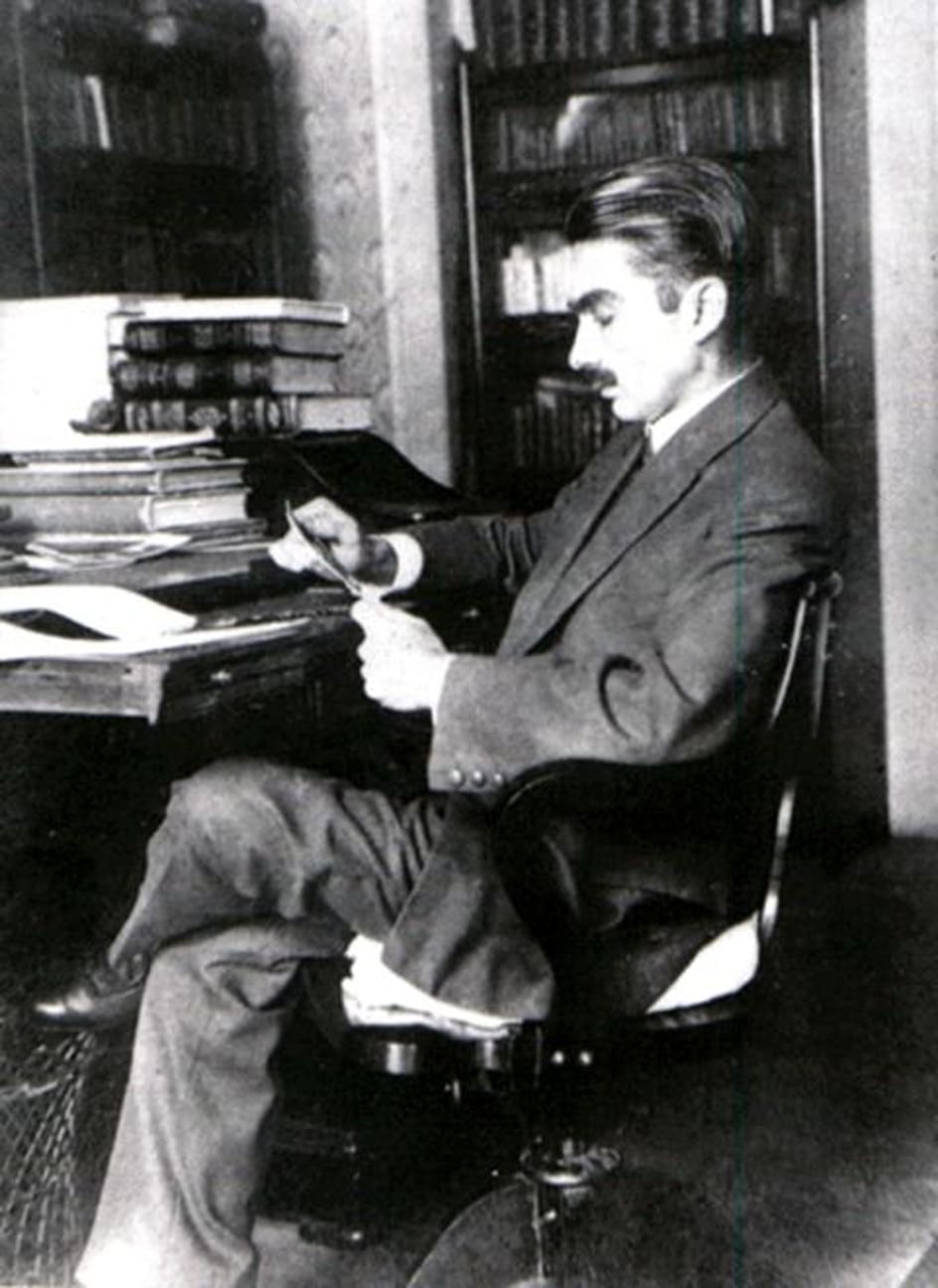 His companies were liquidated, and the censorship of the dictatorship brought Lobato closer to communists. Lobato declined the invitation to enter public life but sent a note of greeting that was read by Luís Carlos Prestes at a rally in 1945.
He became director of the “Instituto Cultural Brasil-URSS” but was forced to step down when he was taken for emergency surgery for a cyst in his lung.
In April 1948, he suffered a first vascular spasm that affected his motor skills.
Two days after giving his last interview to Rádio Record, Monteiro Lobato suffered a second cerebral spasm and died at 4 a.m., beside his wife, Maria Pureza (Purezinha), and his daughter Ruth, on July 4, 1948, at the age of 66. Amid strong national mourning, his body was laid to rest at the Municipal Library of São Paulo and buried in the Consolação Cemetery.
Curiosities about Monteiro Lobato
• Monteiro Lobato is one of the first writers of children’s works in Brazil and Latin America. The day of his birth, April 18, known as Monteiro Lobato Day, is National Children’s Book Day.
• The Vila do Buquira, where Monteiro Lobato lived and wrote much of his work, was named after him. Today, the city is called Monteiro Lobato.
• The farm located in this city, inherited from his grandfather, became known as Sítio do Picapau Amarelo, currently visited by many tourists.
• Additionally, there are several schools, streets, and libraries in Brazil named after the writer.
Famous Quotes by Monteiro Lobato
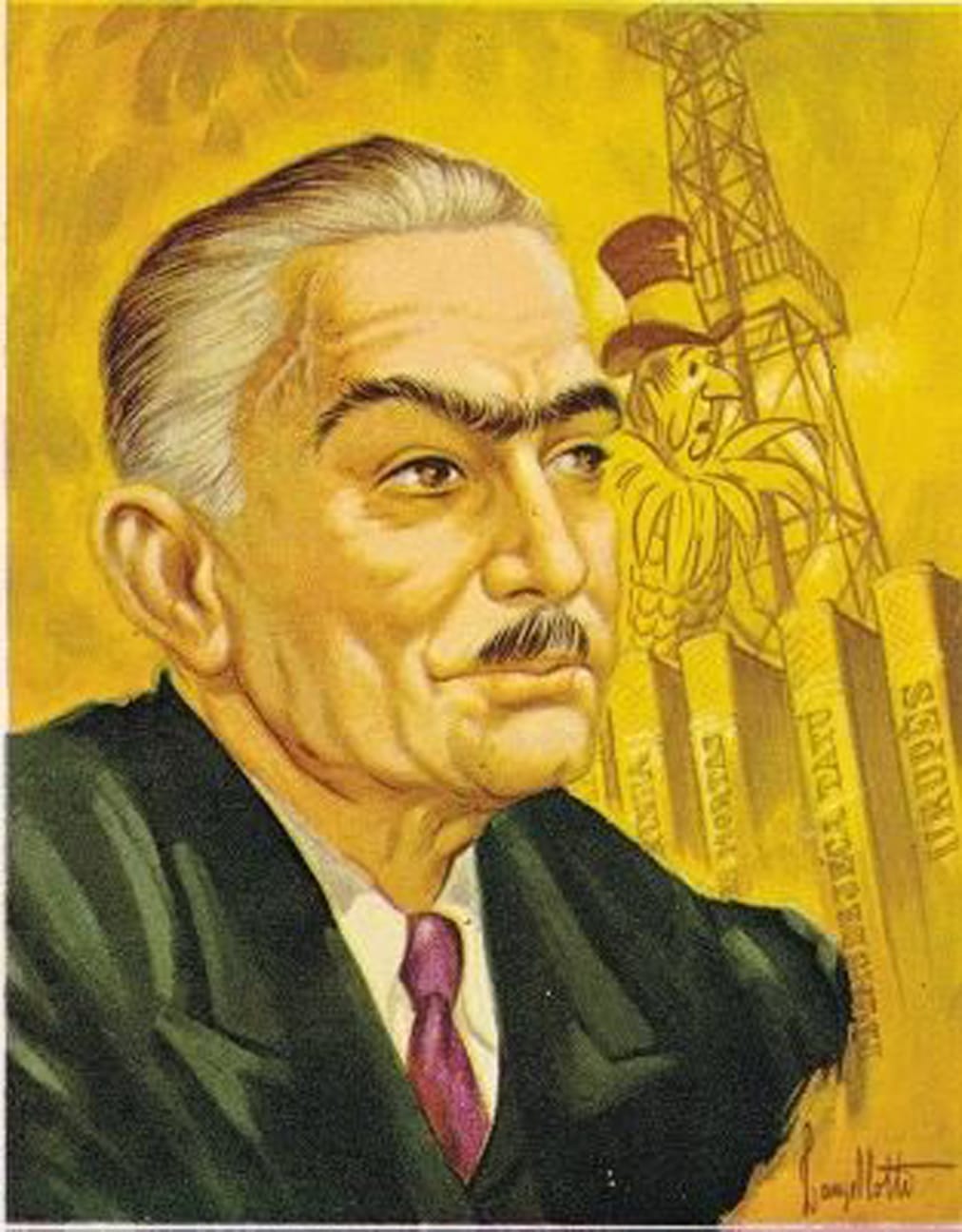 • “A country is made with men and books.”
• “Everything originates from dreams. First we dream, then we do.”
• “Those who read poorly, hear poorly, speak poorly, and see poorly.”
• “I end up writing books where our children can live.”
• “Children saved me. By writing for them, I simplified myself.”
• “The degree of culture of a country is measured by the price of its books.”
• “Writing for adults has become tiresome. Dull creatures. But for children, a book is an entire world.”
• “It is wrong to think that science kills a religion. It can only be replaced by another religion.”
• “A book is a commodity like any other; there is no difference between a book and a food item. (…) If a book doesn’t sell, it’s because it’s not good.”
Monteiro Lobato was a storyteller, still tied to certain realistic models. Owner of a careful style, he did not miss the opportunity to criticize certain Brazilian habits, such as the imitation of foreign models.