



Mauricio Araújo de Sousa was born in Santa Isabel, São Paulo, on October 27, 1935. He is the son of Antônio Mauricio de Sousa and Petronilha Araújo de Sousa. Mauricio grew up in an environment surrounded by art, as his father was a poet, composer, and painter, and his mother was a poetess.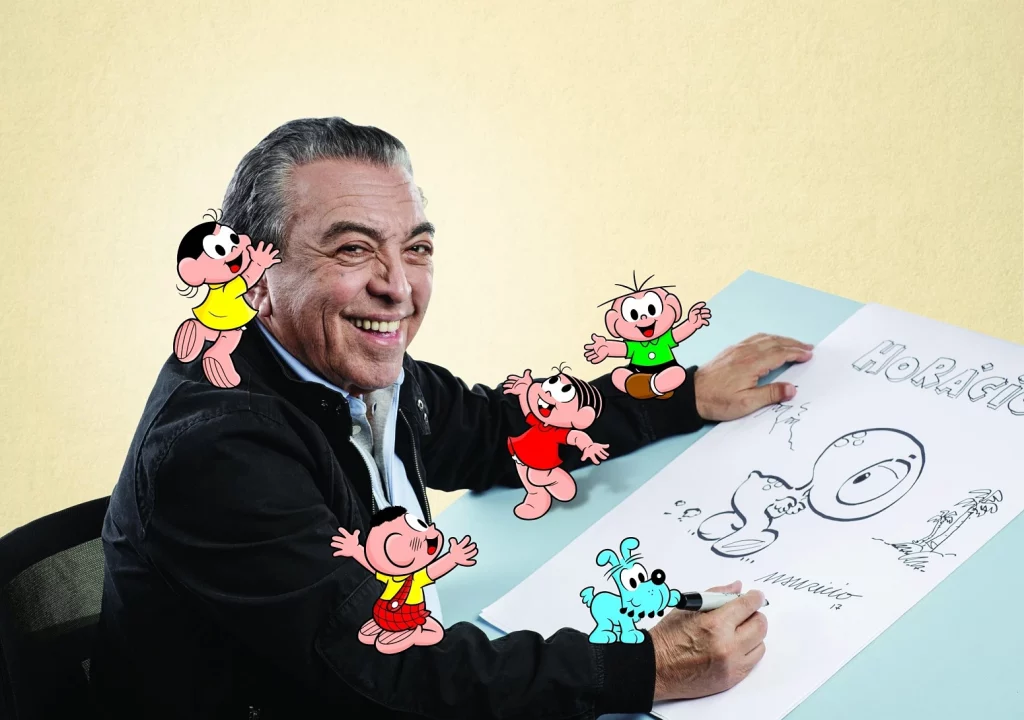 At a very young age, Mauricio moved with his family to Mogi das Cruzes, a neighboring city. According to the cartoonist, he learned to read with comic books when he was 5 years old. He found one without a cover in the trash and asked his mother to read it to him, even though he couldn’t read yet. Seeing that her son enjoyed it, Petronilha decided to teach him to read while Antônio Mauricio brought more comic books for little Mauricio.
His mother wanted him to become a child singer, but his shyness prevented him from pursuing that path. Since he was little, his favorite pastime was drawing, and he filled the pages of his school notebooks with drawings, which led to the creation of his first character, Captain Picolé.
As he grew older, Mauricio began drawing posters and flyers, some of which were published in newspapers in Mogi. When he told his father about wanting to live as an illustrator, his father told him: “Mauricio, draw in the morning and manage in the afternoon.”
In the 1950s, comic books faced fierce persecution in Brazil and other parts of the world. In 1954, German psychiatrist Fredric Wertham claimed that the comic book industry was one of the reasons for the behavioral deviation of youth and the increase in crime and 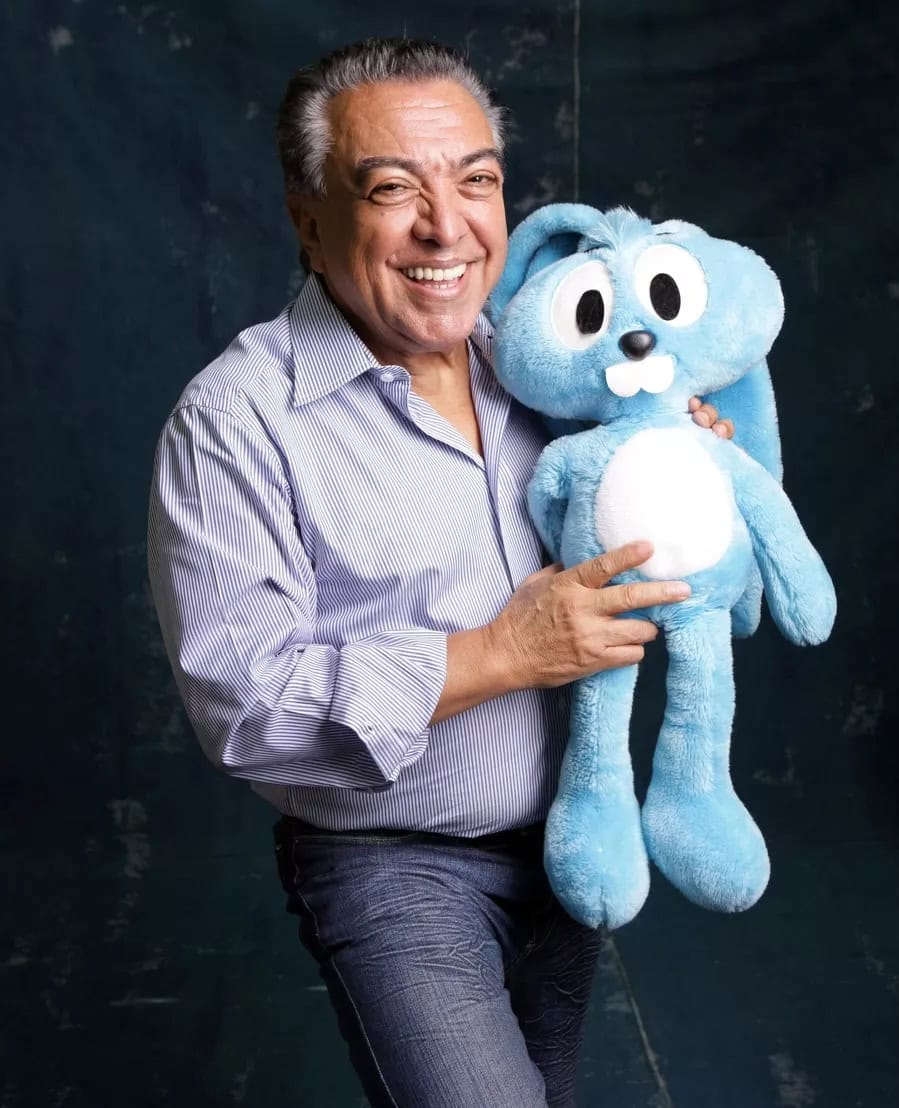 delinquency. His thesis was a document that motivated a witch hunt against this form of media.
The doctor’s theory spread to several countries and led to the Comics Code Authority, a seal that determined which comics could be published. The news also reached Brazil, and one of Mauricio’s teachers asked students to bring their comic books to be burned. “I didn’t accept that threat, but since I didn’t want to get a low grade, I chose the comic books I didn’t like much and that had some bad drawings,” recalls the cartoonist.
Mauricio wanted to make a living from drawing, and in 1954, he sought a job as an illustrator in São Paulo but only managed to get a position as a police reporter at Folha da Manhã. He spent five years writing this type of report, which he illustrated with drawings well-received by readers. Mauricio de Sousa began drawing comic strips in 1959 when a story featuring Bidu, his first character, was approved by the newspaper. The comic strips with the little dog Bidu and his owner, Franjinha, gave rise to the character Cebolinha.
 Accused of being a communist, Mauricio was fired by the editor-in-chief of the Folha de S.Paulo newspaper and returned to Mogi das Cruzes; at that time, he began presenting a catalog of his strips to supply local newspapers. In 1962, he was hired by the Rio de Janeiro newspaper Tribuna da Imprensa, for which he created the character Piteco and his crew.
He and some other illustrators founded the São Paulo Association of Illustrators (ADESP), of which he was president. During his presidency, Mauricio supported market reservation due to the difficulties artists faced because of publishers’ preference for publishing stories from abroad, especially from the USA.
During Jânio Quadros’ presidency, Mauricio joined Zé Geraldo, leader of the unions of Guanabara and Rio de Janeiro, in what became known as Operation Gibi, to pressure the president to fulfill his promise to reserve 60% of the market for national production.
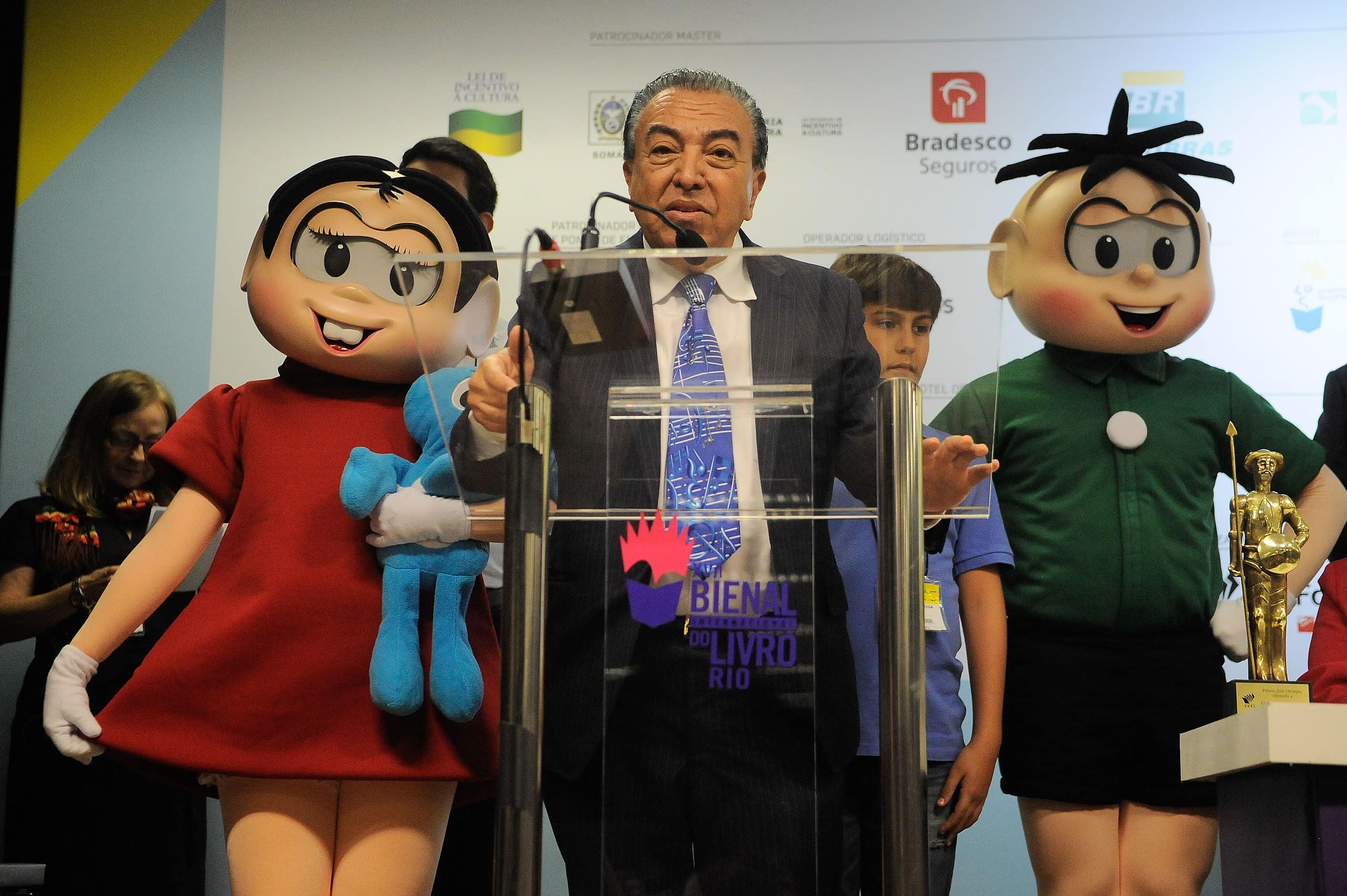 In 1963, Mauricio de Sousa, along with journalist Lenita Miranda de Figueiredo, created Folhinha de S. Paulo. That year, Mônica and Horácio were created. Before her, he had already created Cascão in 1961. At that time, he also founded Bidulândia Serviços de Imprensa, later called Maurício de Sousa Produções (Bidu became the symbol of Mauricio de Sousa Produções). He supplied the newspaper with three daily strips. It was during this time that he created Magali and Anjinho.
In 1964, many cartoonists feared censorship and the possible difficulties of producing art due to the regime established after the Military Coup. In addition, the nationalist movement divided illustrators between those who wanted to create Brazilian narratives and those who saw no problem in incorporating certain American standards. During that period, Mauricio decided not to lean towards either side. He did the opposite: he left the presidency and continued writing his stories, sometimes even poking fun at censorship. However, none of his stories were suppressed by the dictatorial regime.
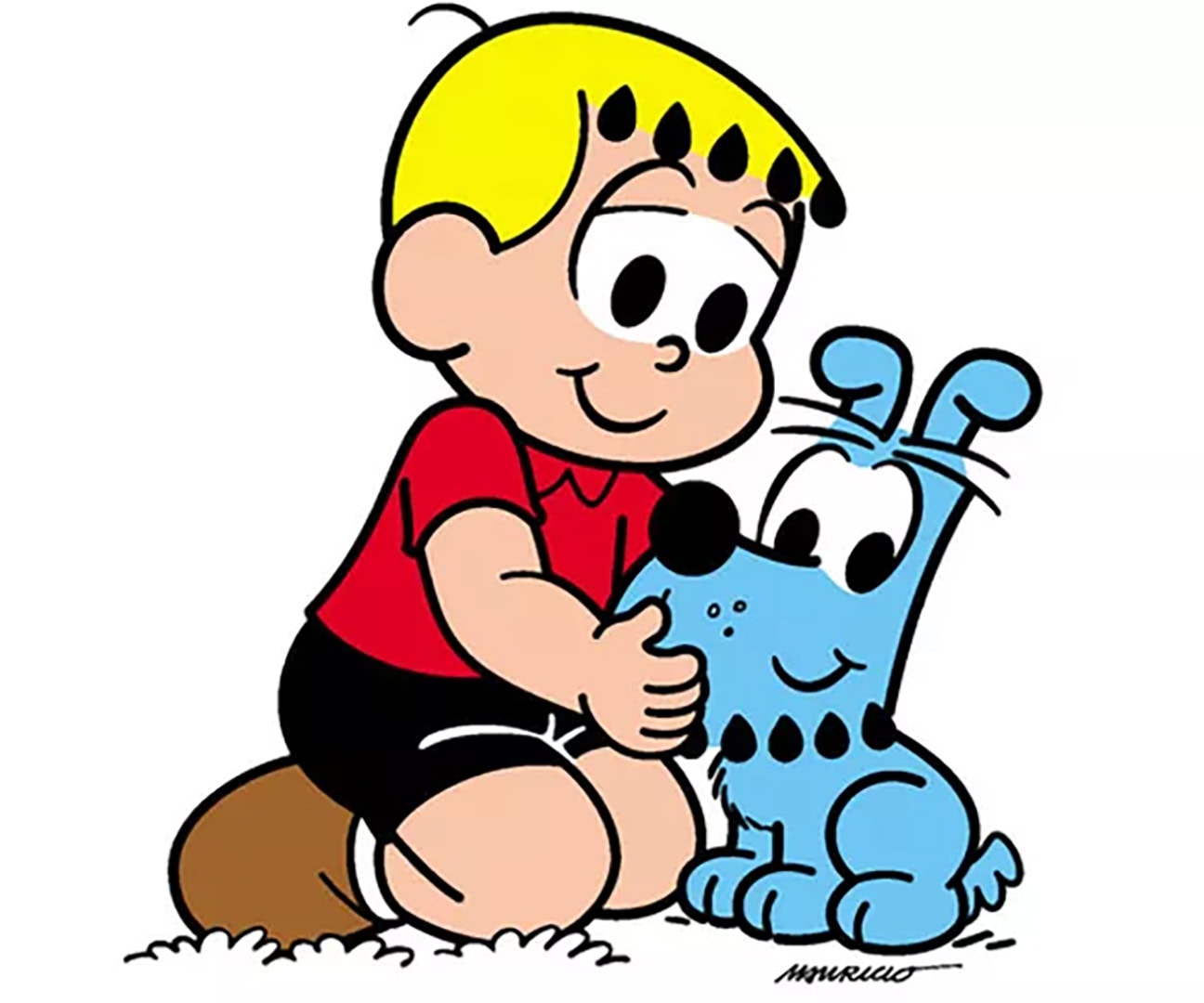 As he chose not to take part in the movement, Mauricio lost his job at the Folha da Tarde newspaper. This was a difficult time for him economically, and he opted to illustrate parish newspapers.
Mauricio describes how it worked: in the 1st week, parish A received a strip of Bidu, parish B of Piteco, and parish C of Cebolinha. In the 2nd week, A had Cebolinha, B had Bidu, and C had Piteco. In the 3rd week, A published Piteco, B Cebolinha, and C Bidu. Now imagine this game of musical chairs with about 100 participants. Later, he expanded the system using the mail to sell strips to newspapers that were far from Mogi. The strips became a success and began to be republished in over 100 newspapers across the country. In 1987, he began illustrating the newly created children’s supplement of the newspaper O Estado de S. Paulo, the Estadinho, which still publishes strips of the Turma da Mônica today. At the same time, Mauricio created Piteco and revamped Penadinho and Chico Bento to star in the pages of Estadinho. He also created Jotalhão to serve as the mascot for the classified section of Jornal Brasil. Mauricio 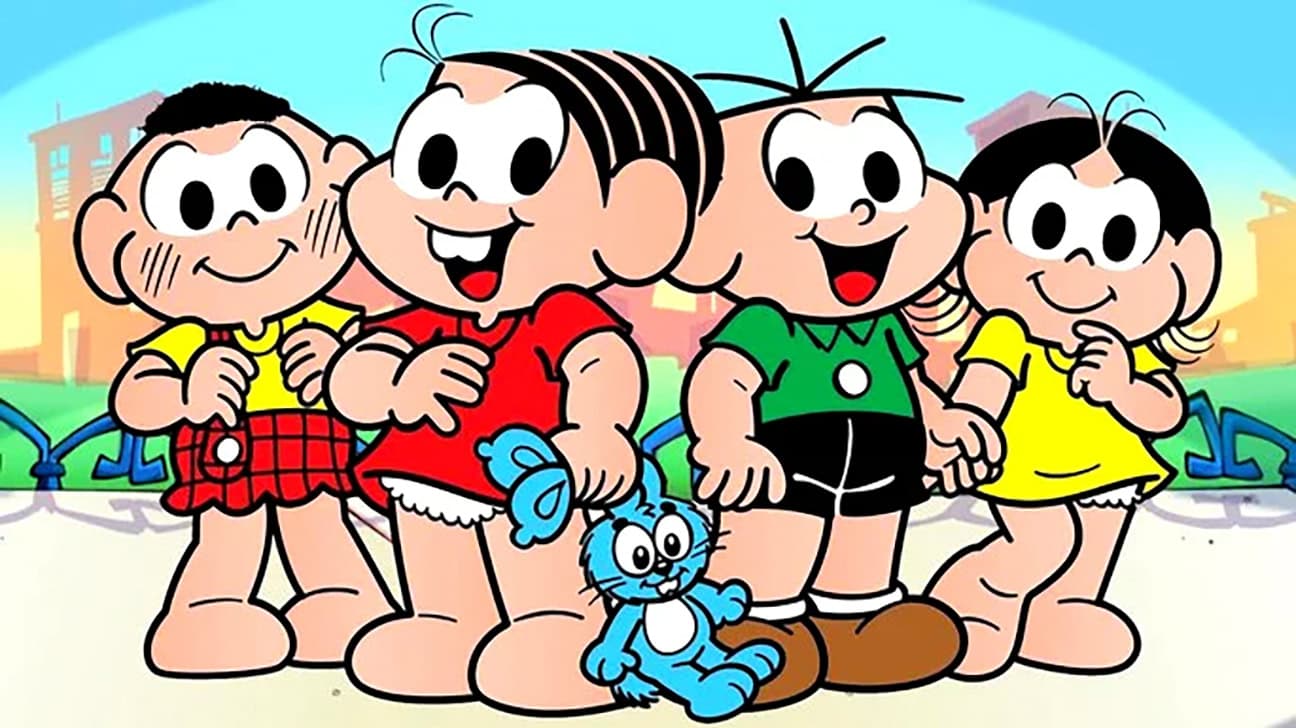 assembled a team of illustrators and writers, and after some time, he began to draw only the stories of Horácio, the dinosaur.
From 1970 (he launched the magazine of Turma da Mônica, then called Mônica e sua turma, with a circulation of 200,000 copies) to 1986, Mauricio’s magazines were published by Editora Abril. Starting in 1987, the magazines began to be published by Editora Globo, in conjunction with Mauricio de Sousa studios. After 20 years, all Turma da Mônica titles were transferred to the multinational Panini. Mauricio’s goal was to expand his presence abroad.
In 2007, for the first time, a children’s character, Mônica, was honored as “UNICEF Ambassador.” At the same ceremony, Mauricio de Sousa was honored as “UNICEF Children’s Writer.” In 2008, the Ministry of Tourism appointed Mônica as the “Ambassador of Brazilian Tourism.”
The publication of “Turma da Mônica Jovem,” a line of characters aged 15, sold over one and a half million copies of the first four issues of the magazine in 2008.
During the celebrations of the centenary of Japanese immigration to Brazil, he created the characters “Tikara” and “Keika,” which were incorporated into Turma da Mônica.
Today, between comic books and newspaper strips, his creations reach about 50 countries. The author has reached 1 billion published magazines. The comics are joined by illustrated books, activity magazines, sticker albums, CDs, three-dimensional books, and braille books.
More than 100 national and international industries are licensed to produce nearly 2,500 items featuring Mauricio de Sousa’s characters, including games, toys, clothing, footwear, decorations, stationery, school supplies, food, animation, films, in addition to magazines and books. In 2013, “Turma da Mônica” celebrated its 50th anniversary.
In 2014, the writer launched a Turma da Mônica book with a spiritual theme, “Meu Pequeno Evangelho,” inspired by the book “The Gospel According to Spiritism,” one of the five basic works of Spiritism.
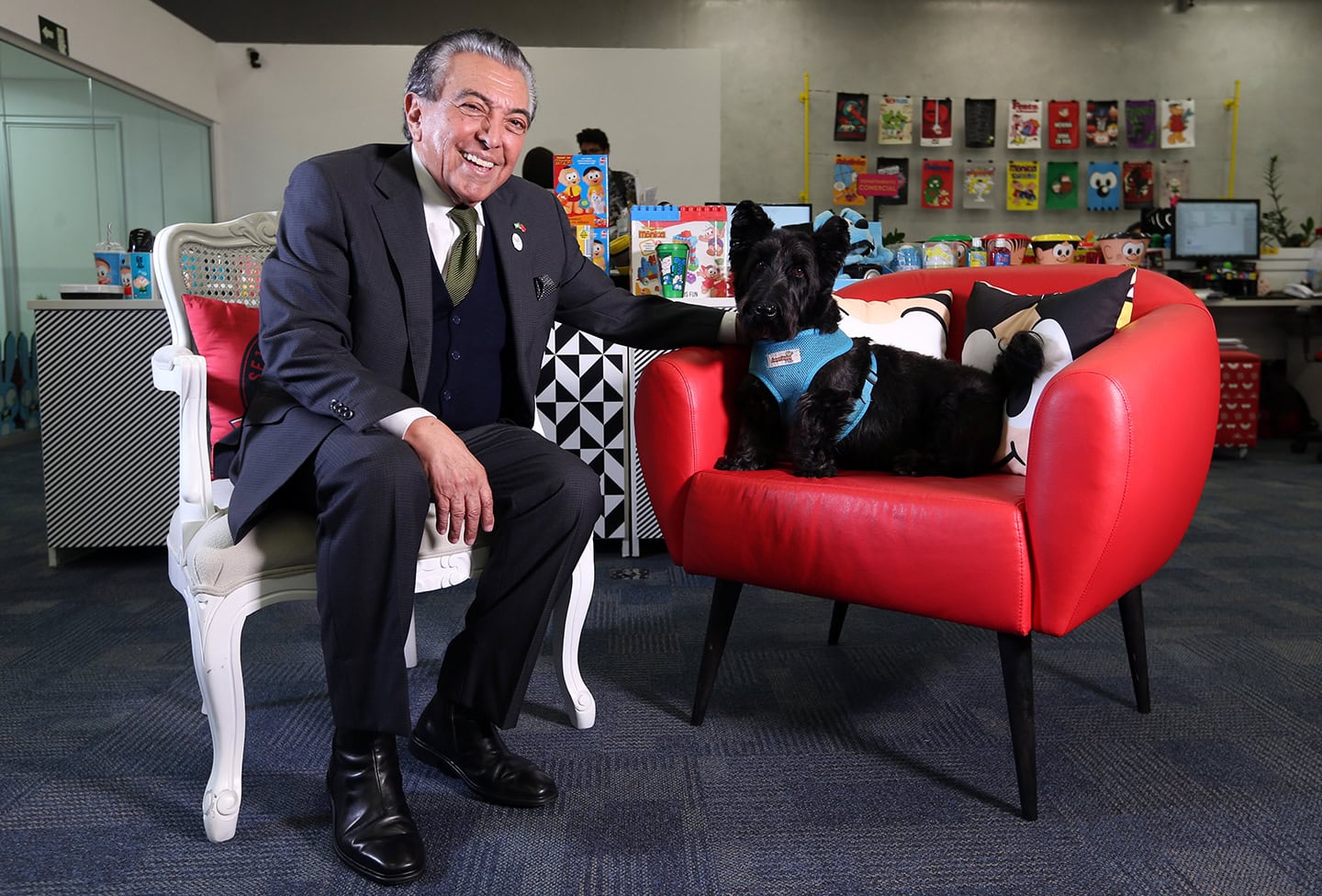
Mauricio de Sousa’s comics have international fame, having been adapted for cinema, television, and video games, in addition to being licensed for trade in a series of products featuring the characters’ brand. There is even the Turma da Mônica theme park, Parque da Mônica, which opened in 1993, initially located in Shopping Eldorado, São Paulo.
The park remained at that location until 2010, when it temporarily suspended its activities, reopening in 2015 at Shopping SP Market, São Paulo, occupying a larger area than the previous space. There was also the Parque da Mônica in Curitiba, which opened in 1998 and closed in 2000, and the one in Rio de Janeiro, which closed in early 2005. A new unit of the park is scheduled to open in Gramado (RS), expected to occur in the second half of 2020.
His drawing style somewhat resembles that of Osamu Tezuka, a famous Japanese mangaka and his personal friend. Today, he is considered by many to be the greatest cartoonist in Brazilian history and the most awarded as well.Personal Life
Mauricio de Souza was married for 12 years to Marilene Spada, the mother of his daughters: Mariângela, Mônica, and Magali, and his son Mauricio Spada. From his second relationship with Vera Lúcia Signorelli, he had Wanda and Valéria. From his third relationship with Alice Keiko Takeda, he had Marina, Mauro, and Mauricio Takeda. Lastly, Marcelo de Sousa was born from a relationship during a period when Mauricio and Alice were separated.
In March 2008, his youngest son, Marcelo, and two other people were kidnapped in São José dos Campos by a gang. They were taken to São Sebastião, on the São Paulo coast, and were freed by the civil police in April.
On May 2, 2016, Mauricio Spada, his 44-year-old son, died of a heart attack while at home.Family and Characters
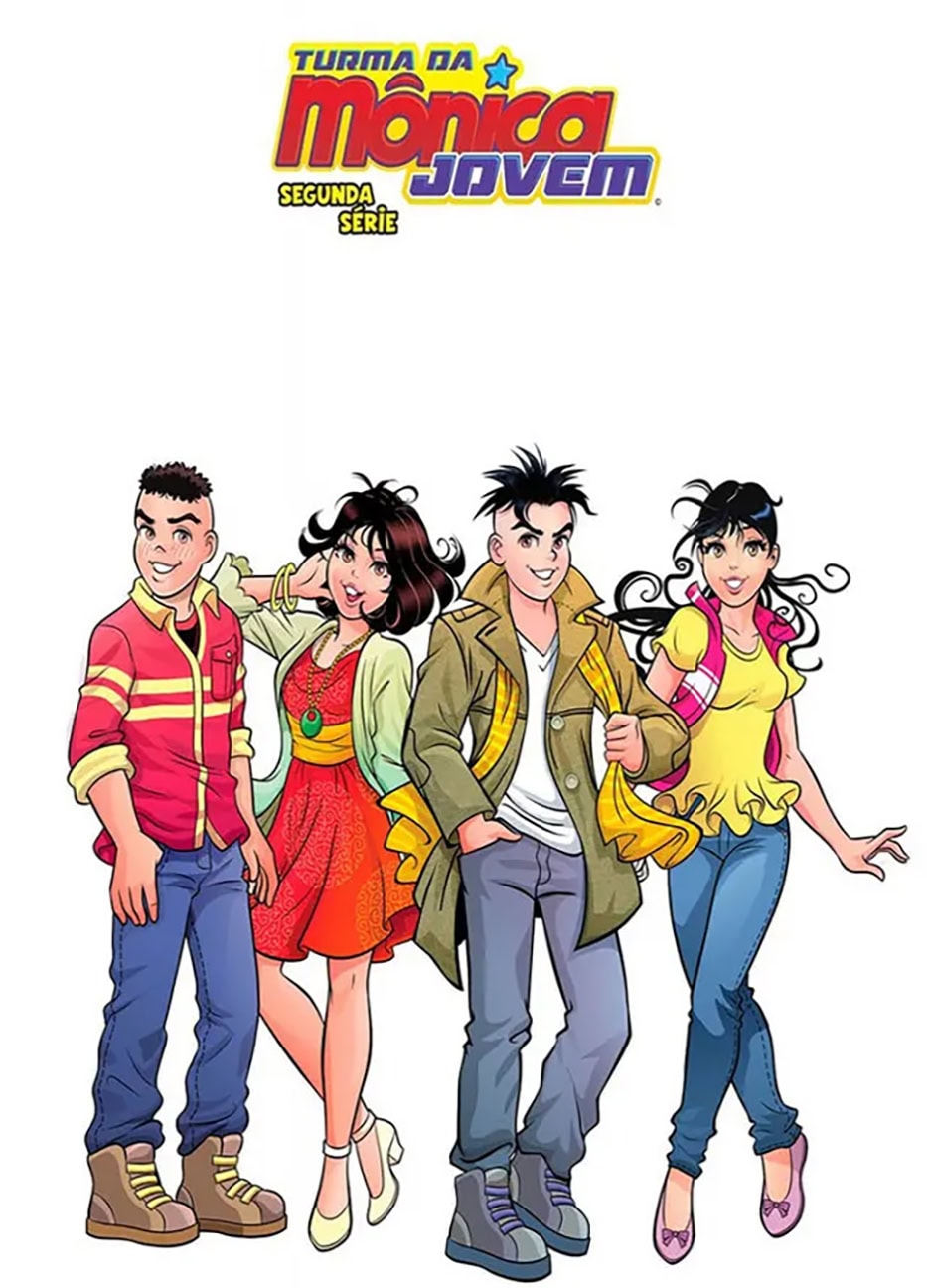 Mauricio created characters based on all his children, six namesakes (Mônica, Magali, Marina, Vanda, Valéria, Marcelinho) and more Maria Cebolinha (inspired by Mariângela), Nimbus (in Mauro), Do Contra (in Mauricio Takeda), and Professor SpadaDr. Spam (Maurício Spada). Titi and Franjinha are characters inspired by his nephews. Bidu was a dog from his family, while Cebolinha and Cascão were friends of his brother. Horácio, the dinosaur, is the cartoonist’s alter ego.
“Mônica, Cascão, Cebolinha, Magali, they all are my family, they are inspired by my life, so they are part of who I am,” says Mauricio de Sousa.
Some of his children have started working with him; Mônica is responsible for the commercial division of food and licensed products, Magali collaborates as a scriptwriter, and Marina helps in creating new stories.
Among Mauricio de Sousa’s other characters are: Chico Bento, Rosinha, Penadinho, Anjinho, Piteco, Floquinho, Tina, and others.
From 1959 to the present day, Mauricio and his team have brought to life around 250 characters, some of whom have become popular while others have ceased to exist.
In over 60 years of work, Mauricio de Sousa Produções has published more than 1 billion magazines. The material is also exported to about 30 countries.Honors
• Awarded the Order of Ipiranga by the Government of the State of São Paulo.
• On May 13, 2011, Mauricio de Sousa was inducted into the Paulista Academy of Letters, occupying chair 24, previously held by poet Geraldo de Camargo Vidigal, thus becoming the first cartoonist to be inducted into this Academy.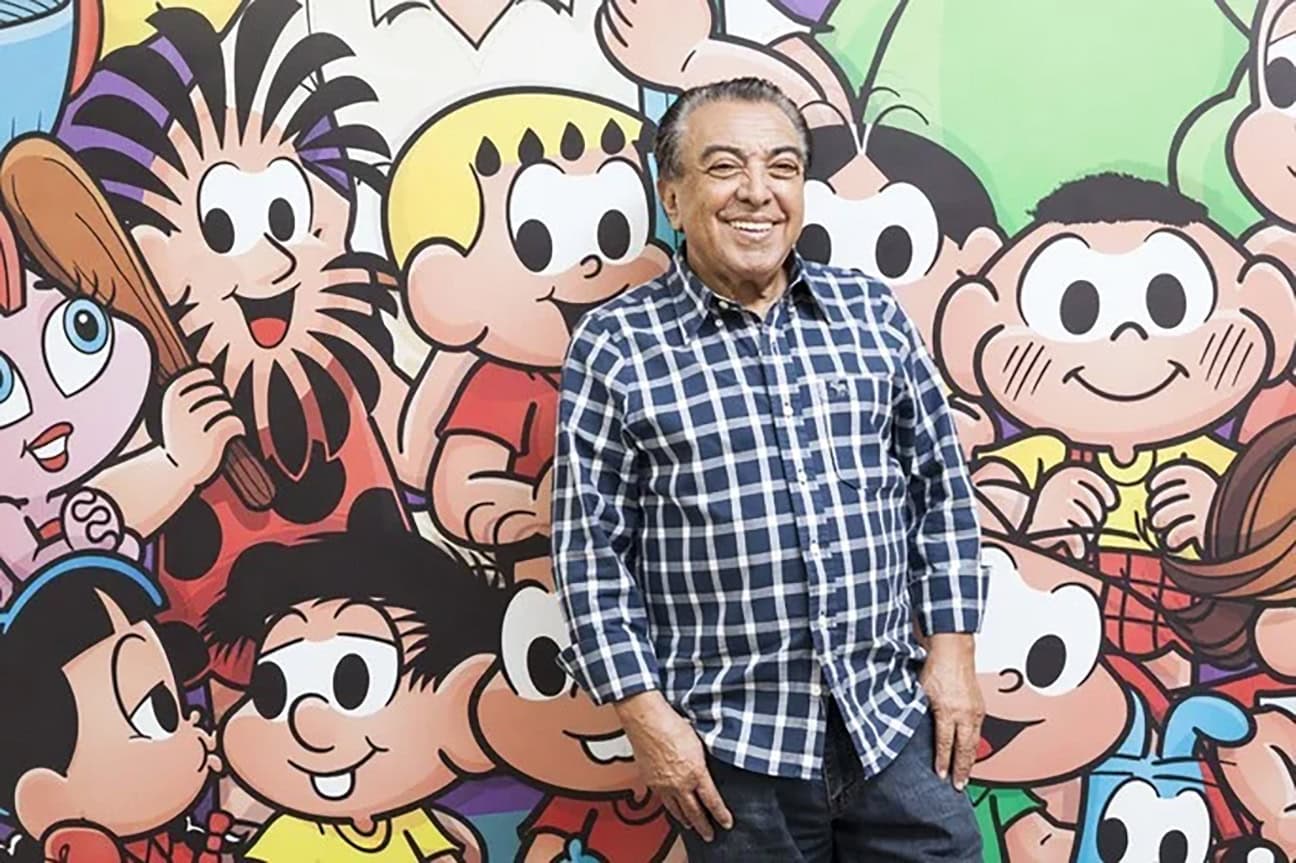
• Gran Guinigi Award for the magazine Mônica (Italy, 1971)
• Yellow Kid Trophy, the Oscar of World Comics (Italy, 1971)
• Human Rights Medal (Brazil, 1998)
• ABL Children’s Literature Award (Brazil, 1999)
• Doctor Honoris Causa from La Roche University (Pittsburgh, 2001)
• Vatican Medal (Washington, DC, 2004)
• Medal of the Order of Cultural Merit (2004)
• In 2007, Mauricio de Sousa was honored by the samba school Unidos do Peruche with the theme “With Mauricio de Sousa, Unidos do Peruche opens paths, opens books, opens minds, and makes dreams come true.”
• Vermeil Medal (France, 2008)
• Pulcinella Award for lifetime achievement (Italy, 2011)
• In 2019, it was announced that director Pedro Vasconcelos would direct a film inspired by the work Maurício – The Story That Is Not in the Comic.