



The municipality of União da Vitória, in the southern region of Paraná, inaugurated a colorful staircase that provides access to Morro do Cristo, in the São Joaquim neighborhood. The staircase is part of a complete revitalization of the Morro do Cristo park, with an investment of R$ 541 thousand from the State Government, which also includes the renovation of the Stations of the Cross, construction of a viewpoint, renovation of the Christ monument, renovation of the chapel, electrical installation and lighting renovation, drainage construction, paving renovation, and landscaping.
The statue of Christ is located on one of the highest hills surrounding the municipality, at 928 meters above sea level. The statue is 27 meters tall and is fixed on a 6-meter pedestal that houses a chapel inside. It was built in 1968 and is still today the second largest image of its kind in the interior of Brazil. The site offers a privileged view of the municipalities of União da Vitória, in Paraná, and Porto União, its neighbor in Santa Catarina.
The staircase is a kind of gift to the municipality of União da Vitória, which has already suffered four major floods. The strength and violence of the Iguaçu River are themselves depicted in the mosaics of the staircase.
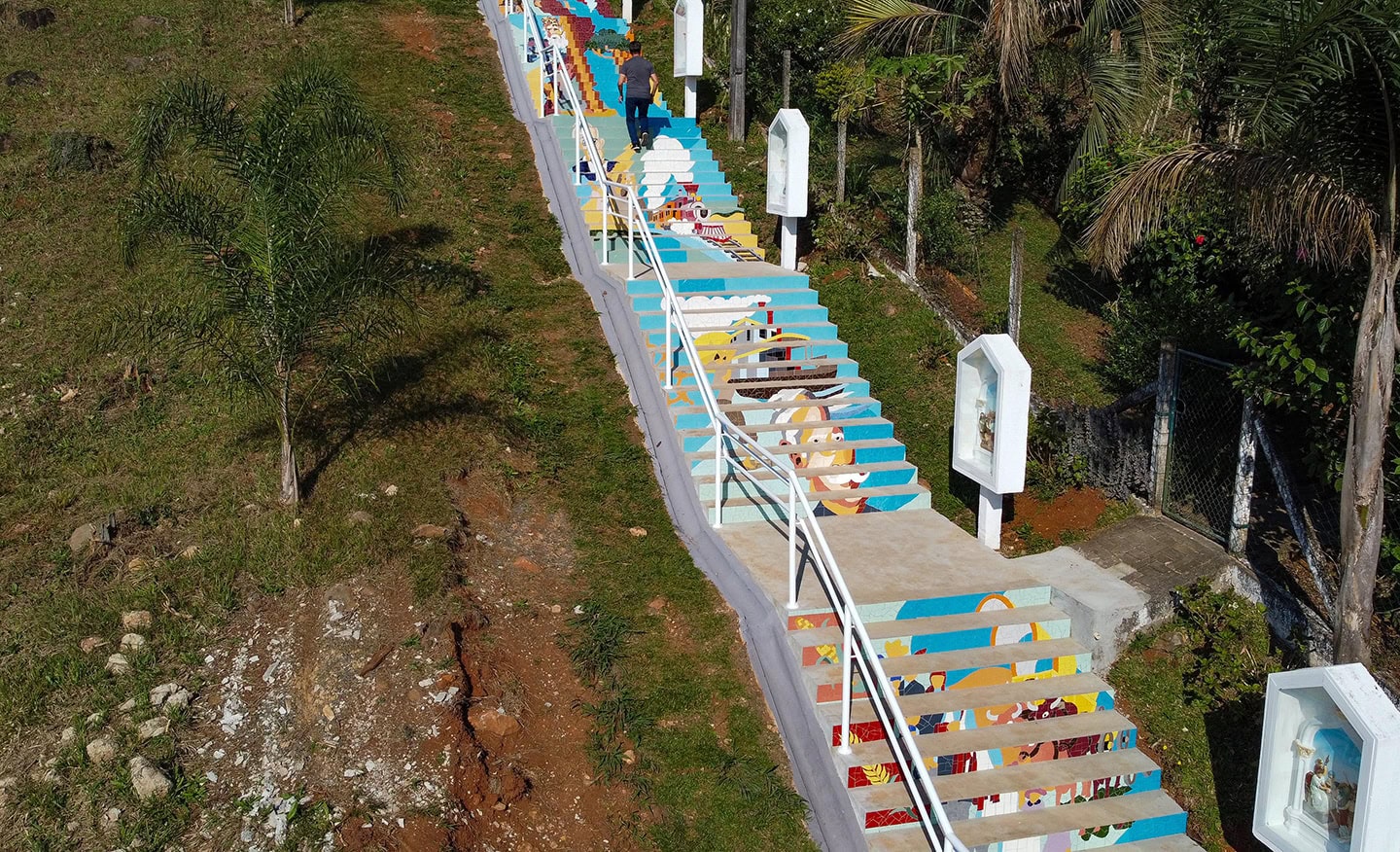
Photo Gilson Abreu
“The colorful mosaic staircase, the largest in the country, which leads citizens to Morro do Cristo, tells and pulses the entire history, culture, and life of the population of União da Vitória and has become the City’s Postcard,” says Paraná mosaic artist Ragli Rotta Martins, responsible for the construction of the mosaic.
Ragli has been a mosaic artist for 20 years and leads a team of seven professionals who, together, accepted the challenge proposed by the Municipal Secretary of Culture, Francielii Misturini, who requested the revitalization of the site, the glass viewpoint, and the staircase.
There are 227 steps that tell, in colorful mosaics, the history of União da Vitória from colonization, passing through the drovers. It shows the beauty and violence of the Iguaçu River; the sadness and victories of the Contestado War; the monks of the region.
It also features personalities such as Captain Kirk, the first aviator to use the first airplane in Brazil during the Contestado War; Colonel Amazonas Marcondes, a defender of settlers and the population in the conflict, whose residence survived all four floods, which is described as a miracle by the residents. There is also the figure of Maria Rosa, who
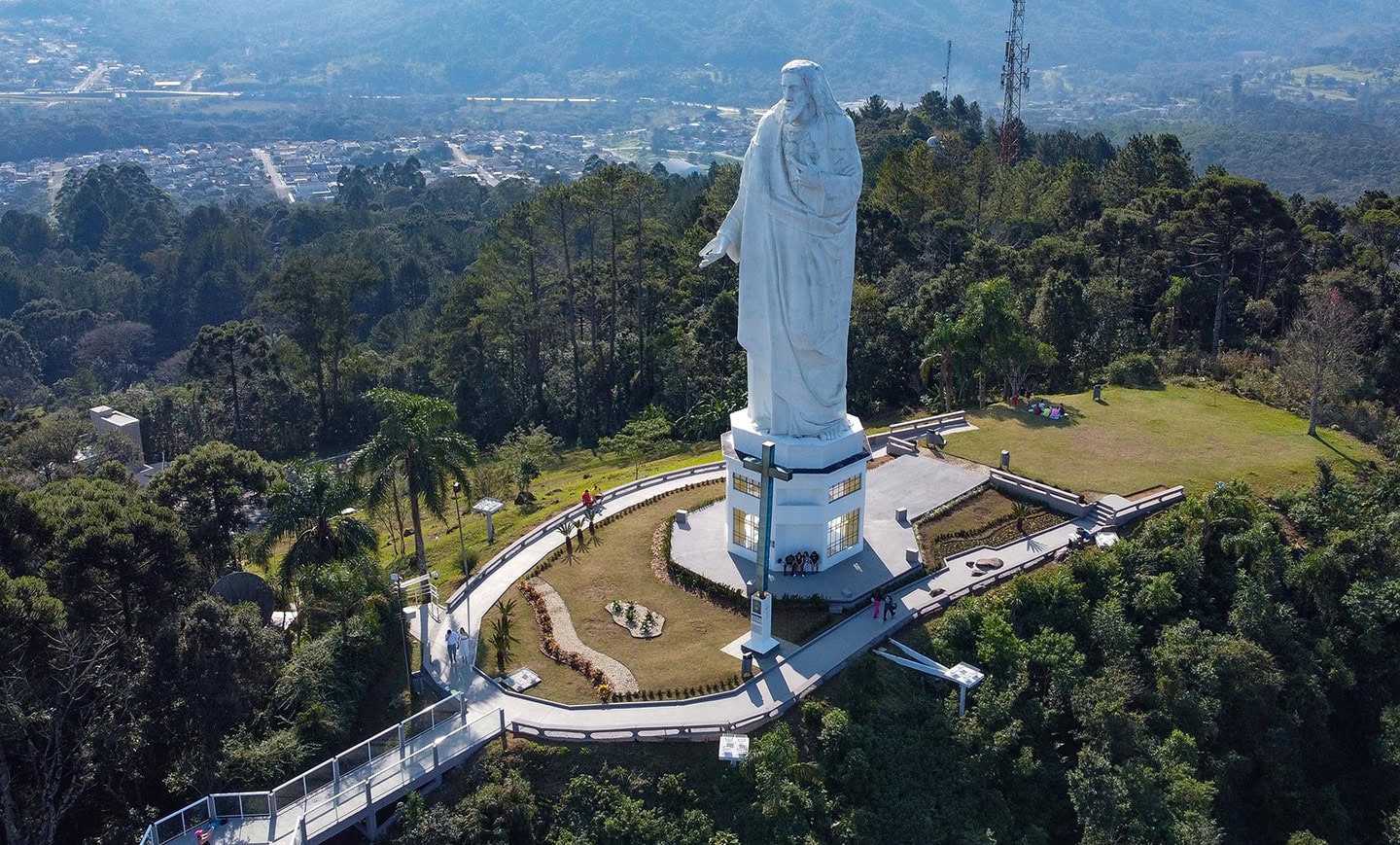
Photo Gilson Abreu
also fought in the Contestado War.
The history, culture, economic development, industrialization, timber extraction, the emergence of banks, hospitals, and commerce in general are all depicted on the steps of the staircase. Visitors can also see tourist attractions, such as the three churches: the Ukrainian; the Navigators; and the Mother Church of Our Lady of the Sacred Heart of Jesus. Tourist points such as the Railway, the Arches Bridge; and Colonel Marcondes’ house, which has never been flooded, are also depicted on the staircase.
At the site, the steps also show the religious diversity of the peoples who helped build União da Vitória. They include Indigenous peoples, Africans, Poles, Italians, Ukrainians, Germans, Swiss, Orientals, Lebanese, Israelis, Portuguese, and Austrians.
The new staircase has been approved by residents and tourists. Nancy Santana Machado visited relatives in the municipality and took the opportunity to see the attraction. “I used to live here before. Now I came to visit a niece, and she said, ‘Aunt, you need to see the renovation they did at Christ.’ It turned out very beautiful. Congratulations to those who did it,” she said.
Also visiting the site, Fátima Diba says that Morro do Cristo should be seen as a source of pride for the residents. “It’s really beautiful. It’s a pride for the city,” she stated.
Source: www.turismo.pr.gov.br