



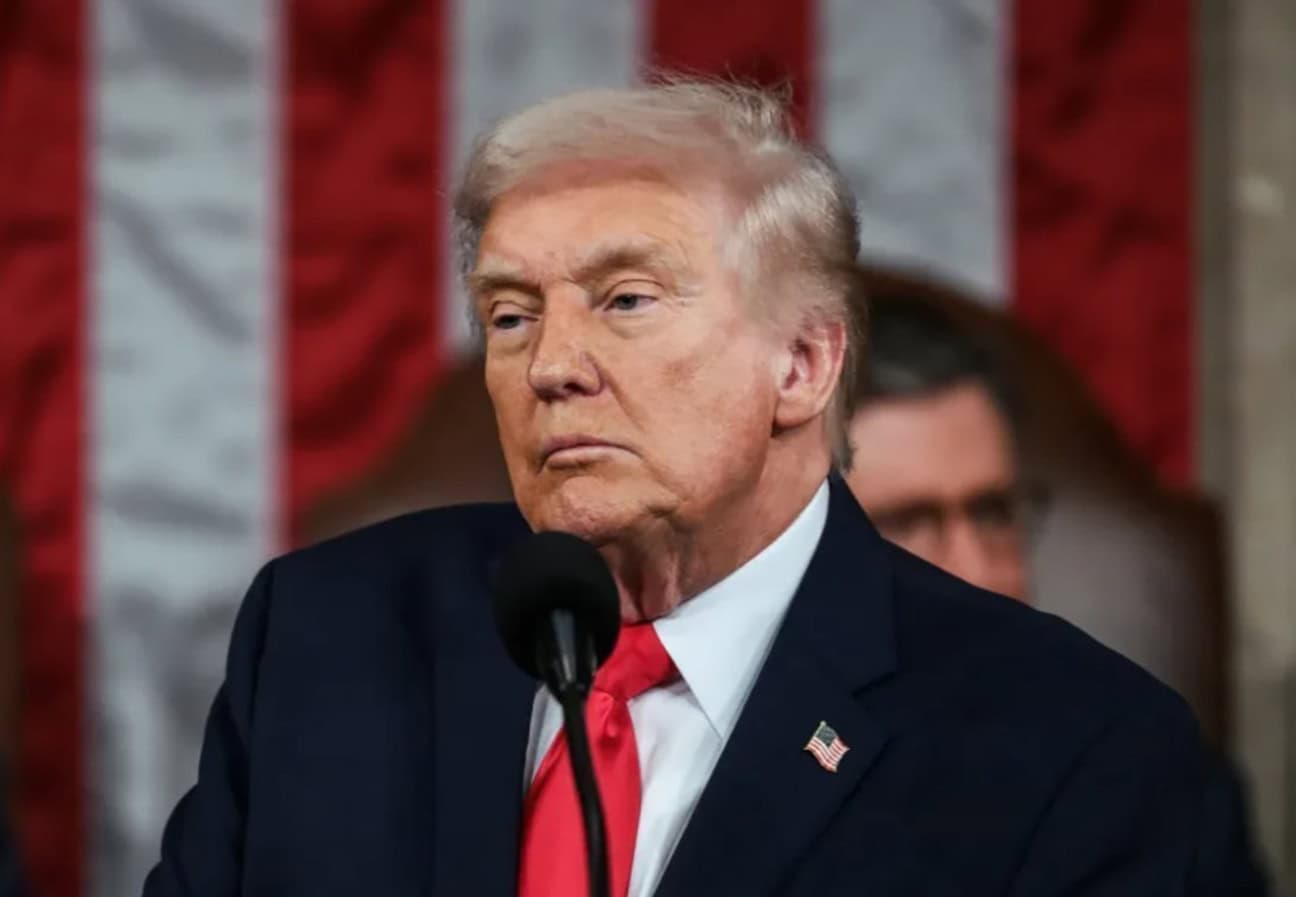
President Trump says the United States is negotiating with Iran to end the war, now in its fourth week. Iran denied being in negotiations.
Speaking to reporters on Monday, Trump said the U.S. objectives include Iran halting uranium enrichment for its nuclear program and the U.S. removing the enriched uranium that Iran already possesses.
“If that happens, it’s a great start for Iran to rebuild itself, and that’s all we want,” Trump told reporters on Monday. He said it would be a great deal for Israel, as well as for Saudi Arabia, the United Arab Emirates, Qatar, Kuwait, and Bahrain.
“There is no dialogue between Tehran and Washington,” Iran’s Foreign Ministry said, according to the country’s state broadcaster. It claimed that Trump’s previous social media post touting “productive talks” with Tehran was aimed at calming energy markets and buying time to execute its military plans. Major stock indexes rose and oil prices fell on the news.
The speaker of the Iranian parliament also denied that there are negotiations.
Here’s what else you need to know about the latest developments in the conflict.
To go directly to specific areas of coverage, use the links below:
Iran Threatens Attacks on Gulf Energy Infrastructure
Iranian authorities warned on Monday that if the U.S. attacks Iran’s power plants, Iran would retaliate against energy and water infrastructure across the Gulf region – including in countries hosting U.S. military bases.
In a separate statement, Iran’s Defense Council said that “non-belligerent” countries could only transit the Strait of Hormuz through coordination with Iran, and warned that any attack on Iran’s coasts or islands would trigger the placement of mines in Gulf maritime routes, which could effectively block maritime traffic beyond the narrow strait.
The commander of U.S. Central Command, Admiral Brad Cooper, said on Monday that the Strait of Hormuz is “physically open,” but argued that ships are staying away because Iran was firing missiles and drones at vessels. Cooper made the comments in an interview with Iran International, a Persian-language news broadcaster based in London.
Cooper said the U.S. campaign in Iran is “ahead of or on schedule,” stating that Iran’s military capabilities are deteriorating.
He also accused Iran of increasingly targeting civilians across the Middle East.
“They are operating out of desperation…in recent weeks, they have deliberately attacked civilian targets more than 300 times,” Cooper said.
Head of International Energy Agency Warns Global Economy Faces ‘Major, Major Threat’
Fatih Birol, head of the International Energy Agency, warned on Monday that the global economy faces a “major, major threat” due to the war’s disruption of oil and gas flows.
“No country will be immune to the effects of this crisis if it continues in this direction,” Birol said, speaking at the National Press Club of Australia in Canberra on Monday.
He added: “The situation is very serious.”
“At least 40 energy facilities in nine countries have also been severely damaged in the conflict.”
Birol said the current situation is worse than the combined oil crises of 1973 and 1979, which together lost 10 million barrels per day.
“And today, just up to today,” we have lost 11 million barrels per day – more than two major oil shocks combined,” he said.
Birol said the IEA was consulting governments in Europe, Asia, North America, and the Middle East about releasing more oil stockpiles, in addition to the 400 million barrels of oil released in a “historic” manner earlier this month.
Source: npr.org