



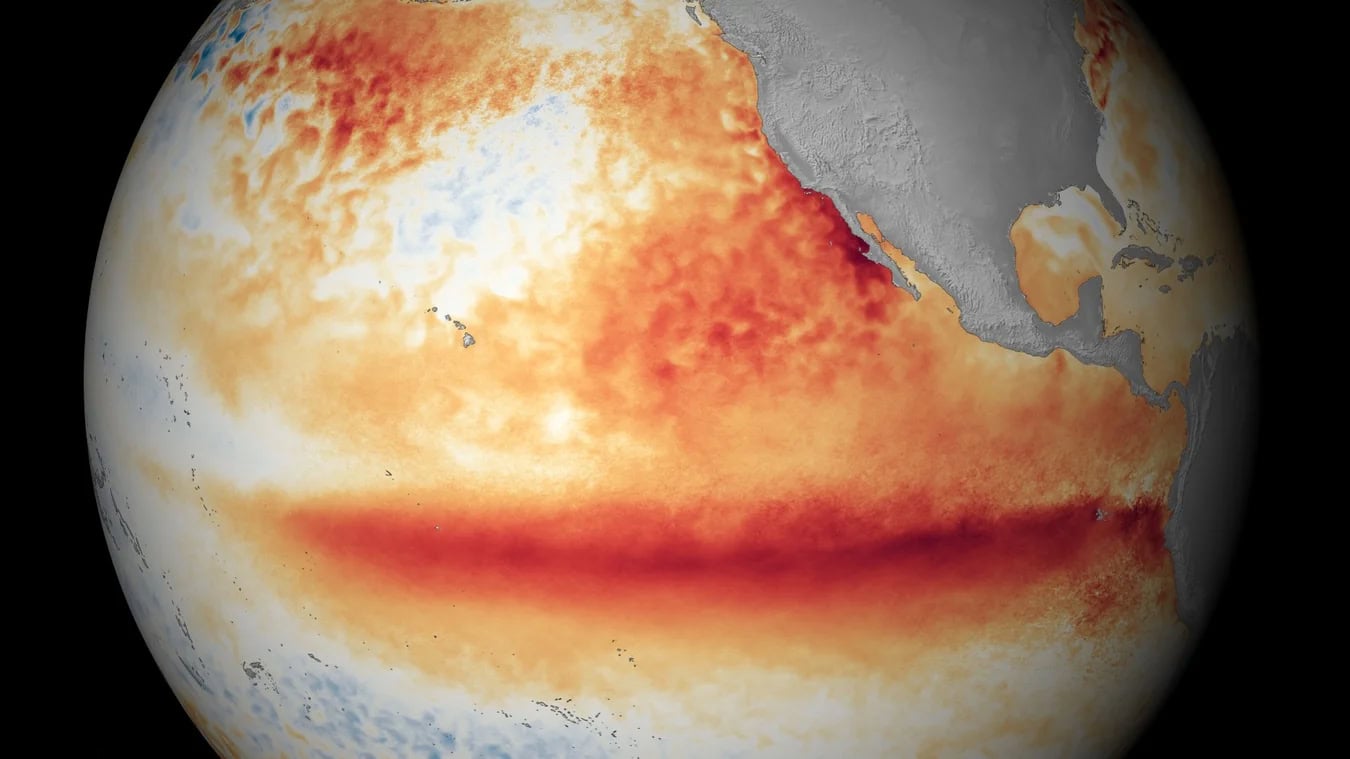
A potentially strong El Niño climate pattern is likely to emerge this summer and persist through the rest of the year, according to the most recent official forecast from the National Oceanic and Atmospheric Administration.
Forecasters estimate a 62% chance that El Niño will develop between June and August. El Niño occurs when trade winds weaken, allowing vast volumes of warm ocean water to move from the eastern Pacific toward the Americas.
“Even though the evidence is still preliminary, this could be a very significant event in 2026 extending into 2027,” says Daniel Swain, climate scientist at the University of California Agriculture and Natural Resources.
A strong El Niño would raise average global temperatures. The hottest years on record generally occur in years when El Niño is active, because El Niño happens when the eastern Pacific is warmer than usual.
“Its role in the global Earth system is to release heat from the deeper oceans that was temporarily stored there,” says Swain. “El Niño allows that subducted heat to be released.”
This dynamic played out starkly in 2023 and 2024, when a long and strong El Niño pattern helped shatter global temperature records. 2023 broke the record for the hottest year ever recorded on Earth, only to be surpassed by 2024 temperatures.
“If a strong El Niño develops, it will boost 2026 temperatures somewhat, but it will have a particularly large effect on 2027 temperatures and put that year on track to likely be the hottest on record after 2024,” says Zeke Hausfather, research scientist at Berkeley Earth and climate research lead at the technology company Stripe.
El Niño, a natural cyclical fluctuation, is just one of the factors behind this record heat. Human-caused global warming from burning fossil fuels is the main reason the planet is heating up. Even without El Niño, last year was among the three hottest on record.
El Niño also affects regional weather patterns around the world. The southern United States often sees more rain and cooler temperatures, which can help control droughts and reduce wildfire activity.
However, the Southwest is gripped by such severe drought that one year of wetter weather won’t be enough to fully replenish reservoirs, according to a new analysis from the National Integrated Drought Information System. And the extra global heat from El Niño can drive more severe droughts in other parts of the world.
On the other side of the U.S., El Niño makes it harder for hurricanes to form in the Atlantic Ocean, so they often coincide with less severe hurricane seasons. However, El Niño offers limited protection, since it only takes one major storm hitting the coast to cause catastrophic damage, and climate change has driven Atlantic temperatures soaring, providing more fuel for storms that form. And El Niño does nothing to moderate storms forming in the Pacific.
Swain says El Niño’s regional patterns are its most dangerous effects. “This means more heat waves and tangibly warmer temperatures, but perhaps most importantly what it means for everything else: more energy for storms, heavier rains, more intense droughts, more extreme wildfires.”
Source: npr.org