



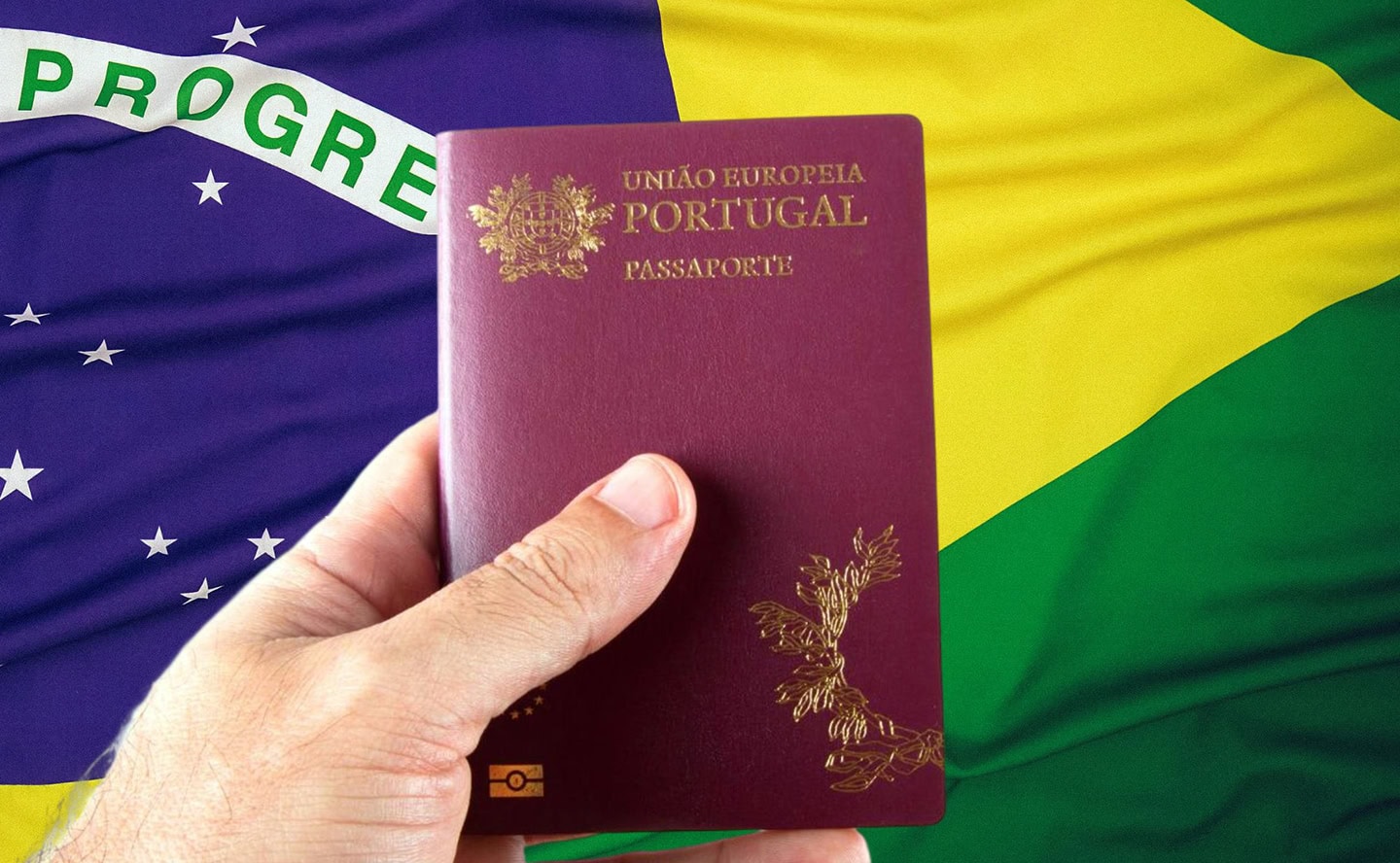
The Brazilian community in Portugal is going through a period of apprehension amid recent changes in the country’s immigration policy. Reforms to immigration and nationality laws, coupled with the topic’s prominence in the electoral debate, have generated fear and insecurity among thousands of foreign residents on the eve of this Sunday’s (18) presidential election.
The situation was detailed in an RFI report produced by special correspondent in Lisbon, Lígia Anjos, based on an interview with Ana Paula Costa, political scientist and president of the Casa do Brasil in Lisbon. According to her, Portugal is undergoing a profound transformation in how it deals with immigration, both legally and in public discourse. “We are living through a period of major transformations in Portugal’s migration policy, with a clear paradigm shift, both in legislation and public discourse,” she stated.
Paradigm Shift in Migration Policy
According to Ana Paula Costa, the year 2025 marked a turning point in this process. “There was a major reform of the immigration law, with profound changes to family reunification, the job-seeker visa, and residence permits,” she explained. For the researcher, the new rules represent a toughening of immigration policy, with stricter requirements and an approach “on the limit of what the European directive allows,” breaking with a Portuguese tradition she describes as “humanist and inclusive.”
In addition to the most visible changes, the political scientist draws attention to less debated alterations, such as those provided for in the so-called return law. “They went almost unnoticed, but they are under public consultation and will impact how returns are carried out,” she warned, pointing to a reinforcement of the logic of control and distrust toward migrants.
Nationality Law and Discourse of Distrust
Another central axis of the debate involves the nationality law. Although some proposals were blocked by the Constitutional Court, Ana Paula Costa believes the principle behind these initiatives signals a worrying shift. “Nationality is starting to be treated almost as a merit, when in fact it concerns ties, integration, and belonging,” she stated.
She recalls that Portugal had been expanding rights related to birth and naturalization and emphasizes that “nationality is not immigration,” even while acknowledging that the issues intersect when discussing naturalization. “Portugal was internationally recognized for family reunification and access to nationality from a citizenship perspective. This is now being questioned,” she added.
According to the president of the Casa do Brasil in Lisbon, the problem is not the existence of rules. “There have always been requirements: clean criminal records, proof of ties to the country, continuous residence. No country grants nationality overnight,” she pointed out. The regression, for her, lies in the narrative that turns residents and workers into suspects. “The logic shifts to the idea that these people are almost enemies,” she said.
Impacts of Administrative Reform
This new scenario is occurring alongside significant institutional changes, such as the end of the Foreigners and Borders Service (SEF) and the creation of the Agency for Integration, Migration, and Asylum (AIMA). Ana Paula Costa considers the separation between administrative and police functions correct, recalling that “migration is not a crime.”
However, she criticizes how the transition was handled. According to the political scientist, there was a lack of preparation and investment in human and technological resources. “AIMA has a positive mission, but it needs resources to ensure agility, integration, and dignified, humane service,” she stated, expressing concern over the transfer of police powers to forces “without adequate training to deal with vulnerable populations.”
Everyday Difficulties and Social Climate
Currently, more than 400,000 Brazilians live in Portugal, forming the country’s largest foreign community. “It is the most representative immigrant community,” Ana Paula Costa highlighted. At the Casa do Brasil, the complaints are the same: difficulties renewing residence permits, pending processes, and lack of response from public administration. “People meet the requirements, but the State does not meet deadlines, generating legitimate anxiety and insecurity,” she stated.
The practical consequences directly affect daily life. “Without updated documents, there are problems at work, accessing healthcare, and enrolling children in school,” she listed. This is compounded by a social environment she considers worrying. “Anti-immigration rhetoric has real effects: fear, more racism, more xenophobia. People feel threatened by something they cannot control,” she reported.
According to the researcher, a recurring feeling among Brazilians is sadness. “It is profoundly sad to work, contribute, build ties, and then hear that you are not welcome, that you are a problem,” she said. For her, this narrative ignores the concrete reality of the majority. “The majority works long hours, pays taxes, contributes to social security. The idea of dependency on subsidies is simply false.”
Political Participation and Sense of Belonging
Although many Brazilians have already acquired Portuguese nationality and represent about 5% of the population, political participation remains limited. “It is a diverse community, with all political orientations, but deeply underrepresented,” Ana Paula Costa assessed. Legal insecurity, everyday difficulties, and a sense of non-belonging keep part of this population away from civic life.
“Integration is a two-way street,” she concluded. “Migrants must participate, but the country must also recognize them as an integral part of its political community. Without that, there is no full citizenship or solid democracy.” The immigration issue has taken center stage in the presidential campaign, and Brazilians with Portuguese nationality, residents in Portugal or abroad, are eligible to vote in this Sunday’s election.
Source: brasil247.com