



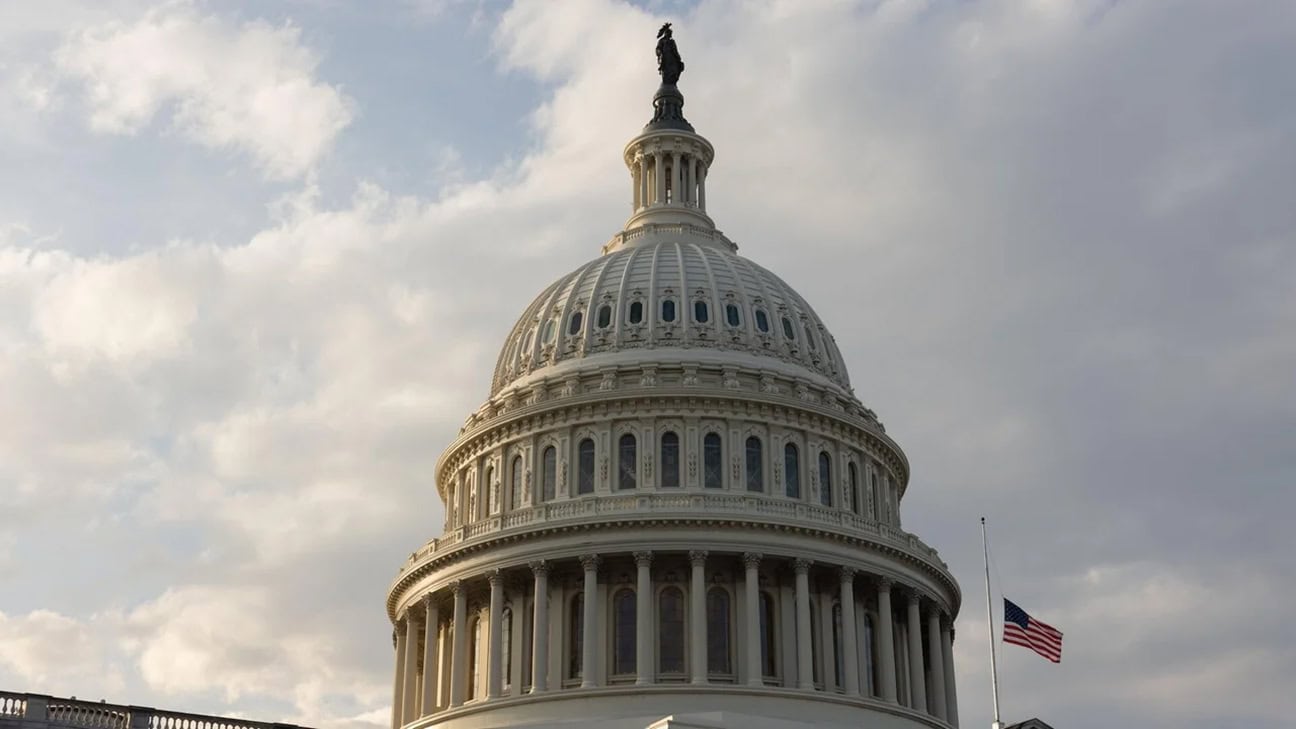
A bipartisan group of Senate Democrats and Republicans reached an agreement to reopen the government after the longest shutdown in U.S. history, voting on the first procedural step of the measure.
The agreement would fund the government until January 30 and include full annual funding for three appropriations bills, including full funding for the Supplemental Nutrition Assistance Program, or SNAP, until September 30, 2026, or the end of the fiscal year.
The Sunday night vote was 60-40, with seven Democrats and one independent joining the Republican majority to advance the measure.
This marked the first, but crucial, step toward approval of the measure in the Senate. Once the bill overcame the 60 votes needed to beat the filibuster, any remaining Senate votes need only a simple majority. However, the legislation still needs to be approved by the House before the shutdown ends, allowing air traffic controllers and other federal employees to be paid and federal food benefits to resume, among other things.
Senate Democrats had previously voted against more than a dozen short-term spending measures in their fight to preserve health subsidies. But as the pain of the shutdown continued to intensify, some agreed to more modest changes in the latest agreement.
The continuing resolution to fund the government until the end of January would also include language to reverse any federal workforce reductions that occurred during the shutdown, as well as protections against further layoffs of that kind until the end of the fiscal year, and retroactive pay for all federal employees during the shutdown.
“I said a long time ago that to win my vote, we need to be on a path to fix the Republican health mess and protect the federal workforce,” Sen. Tim Kaine (D-Va.) said in a statement. “This agreement guarantees a vote to extend the Affordable Care Act premium tax credits, which Republicans were not willing to do.”
The agreement to reopen the government is also expected to include a Senate vote on health care in the second week of December, on a bill of the Democrats’ choosing. This informal agreement is not part of the legislative text.
Democrats are deeply divided over the compromise measure, which was opposed by Senate Minority Leader Chuck Schumer.
“I think it’s a terrible mistake,” Sen. Elizabeth Warren (D-Mass.) said of the agreement. “The American people want us to fight for health care.”
Democratic Divisions over the Legislation
Several high-ranking House Democrats also vowed to vote against the bill.
House Minority Leader Hakeem Jeffries, D-N.Y., criticized the agreement in a statement before the Senate vote.
“We will not support spending legislation advanced by Senate Republicans that fails to extend Affordable Care Act tax credits,” Jeffries said in a statement. “We will fight the GOP bill in the House of Representatives, where Mike Johnson will be compelled to end the seven-week taxpayer-funded Republican recess.”
And Rep. Greg Casar, D-Texas, called the agreement a “betrayal” and “capitulation” because it does not reduce health care costs.
The House has not held a vote since September 19 and previously passed a government funding measure without Democratic support.
The Senate agreement on government funding comes after Democrats secured a series of electoral victories last week, giving some in the party new political confidence to continue fighting for health care extensions.
Many Democrats believed that keeping the government shut down gave them their only legislative leverage, with Republicans still controlling Congress and the White House.
Moderate Democrats defended their votes, with some telling reporters it was the best deal they could make.
Kaine, one of the Democrats who voted for the measure on Sunday, defended his support, saying Democrats would be able to bring important health care legislation to a vote.
“Legislators know their voters expect them to vote for it, and if they don’t, they may well be replaced at the ballot box by someone who will,” he said in his statement.
Source: npr.org by Claudia Grisales, Luke Garrett