



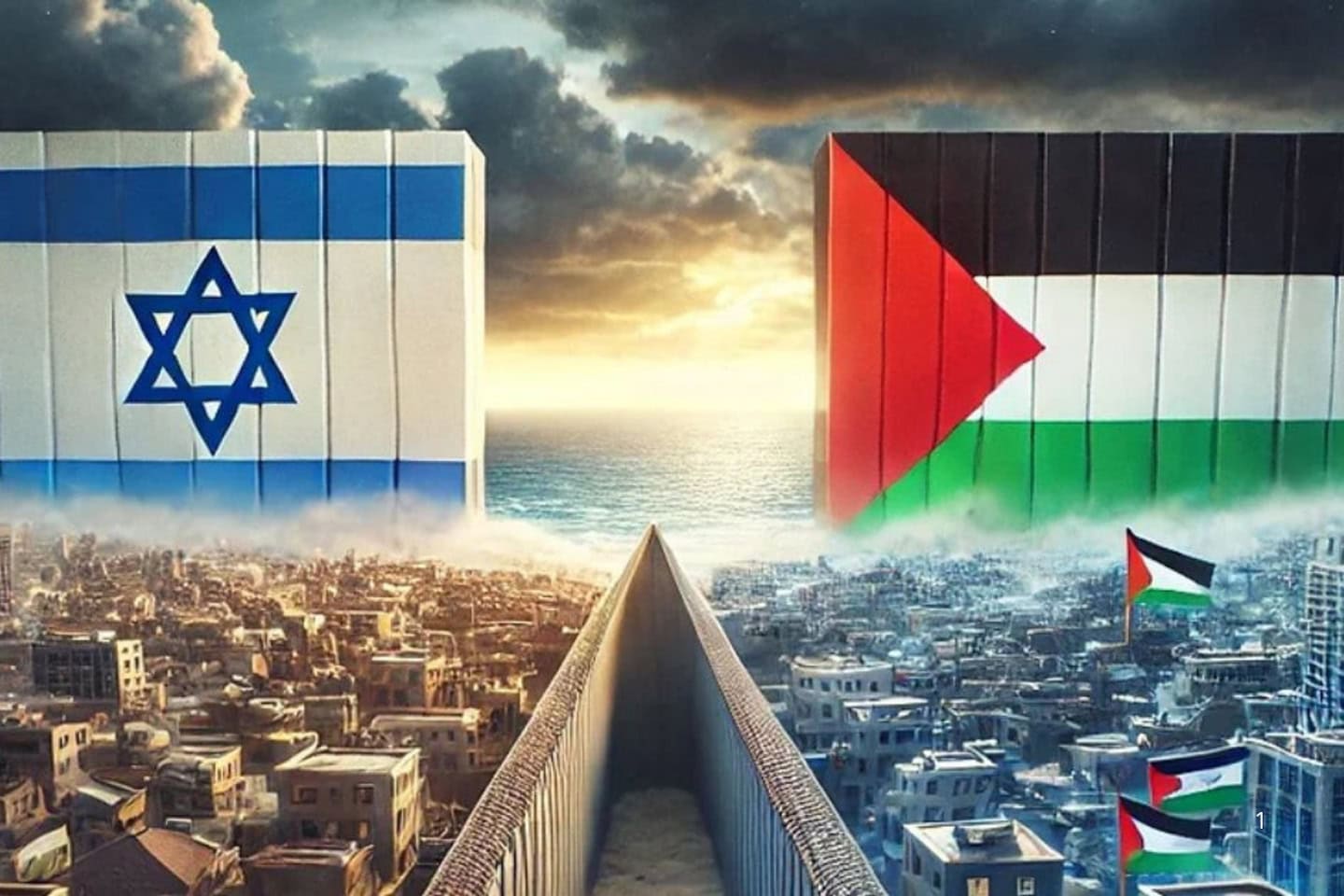
Two years after the attacks led by Hamas against Israel on October 7, 2023, the subsequent war they provoked may finally be approaching a turning point.
On Friday, Hamas said it had partially agreed to a 20-point plan presented by the White House to end the fighting in Gaza. Israel said it accepted the first phase of the plan — agreeing in principle to a limited troop withdrawal linked to the delivery of hostages — but framed this acceptance as conditional, saying that Hamas must be disarmed as part of any final agreement.
On Sunday, President Trump told CNN that Hamas would face “complete obliteration” if it refused to relinquish control of Gaza, while asserting that Israeli Prime Minister Benjamin Netanyahu is in favor of ending Israel’s bombings in the territory.
Also on Sunday, Secretary of State Marco Rubio said on CBS’s Face the Nation that Hamas had agreed to the framework of a hostage deal, emphasizing that the negotiations must focus “on the logistics behind the release of these hostages”.
Delegations from Israel, Hamas, and the United States — accompanied by mediators from Egypt and Qatar — will meet on Monday in Sharm El Sheikh, a resort city on Egypt’s Red Sea coast, as global protests against the war in Gaza continue and diplomatic pressure for a cease-fire mounts. Jared Kushner and U.S. special envoy Steve Witkoff will join the American team.
What is being discussed in Monday’s negotiations in Egypt?
The White House’s 20-point proposal would immediately end the war in Gaza as soon as both sides accepted it. Under the plan, Israeli forces would withdraw to a designated “initial line” inside Gaza so that hostages can be handed over, and military operations would be suspended during the transfers.
All 48 hostages, alive and dead — only 20 are believed to be alive — would be returned within 72 hours after both sides publicly accept the deal. In exchange, Israel would release about 250 Palestinian prisoners held in Israel serving life sentences, plus 1,700 Gaza residents detained since the start of the war.
Israeli officials say they are prepared to carry out the withdrawal and prisoner releases, but assert that any release must be verifiable, security guarantees must be in place, and Hamas must be effectively disarmed.
Hamas officials say they accept the general framework and are willing to enter negotiations, but their acceptance is partial and depends on changes. Negotiators close to Hamas say the group is pushing for adjustments to the proposed withdrawal line and wants explicit guarantees that Israel will not resume large-scale operations after the hostages are returned.
Hamas and the mediators also say the 72-hour deadline in the plan for returns is likely unrealistic. The remains of some hostages are believed to be buried under heavy rubble, others may be held by different groups, and damage to infrastructure complicates quick recovery and verification — so they advocate for a longer, staggered timeline. A person briefed by Egyptian officials told NPR, speaking anonymously to reveal details, that they expected the hostage release timeline to be extended to up to seven days.
The plan leaves several major questions unanswered. Hamas insists that Israel completely leave Gaza — the proposal, however, calls for an “Israeli security perimeter presence” in some areas until Gaza is demilitarized and monitored by an international force.
Any complete Israeli withdrawal would be conditioned on Hamas renouncing its weapons and the presence of an international security force to oversee the process. The document also says that if Gaza’s reconstruction goes well and the Palestinian Authority (which administers parts of Israeli-occupied West Bank) carries out the agreed reforms, there could eventually be a path to self-administration or a Palestinian state. But that outcome would be conditional, and the plan does not set a firm timeline.
People in Israel and Gaza remain cautiously hopeful
Many Israelis now see this as the closest chance they’ve had to end the war. A recent Maariv opinion poll found that more than half of Israelis support the American cease-fire proposal.
At a weekly Saturday night gathering for the hostages in Tel Aviv, many people sounded cautiously hopeful — if not frustrated with political leadership at home.
Zvia Agur, who has participated in weekly protests since the start of the war, told NPR she no longer sees Netanyahu as her leader.
“He is our enemy,” she said. “When we see that he acts against our true and just aspirations, we have to fight against him.”
Hostage families have been some of the most visible voices pressing for a deal. Einav Zangauker, whose son Matan remains captive, told reporters she felt closer than ever on Sunday to reuniting with her son.
“We are one step away from a comprehensive agreement,” Zangauker said, according to a statement from the Hostage and Missing Families Forum. “We will not let this opportunity slip away.”
Israeli airstrikes and drone fire continued over the weekend in Gaza, and dozens of Palestinians were killed, according to the Gaza Health Ministry.
The Gaza Health Ministry says more than 67,000 Palestinians have been killed since the start of the war.
Inside the territory, many are cautiously optimistic. But there are doubts. A’id Fuad al-Minawi, 52, told NPR that bombings intensified on Friday after Hamas responded to the cease-fire proposal.
“It’s a trap,” he said. “Israel will impose new impossible conditions after receiving the hostages — and the war will start again.”
Hamas officials say their main demand is a guarantee that Israel will not resume large-scale operations once the hostages are returned.
If the negotiations in Egypt succeed, the first hostages could be released in days — and for the first time in nearly two years, both Palestinians and Israelis could glimpse the end of the war.
Source: npr.org by Rebecca Rosman, NPR’s Daniel Estrin and Emily Feng contributed reporting from Tel Aviv, PR’s Anas Baba contributed reporting from Gaza.