



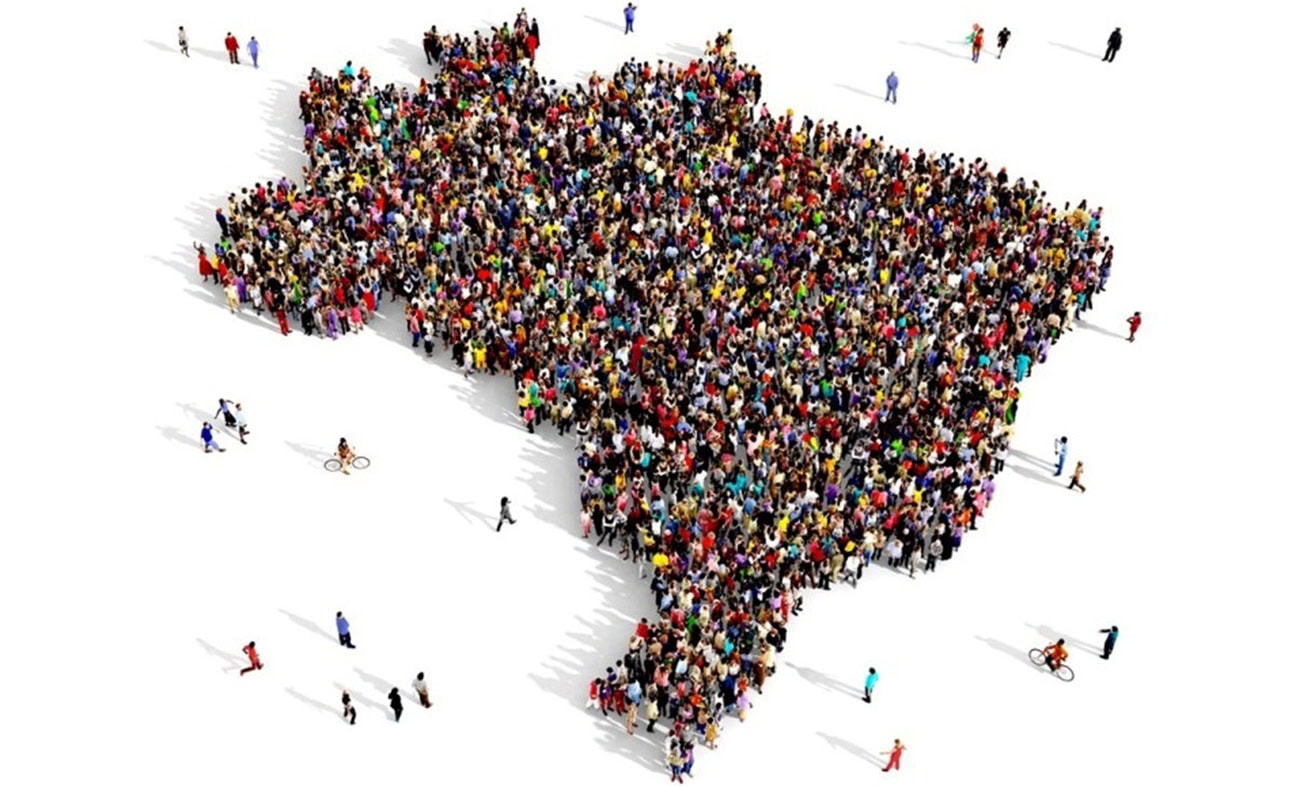
Brazil has 15 cities with more than 1 million inhabitants. These municipalities are home to 42.8 million people, representing 20.1% of the Brazilian population, or one in every five residents. Of the 15 cities, only two are not state capitals—Guarulhos and Campinas, both in the state of São Paulo.
The data are based on estimates for July 1, 2025, released on Thursday (Aug. 28) by IBGE, Brazil’s statistics institute.
The figures show that Brazil’s population reached 213.4 million, with 0.39% growth over one year.
São Paulo, the capital, is the country’s largest city, with 11.9 million people. Guarulhos and Campinas, also in the same state, are the only non-state capitals with more than one million inhabitants.
Although Brazil’s population grew year-over-year, IBGE notes that five capitals recorded population declines from 2024 to 2025—Salvador (0.18%), Belo Horizonte (0.02%), Belém (0.09%), Porto Alegre (0.04%), and Natal (0.14%).
Surroundings
Márcio Minamiguchi, IBGE manager for Studies and Analysis of Demographic Dynamics, said the population decline stems from ties between cities and neighboring municipalities.
“The largest capitals, these more central municipalities, generally have a more conurbated environment and lose population to it. Growth shifts from the center to the periphery. In the case of the capitals that lost population—with the exception of Salvador—an increase in the number of inhabitants is observed in their metropolitan regions,” he highlighted.
According to IBGE, Brazil has 30 metropolitan regions, home to 103.5 million people, or 48.5% of the population. The largest are São Paulo (21.6 million), Rio de Janeiro (12.9 million), and Belo Horizonte (6 million).
Background
The release of population estimates by IBGE is a legal requirement and is used by the Tribunal de Contas da União to calculate the values of resources transferred from the federal government to other federative entities.
To produce the population estimate, IBGE uses the 2022 census and makes annual projections based on data such as mortality and natality rates.
The Brazilian population is expected to continue growing until 2041, reaching 220.43 million inhabitants, then begin declining from 2042 onward. By 2070, the country is projected to have 199.2 million people.
Source: Agência Brasil