



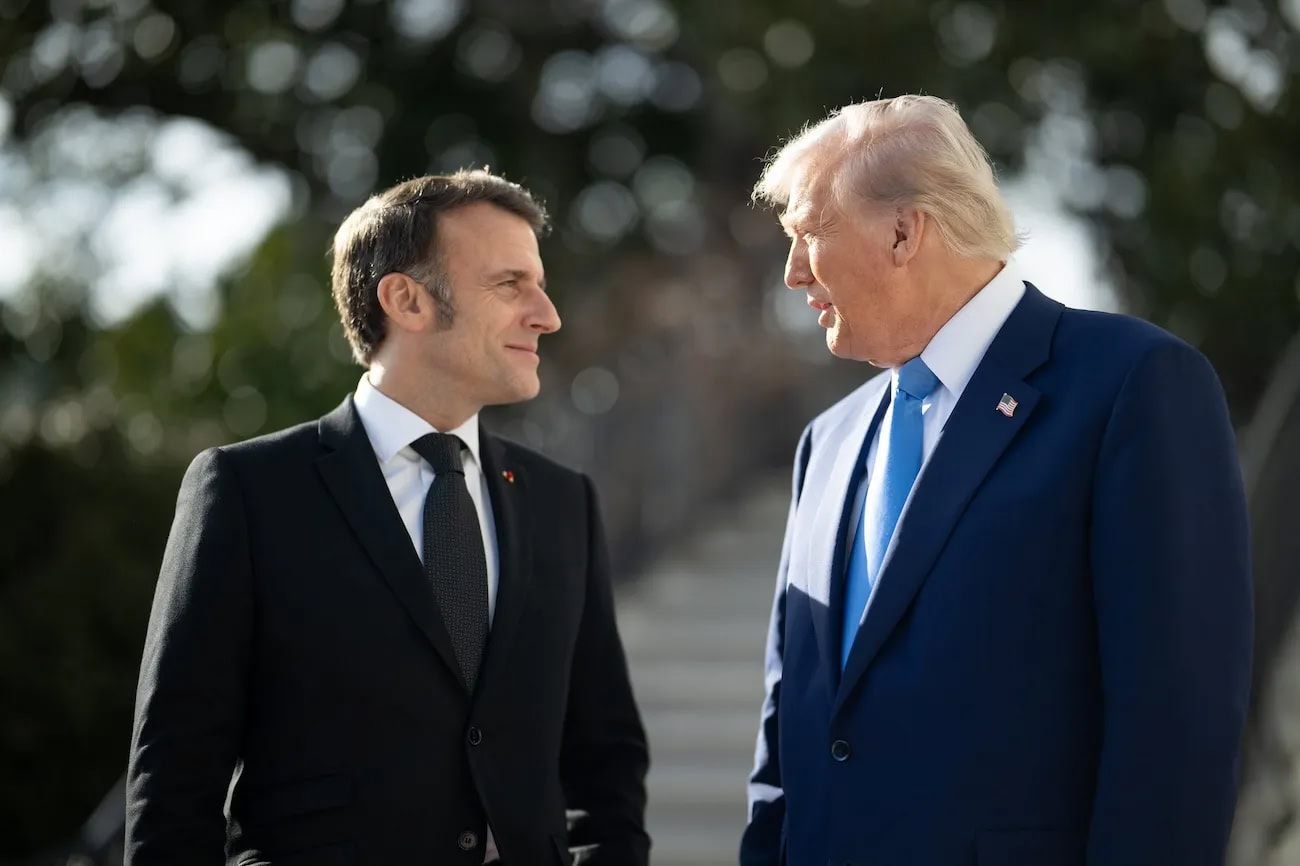
There is a pattern in many of President Trump’s interactions with other world leaders. You could call it “the art of praise” — and they are serving generous portions of flattery.
When UK Prime Minister Keir Starmer visited the White House in February, he brought a letter in his suit pocket. It was a formal invitation from King Charles III for a rare second state visit, presented to Trump with rhetorical flourishes in the Oval Office.
“This is really special. This has never happened before,” said Starmer. “This is unprecedented, and I think it symbolizes the strength of the relationship between us. So, this is a very special letter.”
Then, in July, Israeli Prime Minister Benjamin Netanyahu brought Trump another letter, one he said he had sent to the Nobel Committee.
“It’s a nomination for the Nobel Peace Prize, which is well deserved and you should receive it,” Netanyahu told Trump. Trump has long coveted the Nobel Peace Prize and responded with a “wow”.
Two days later, at another White House event, leaders from several African nations agreed when prompted by a friendly journalist. Trump deserves the Nobel Peace Prize, the leaders said.
The president has been receptive to both tributes, thanking Starmer and Netanyahu. But there is strategy in the flattery, and it seems quite different from Trump’s first term in the White House. During his first term, world leaders were skeptical and distant toward Trump’s authority. Now, in his second, they are more obsequious.
“He’s back, and he’s powerful,” said Kurt Volker, a career diplomat who served during Trump’s first term and now, among other post-government roles, serves as a fellow at the Center for European Policy Analysis, a nonpartisan public policy institution. He described the thinking of European leaders, especially: “He can do things we like or don’t like, so it’s better to make sure he does what we like.”
And Trump isn’t just receiving more praise, he’s getting results, said Volker. He points to the commitments by NATO alliance members to spend 5% of their GDP on defense by 2035, which Trump helped secure at the NATO summit in The Hague in June.
“And part of that is the Europeans stepping up to do what they should already be doing,” said Volker.
The White House highlights the number of leaders who have come to Washington to meet with Trump, including repeat visits. The total reaches 23 so far, with many of them going to the White House in hopes of securing a favorable trade deal with lower tariffs. That’s much more than visited Presidents Biden and Obama during their first six months.
“The results speak for themselves: the president’s trade deals are leveling the playing field for our farmers and workers, trillions of dollars in investments are flooding into our country, and decades-long wars are ending — making the whole world safer and more prosperous,” said Anna Kelly, White House spokesperson, in a statement to NPR. “Foreign leaders are eager for a positive relationship with President Trump and to participate in the booming Trump economy.”
There is another explanation. These leaders have “taken the measure of the man,” said Ivo Daalder. He is a senior fellow at Harvard’s Belfer Center and served as U.S. ambassador to NATO during the Obama administration.
He says Trump clearly wants to be seen as a winner, as a singularly important figure who achieves things others cannot.
“So, flattery and saying he’s the best, that he’s the only person who could have achieved that result at this summit, aims primarily at keeping him on our side,” says Daalder.
Last weekend, European Commission President Ursula von der Leyen made a point of praising Trump before finalizing the details of a trade deal, calling him a “tough negotiator and dealmaker.” Then, she took a page straight from Trump’s playbook.
“If we’re successful, I think it would be the biggest deal that each of us has ever closed,” said von der Leyen. Later, when they announced that a deal had been reached, Trump proudly echoed von der Leyen’s language about it being the ‘biggest deal ever made’.
As in many of the trade deals announced by Trump, many details of the US-EU deal remain quite obscure. But for Trump, they are all victories, and he, as chief dealmaker, is the central protagonist.
That’s another change from the first term, when Daalder says many leaders tried to work with Trump’s Secretaries of State or national security advisors. They were seen as “guard rails” or aides who might convince Trump to achieve the right outcome. But Daalder says that largely didn’t work. Trump was and is the decision-maker, and foreign leaders and diplomats have now figured that out.
“He decides alone. And that means you have to deal with Trump to get any deal,” said Daalder. “And the only way to get a good deal is to flatter him.”
In the case of NATO, the flattery was fruitful. Trump has long been skeptical of the mutual defense alliance. Ahead of his most recent summit, NATO Secretary General Mark Rutte sent Trump a flattering message, which the president then posted on his social media site, Truth Social.
“You’re flying to another big success in The Hague tonight,” wrote Rutte. “You’re going to achieve something that NO American president in decades has managed to do.”
Securing NATO members’ agreement to spend 5% of their GDP on defense was a major victory for Trump and the alliance, which Rutte reiterated when the two met face-to-face.
“It’s absolutely true,” said Rutte. “I want to declare here, without President Trump this wouldn’t have happened.”
That was the same appearance in which Rutte seemed to refer to Trump as “daddy,” which the president and his merchandising machine exploited.
“I think he likes me, otherwise I’d warn him,” Trump said about Rutte, when a reporter asked about the daddy reference. “He did it very affectionately. ‘Daddy, you’re my daddy.’”
That episode also proved that “the lack of shame is really a superpower,” said Justin Logan, director of defense and foreign policy studies at the CATO Institute. He views Trump’s leadership style as highly personal and personalized, sometimes even “primitive.”
“Nothing is forever. You can go from the good list to the bad list and back quickly,” said Logan. “That’s the really disconcerting thing. So, I think the lesson here will be to keep piling on the praise, even if it doesn’t seem so good.”
For some of these leaders, there have been political consequences at home. In many countries, Trump remains an unpopular figure and leaders have faced criticism for their exaggerated praise in working to win him over.
Source: npr.org by Tamara Keith, Saige Miller