



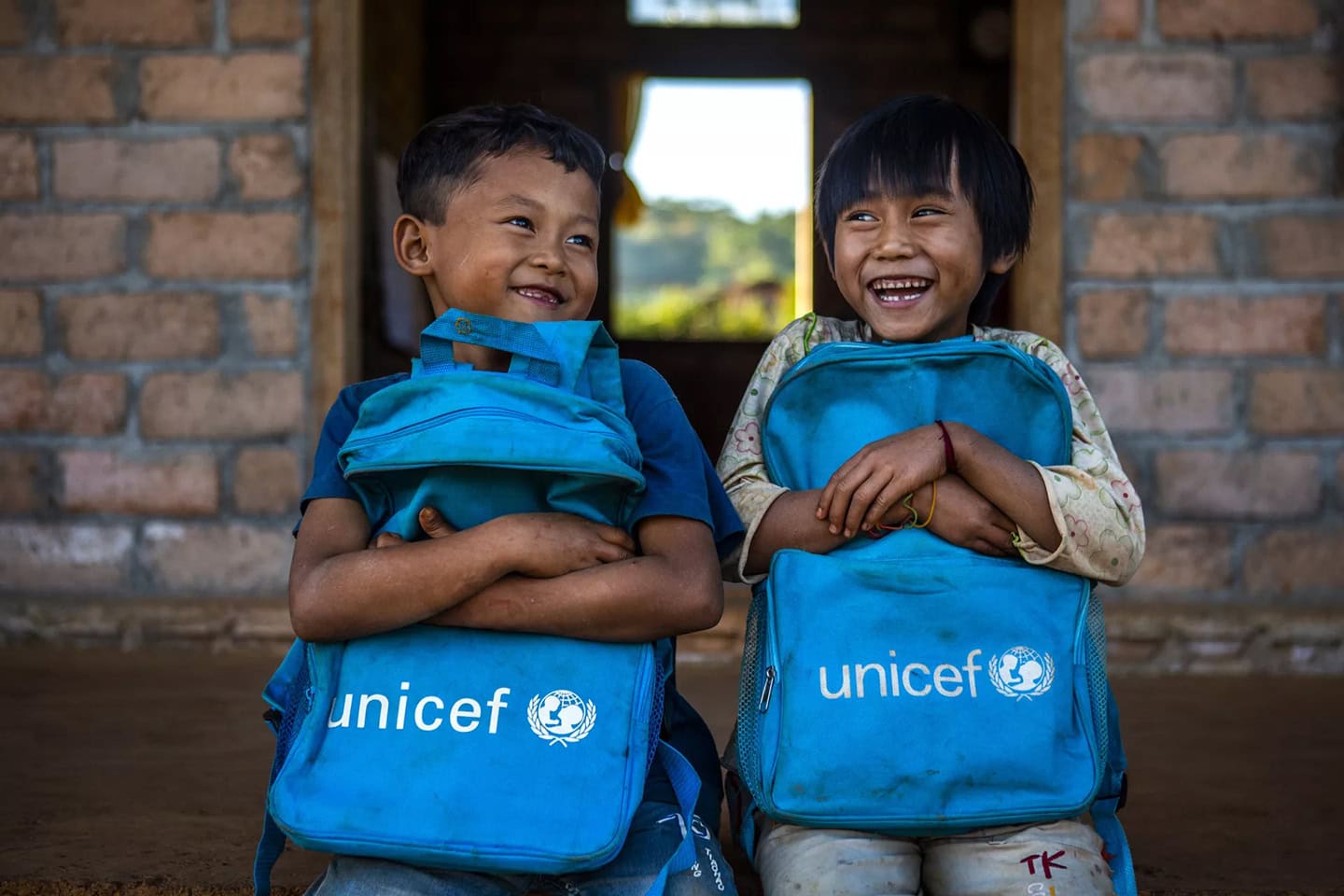
On its 75th anniversary in Brazil, the United Nations Children’s Fund (UNICEF) has been one of the main partners in promoting and defending the rights of Brazilian children and adolescents.
When it began its activities in Brazil, 158 out of every 1,000 children born died before completing one year of age – 16 out of 100 babies. Today, this percentage has fallen 90%, to 12 children per thousand. This reduction is the result of UNICEF’s efforts, in conjunction with public authorities and non-profit organizations.
Over seven decades, UNICEF’s work in Brazil has also focused on other fronts besides health. These are initiatives in education, protection, and combating poverty and other problems that afflict Brazilian children and adolescents.
The achievements and challenges can be found in the book “UNICEF, 75 anos pelas Crianças e pelos Adolescentes – Uma História em Construção” (“UNICEF, 75 Years for Children and Adolescents – A History in the Making”) and in the exhibition Passos para o Amanhã (“Steps to Tomorrow”), launched on Wednesday (July 16) during a commemorative event at the Palácio do Itamaraty, headquarters of the Ministry of Foreign Affairs in Brasília.
The exhibition pays homage to the advances of the federal government for Brazilian children and adolescents through a series of sculptures signed by artist André Alves de Freitas. Each of the six sculptures symbolizes areas in which UNICEF’s work has contributed to changing realities – vaccination, basic sanitation, education, civic participation, reduction of infant mortality, and climate change.
Transformations
Over seven decades, UNICEF has been present in Brazil’s main social and political transformations, contributing, along with the Brazilian government and other partners, to decisive moments, such as the approval of an item by the 1988 Constituent Assembly, which included in the Brazilian Constitution the duty “of the family, society, and the State to ensure to the child, the adolescent, and the youth, with absolute priority, the right to life, health, food, education, leisure, professionalization, culture, dignity, respect, freedom, and family and community coexistence, as well as to place them safe from all forms of negligence, discrimination, exploitation, violence, cruelty, and oppression.”
UNICEF also helped in the debates that resulted in the creation of the Statute of the Child and Adolescent (ECA), and has worked to formulate and implement public policies aimed at reducing infant mortality, strengthening public health, and expanding access to quality education.
“The rights of children and adolescents are an unfinished agenda, because there are always old challenges still underway besides new ones emerging. Society is also constantly changing and demanding new rights for boys and girls,” said UNICEF Representative in Brazil, Youssouf Adel-Jelil.
Milestones
In addition to various projects in Brazil, the UN institution directly contributed to the creation of the National Immunization Program (PNI) of the Ministry of Health, in 1973, which made Brazil a model in child vaccination.
In 2020, during the COVID-19 pandemic, UNICEF’s efforts focused on protecting the rights of children and adolescents with initiatives related to water, sanitation, and hygiene in vulnerable territories. From 2020 to 2022, more than 17 million people benefited from emergency actions promoted by the organization.
Challenges for the Future
For the future, UNICEF stated that there is much to be done to ensure the full rights of children and adolescents in Brazil. Among the main demands listed by the institution are reducing poverty and inequality – including guaranteeing access to health and quality education – and addressing violence against children and adolescents – the only item in which Brazil has not advanced in recent decades. Violent deaths of children and adolescents, especially black boys, are still a reality that needs to be confronted.
The organization also pointed out challenges related to mental health in an increasingly connected world, migration, and efforts to mitigate the climate emergency.
Regarding the last topic, UNICEF spoke about COP30 in Brazil, highlighting the need to place the most vulnerable people at the center of the national and global agenda.
“We must continue working on this unfinished agenda together with communities, society, the private sector, and children and adolescents themselves, to ensure a safe and prosperous present and future,” concluded the UNICEF Representative in Brazil.
Source: Agência Brasil