



Rising ocean temperatures between 2023 and 2024 triggered a global coral bleaching wave. It is estimated that 84% of the world’s coral reefs were affected by this phenomenon, which occurs when the symbiotic relationship between photosynthetic algae (zooxanthellae) and corals breaks down.
When corals lose their symbiotic relationship with zooxanthellae, they are deprived of a vital source of nutrition, becoming weaker and more vulnerable to diseases and death.
Brazil was not spared from the global coral bleaching, which severely affected species such as fire coral (Millepora alcicornis) and sail coral (Mussismilia harttii) along the coast from Maragogi, in the state of Alagoas, to Natal, in Rio Grande do Norte.
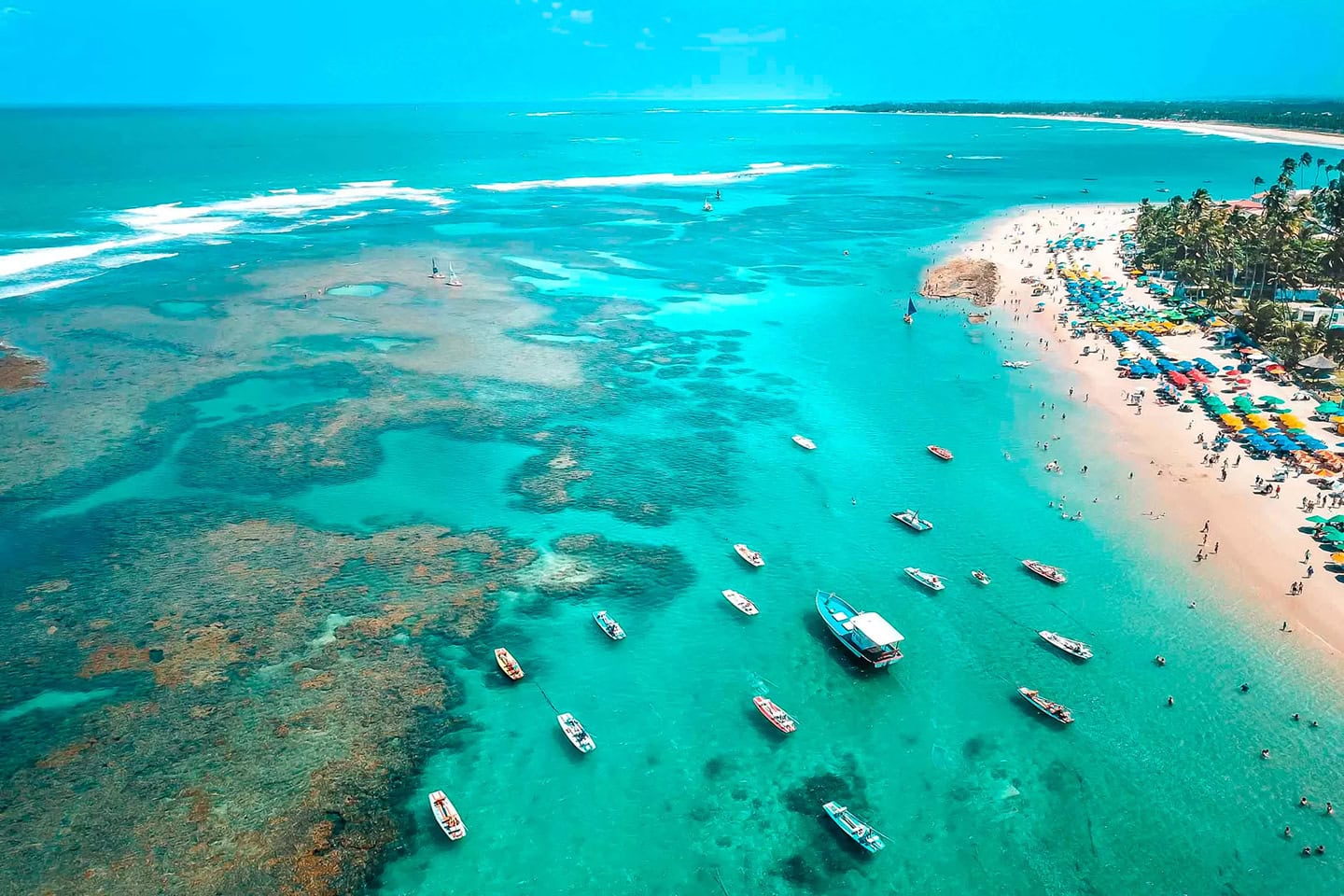
Porto de Galinhas Beach, in Pernambuco – famous for its raft trips to the coral reefs – was one of the areas hit by the bleaching wave. It is there that the Coral Biofactory project is based, combining ecotourism with efforts to regenerate Pernambuco’s reefs.
“The coral colony in Porto de Galinhas suffered losses of more than 95%. The only survivors were tiny fragments, at most one or two centimeters,” explains Rudã Fernandes, fisheries engineer and manager of the Coral Biofactory project.
The Biofactory operates a research and visitor center in Porto de Galinhas, dedicated to recovering coral fragments, breeding these organisms, and restoring the reef.
Part of the reproduction and growth process of these animals – cnidarians, like jellyfish – is carried out directly on the reef, where baby corals grow in their natural environment.
The other part takes place in tanks at a laboratory located at the National Center for Research and Conservation of Northeastern Marine Biodiversity (Cepene), linked to the Chico Mendes Institute for Biodiversity Conservation (ICMBio), in Tamandaré, Pernambuco. Once they reach a larger size, the corals are transported to the reef for transplantation.
Thanks to this work, Coral Biofactory was able to preserve a significant portion of the corals in Porto de Galinhas.
“Unfortunately, our small corals, grown in situ during the nursery phase, were lost. However, our older colonies survived the bleaching, albeit with reduced coverage, which allowed us to save about 20% of them,” says Fernandes. “Thus, most of the corals currently alive in Porto de Galinhas are those managed by Biofactory.”
The current focus is managing the corals to repopulate the Porto de Galinhas reefs. In Tamandaré, where Biofactory’s laboratory is located, corals that had been returned to the sea also suffered bleaching but were saved after being brought back to Cepene’s tanks for recovery.
This year, Coral Biofactory was honored by the United Nations Educational, Scientific and Cultural Organization (UNESCO) as a global reference project for the Ocean Decade.
“This recognition not only supports our work but also helps us connect with other researchers and key global players in ocean conservation. It allows us to acquire knowledge, form strategic partnerships, and participate in exchanges that guide us in improving our efforts,” concludes Fernandes.
Source: Agência Brasil